Most musculoskeletal injuries never need surgery. Understanding natural injury recovery without surgery means knowing which tools, in which order, actually move tissue from damaged to functional, and doing that work actively rather than waiting for pain to fade on its own.
What You’ll Learn in This Guide
- How your body repairs injured tissue and which phase you’re in
- The non-surgical treatments with the strongest clinical evidence
- How lifestyle factors directly affect healing speed
- Injury-specific recovery pathways for knees, backs, shoulders, and ankles
- How to know when conservative care is enough, and when it isn’t
- How to return to activity without reinjury
What Natural Injury Recovery Actually Means
Natural injury recovery is not passive rest and a bottle of ibuprofen. It is structured, evidence-supported care that works with the body’s own repair systems to restore function without surgical intervention. The distinction matters because “avoiding surgery” is often framed as a last resort or a gamble, when the data consistently shows the opposite for most musculoskeletal injuries.
According to a 2023 analysis published in the British Journal of Sports Medicine, more than 80% of common musculoskeletal injuries, including ligament sprains, muscle strains, tendinopathies, and disc-related pain, are successfully managed with conservative care alone. Surgery is appropriate for a specific subset of injuries, particularly complete structural failures that cannot heal without mechanical correction. For the vast majority of people in acute or chronic pain, the path forward runs through biology, not a scalpel.
The Biology Behind Your Body’s Healing Capacity
Tissue repair follows a three-phase model regardless of the injury type. The inflammatory phase begins immediately after injury and lasts roughly 72 hours: blood vessels dilate, immune cells flood the site, and debris is cleared. The proliferation phase follows, typically spanning days 4 through 21, during which fibroblasts lay down new collagen and blood supply is restored. The remodeling phase can continue for months, as the new tissue is organized and strengthened under mechanical load.
A 2022 review in the Journal of Orthopaedic Research confirmed that full tendon remodeling after moderate injury can take 12 to 18 months, even when pain resolves far earlier. The practical takeaway is straightforward: pain relief is not the same as tissue recovery, and the interventions that serve you in week one are often counterproductive in week eight.
Why Inflammation Is Not the Enemy
A 2021 study from the Hospital for Special Surgery examined the inflammatory cascade in skeletal muscle and tendon repair in 340 patients following acute injury. The finding was consistent with a growing body of evidence: controlled early inflammation is not a problem to be eliminated. It is the biological signal that recruits the repair cells needed for healing. Suppressing that signal aggressively with ice or high-dose NSAIDs in the first 48 hours can actually delay the transition into the proliferative phase.
The distinction worth understanding is between productive acute inflammation and chronic, unresolved inflammation. The first is time-limited and purposeful. The second is a sign that something in the recovery process has stalled. That difference should guide decisions about ice, anti-inflammatories, and rest in the first few days after injury.
What Slows the Process Down
Four factors consistently interfere with tissue repair. Poor sleep reduces growth hormone output, which directly limits collagen synthesis. Inadequate protein intake deprives fibroblasts of the amino acid building blocks needed to form new tissue. Chronic psychological stress elevates cortisol, which suppresses immune function and prolongs the inflammatory phase. Returning to load too early, before adequate tissue strength has developed, risks re-injury in tissue that looks repaired but isn’t yet structurally sound.
Non-Surgical Treatment Options That Have Evidence Behind Them
A 2020 systematic review in JAMA Internal Medicine compared conservative care outcomes to surgical outcomes across six common musculoskeletal conditions, including meniscal tears, rotator cuff impingement, and lumbar disc herniation. In four of the six conditions, conservative care produced equivalent or superior long-term outcomes with significantly lower complication rates. The right combination of treatments depends on injury type, healing phase, and individual health history. Here is what the evidence actually supports.
Physical Therapy and Targeted Rehabilitation
A 2022 randomized controlled trial from the New England Journal of Medicine followed 351 patients with meniscal tears. Those who completed a structured physical therapy program had equivalent functional outcomes at two years compared to those who underwent surgery, with no additional complications. That finding holds across multiple injury types.
What makes PT effective is progressive loading: the systematic application of controlled stress to healing tissue, which stimulates organized collagen deposition and restores neuromuscular control. A structured program includes an initial functional assessment, corrective exercises targeted at the specific movement deficit, and graduated loading protocols that advance as tissue tolerance improves. At a first visit, ask your physical therapist what objective markers will determine when each phase of your program advances. That question alone will tell you whether the program is evidence-based or protocol-generic.
Chiropractic Care and Manual Therapy
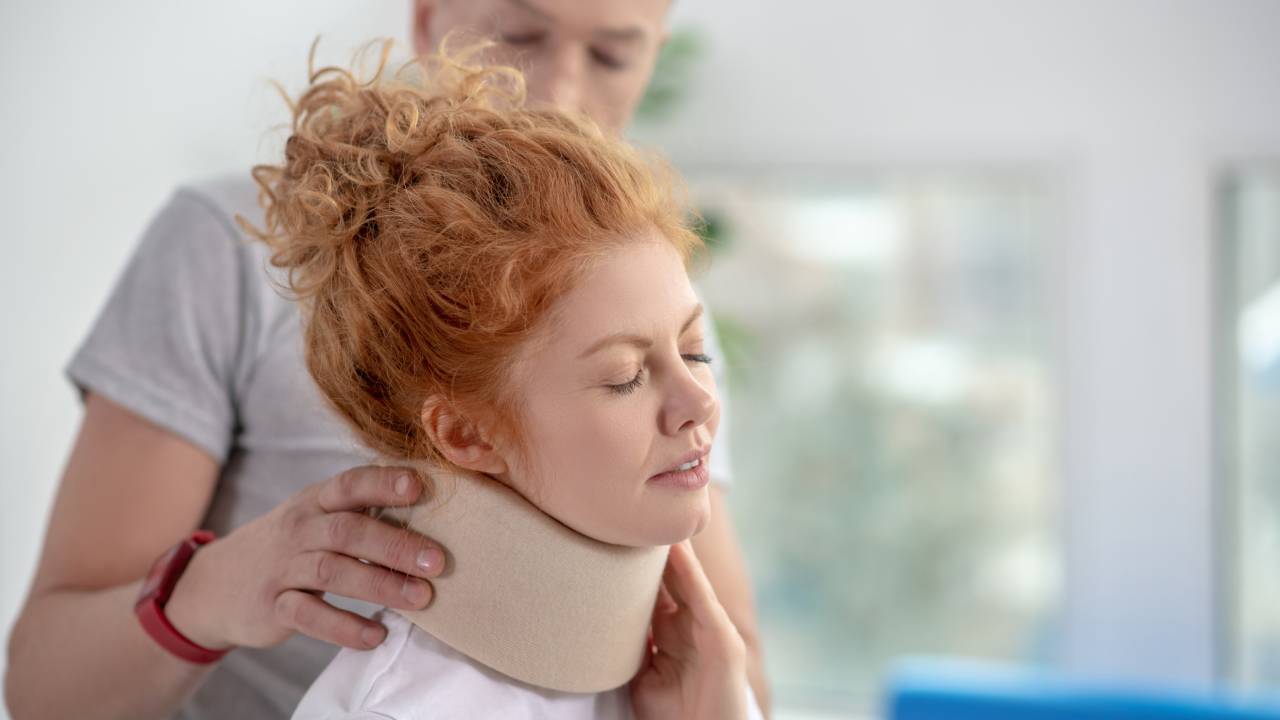
Chiropractic adjustments restore joint mobility, reduce protective muscle guarding, and reset the neurological feedback loops that perpetuate pain after injury. For patients dealing with soft tissue damage and restricted joint movement, manual therapy addresses the mechanical component of recovery that exercise alone often cannot reach.
A 2021 Cochrane review covering 4,700 patients with chronic neck and low back pain found that spinal manipulation produced clinically meaningful improvements in pain and function compared to sham treatment and usual medical care. For acute injuries, the effect is typically faster: reducing joint restriction early prevents the compensatory movement patterns that lead to secondary injuries. The injuries that respond best to manual therapy first are those involving joint restriction, cervical strain, and post-accident soft tissue dysfunction. Following a car accident or impact injury, a thorough clinical evaluation identifies which joints are restricted and which soft tissues are involved before treatment begins.
Orthobiologic and Regenerative Approaches
Platelet-rich plasma (PRP) therapy concentrates growth factors from your own blood and injects them directly into the injury site, amplifying the signals your body already uses to initiate repair. Rather than introducing a foreign substance, PRP accelerates the existing biological cascade.
A 2023 randomized trial published in the American Journal of Sports Medicine followed 192 patients with chronic tendinopathy over 24 weeks. The PRP group showed a 68% improvement in functional scoring compared to 41% in the corticosteroid group, with a significantly lower recurrence rate at six months. Realistic expectations: PRP is not an immediate fix. Most patients see progressive improvement over 6 to 12 weeks, with maximal benefit at three months. It is most appropriate for tendinopathies, ligament sprains, and cartilage-adjacent conditions that have not responded to first-line conservative care.
Acupuncture and Dry Needling
A 2022 meta-analysis in Pain Medicine reviewed 29 trials covering more than 3,000 patients and found that dry needling produced statistically significant reductions in pain intensity and improved pressure pain thresholds for myofascial pain conditions. The mechanism involves mechanical disruption of hyperirritable trigger points and modulation of the central sensitization pathways that sustain chronic pain.
Clinical dry needling, performed by a licensed physical therapist or chiropractor, targets specific trigger points within muscle and connective tissue. Traditional acupuncture follows meridian-based protocols and carries its own evidence base for pain modulation and stress reduction. In practice, dry needling works well as a complement to chiropractic and rehabilitative care when muscle tension or trigger points are limiting range of motion or making loading-based rehab difficult.
The Role of Sleep, Nutrition, and Hydration in Tissue Repair
These are not lifestyle suggestions. Sleep quality, protein intake, and hydration status are clinical inputs that directly determine how fast and how completely tissue repairs. Treating them as secondary concerns while chasing manual therapy appointments is a structural mistake.
Sleep as Active Recovery
A 2019 study from the University of Chicago followed 60 adults recovering from standardized tissue injury under controlled conditions. Participants sleeping fewer than six hours per night showed a 40% reduction in collagen synthesis rates compared to those sleeping seven to nine hours. The mechanism is specific: the majority of growth hormone release occurs during slow-wave sleep, and growth hormone is the primary signal driving fibroblast activity during the proliferative phase.
One concrete shift that improves sleep quality during recovery: set a fixed wake time and protect it regardless of when you fell asleep. Consistent wake time anchors circadian rhythm faster than adjusting bedtime, and circadian consistency is directly linked to immune regulation and cytokine balance.
Fueling Repair With Nutrition
A 2021 study in Nutrients analyzed protein intake in 218 patients recovering from orthopedic injuries. Those consuming 1.6 grams of protein per kilogram of body weight daily showed significantly faster restoration of lean tissue and functional strength compared to those at standard recommended intake. For a 170-pound person, that is roughly 123 grams of protein per day, an amount that requires deliberate food choices, not just normal eating patterns.
Beyond protein, omega-3 fatty acids from sources like salmon, walnuts, and flaxseed reduce the chronic inflammatory signaling that delays remodeling. Vitamin C is a necessary cofactor for collagen cross-linking: without adequate intake, new collagen fiber is structurally weak. These are not supplements to stack; they are nutrients to prioritize in your meals starting this week.
Hydration plays a specific mechanical role in musculoskeletal health. Intervertebral discs are roughly 80% water, and cartilage depends on fluid exchange for nutrient delivery. Chronic mild dehydration reduces disc height and joint lubrication, which compounds loading stress during rehab.
Stress, the Nervous System, and Why Mental State Affects Physical Healing
A 2020 study from Ohio State University tracked wound healing in 193 adults under high versus low psychological stress conditions. High-stress participants showed a 24% reduction in healing rate, measured by standardized tissue closure timelines. The mechanism runs through cortisol: sustained elevated cortisol suppresses the immune cascade needed to transition from inflammation to proliferation, effectively trapping tissue in the early repair phase.
Breathwork and structured mindfulness have direct physiological effects on this process. A 2022 trial from the University of Wisconsin found that eight weeks of daily diaphragmatic breathing reduced salivary cortisol levels by 23% in adults with chronic musculoskeletal pain. The action to try this week: four minutes of slow diaphragmatic breathing, five counts in and seven counts out, before sleep. It is the simplest version of nervous system downregulation with measurable cortisol impact.
Injury-Specific Recovery: What Works for the Most Common Cases
Knee Injuries
For meniscal strains, ligament sprains, and patellofemoral syndrome, the 2022 NEJM trial cited earlier makes a clear case for structured rehab as the first line of care. A typical conservative knee protocol begins with reducing joint effusion and restoring passive range of motion, progresses to quad and hip strengthening under controlled load, and advances to single-leg functional training before return to activity.
The first movement to reintroduce after acute knee injury is terminal knee extension in a pain-free range, which activates the VMO without compressive joint load. The first load threshold to respect is pain: any exercise that produces a pain score above three out of ten is advancing faster than tissue can tolerate. For joint dysfunction following a knee injury, restoring patellar mobility and tibio-femoral alignment before loading is a step many rehab programs skip too quickly.
Back and Spine Pain
A landmark 2016 JAMA study of 512 patients with lumbar disc herniation found no statistically significant difference in outcomes between those who had surgery and those who completed structured conservative care at two-year follow-up. The conservative group avoided surgical risk with equivalent functional recovery. The approach that most reliably reduces recurrence for back pain is not rest: it is early mobilization combined with core stabilization exercises that restore load transfer without relying on passive structures.
The most effective early-stage intervention for acute back pain is controlled movement, not bed rest. For disc-related back pain specifically, spinal decompression therapy and chiropractic mobilization address the mechanical component that standard physical therapy alone often misses.
Shoulder and Rotator Cuff Injuries
Partial rotator cuff tears and impingement syndromes respond well to structured rehab when scapular stability is addressed as the foundation. A 2020 study in the Journal of Shoulder and Elbow Surgery found that 75% of patients with partial-thickness rotator cuff tears achieved full functional recovery with conservative care, provided the program included scapular stabilization training alongside rotator cuff strengthening.
The movement pattern to retrain first is scapular upward rotation: the capacity to maintain a stable scapular base during shoulder elevation. Without it, rotator cuff exercises load an unstable platform and create impingement rather than resolving it. For shoulder injuries with a chiropractic component, joint mobilization of the acromioclavicular and glenohumeral joints restores mechanics that cannot be recovered through exercise alone.
Ankle and Foot Injuries
Ankle sprains are among the most undertreated injuries in clinical practice, precisely because the initial pain resolves quickly while proprioceptive deficits persist. A 2021 study in the British Journal of Sports Medicine followed 400 patients with grade I and II lateral ankle sprains. Those who completed a progressive balance and proprioception program had a reinjury rate of 14% at one year, compared to 37% in those who returned to activity based on pain resolution alone.
The balance drill that most directly accelerates return to activity is single-leg stance with eyes closed, progressed to unstable surface, progressed to dynamic perturbation. Start with 30-second holds on a firm surface and advance when form is consistent. Pain resolution is not readiness; proprioceptive restoration is.
How to Know If Natural Recovery Is Right for Your Injury
Conservative care is appropriate when the structural integrity of bone and major connective tissue is intact. Specifically: partial ligament tears, muscle strains, tendinopathies, disc herniations without progressive neurological deficit, and most soft tissue injuries following trauma all fall within conservative care territory.
Red flags that warrant surgical evaluation include fractures with significant displacement, complete ligament ruptures with joint instability that does not resolve with bracing, suspected compartment syndrome (characterized by severe pain, pressure, and weakness disproportionate to the mechanism of injury), and progressive neurological symptoms such as worsening weakness or loss of bowel and bladder control. These are not common presentations, but they require prompt evaluation.
At your next provider visit, bring three specific questions: What is the evidence base for the treatment you’re recommending? What are the measurable markers that will tell us this approach is working? And at what point do we reassess if progress stalls? Those three questions shift the conversation from passive compliance to active clinical partnership.
Returning to Activity Safely After a Natural Recovery
A 2022 study in the American Journal of Sports Medicine tracked reinjury rates in 580 athletes returning to sport after lower extremity injuries. Those cleared based on time alone had a reinjury rate of 23% within six months. Those cleared based on functional testing thresholds had a reinjury rate of 9%.
“Cleared to return” should mean pain-free full range of motion, limb symmetry index above 90% on strength testing, and passage of at least one sport-specific functional test. In practice, it often means the pain is gone and a provider said “take it easy.” That gap is where reinjury lives.
The one test to self-assess readiness before resuming full activity is the single-leg hop for distance. It requires no equipment, takes two minutes, and measures the functional integration of strength, balance, and confidence in the injured limb. If your hop distance on the injured side is less than 90% of the uninjured side, you are not ready for full loading, regardless of how the injury feels.
What to Try This Week
If you are in the acute phase (first 72 hours): do not aggressively ice or take high-dose NSAIDs. Allow productive inflammation to signal repair, manage pain with movement within a comfortable range, and prioritize sleep tonight.
If you are in the subacute phase (weeks one through four): book a clinical evaluation with a provider who uses multi-modal care. A single-treatment approach, whether rest alone, chiropractic alone, or exercise alone, is slower than a structured combination. The Huntersville and greater Lake Norman area has qualified providers who combine early clinical intervention after injury with progressive rehabilitation, which is the model the evidence supports.
If you are in the chronic phase (beyond six weeks with unresolved symptoms): the next step is not more passive treatment. Ask your provider directly about active rehabilitation protocols, regenerative options, and what objective markers will determine your progress timeline. Recovery that has stalled needs a different input, not more time.