Key Takeaways
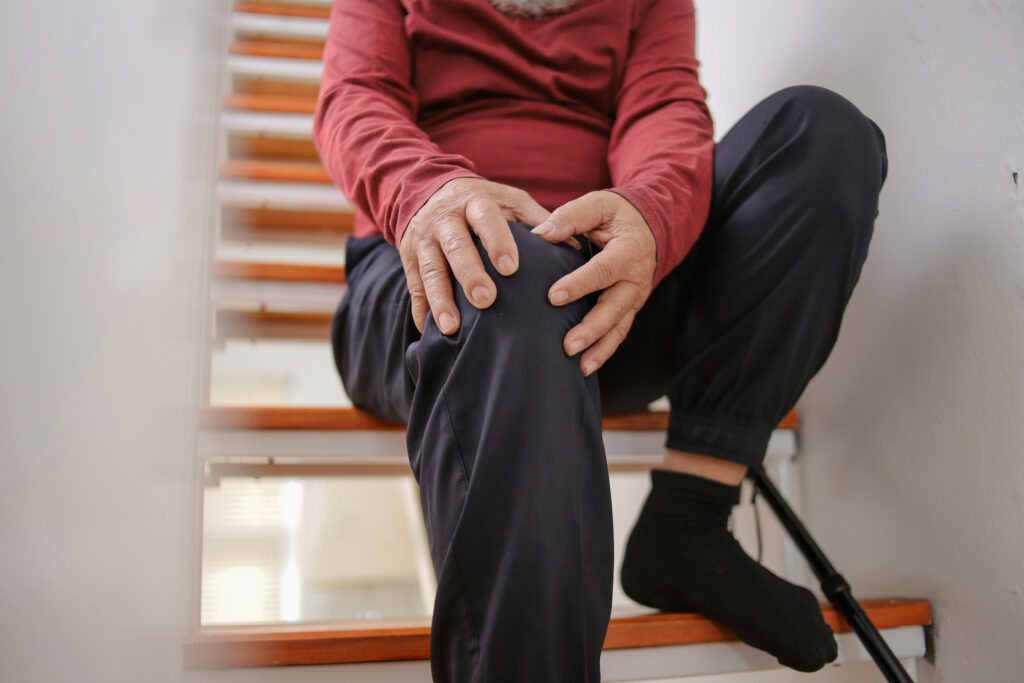
Knee pain when descending stairs commonly involves the patellofemoral joint, where the kneecap moves against the lower end of the thighbone. However, several other knee conditions can produce similar symptoms.
Going downstairs places different demands on the knee than going upstairs. The quadriceps must control the body’s descent while the knee bends under load, increasing the demands on the patellofemoral joint.
Patellofemoral pain can occur without significant cartilage damage. Pain around or behind the kneecap does not automatically mean the cartilage is worn away or the joint is bone on bone.
Patellofemoral osteoarthritis is a different condition. It involves degenerative changes affecting the joint surfaces behind the kneecap and may cause pain, stiffness, and difficulty with stairs, squatting, or rising from a chair.
Weakness, reduced loading tolerance, and movement patterns can contribute to symptoms. Hip and quadriceps strengthening are important components of treatment for many patients.
Grinding, popping, or cracking sounds do not necessarily indicate joint damage. Knee noises must be interpreted alongside pain, swelling, mobility, and functional limitations.
An MRI is not always necessary. A careful history and examination can often identify the likely cause, while X-rays or advanced imaging may be useful when arthritis, injury, or another condition is suspected.
Conservative treatment can help many patients regain stair tolerance. The goal is to improve strength, movement control, and function while identifying patients who need additional medical or orthopedic evaluation.
“Going Up the Stairs Isn’t Too Bad, but Coming Down Really Hurts.”
A patient may walk across a room without significant knee pain.
They may even tolerate walking through a grocery store or around the neighborhood.
But when they begin descending a flight of stairs, discomfort develops around the kneecap.
Sometimes the pain feels sharp.
Other times, it is a deep ache behind the front of the knee.
The patient may begin turning sideways on the stairs, holding the railing tightly, or placing both feet on each step before continuing.
Another patient notices discomfort when walking downhill.
Someone else experiences similar pain while lowering into a chair or performing a squat.
These activities share an important mechanical characteristic.
They require the quadriceps muscles to control knee bending while the leg supports body weight.
This increases the demands placed on the structures around the front of the knee.
Patients frequently describe the problem this way:
“My knee feels pretty good until I have to go downstairs. Then I feel pain right behind my kneecap.”
That symptom pattern often raises suspicion for patellofemoral pain.
However, it is not specific enough to establish a diagnosis.
Patellofemoral osteoarthritis, meniscal disorders, tendon problems, and other conditions can also make stair descent painful.
The important question is why the knee becomes uncomfortable under this particular type of load.
Understanding the mechanics of stair descent helps explain why the pain occurs and how rehabilitation may improve it.
Why Going Down Stairs Is Harder on the Knee Than Walking
Walking on level ground and descending stairs place different demands on the lower extremities.
During ordinary walking, the knee moves through a relatively limited range of flexion while supporting and transferring body weight.
Descending stairs generally requires greater knee bending and more demanding control of the body’s downward movement.
The quadriceps muscles must work to prevent the knee from collapsing too quickly into flexion.
This is an example of eccentric muscular activity.
Eccentric contraction occurs when a muscle produces force while lengthening.
During stair descent, the quadriceps help control the lowering movement.
At the same time, the patellofemoral joint experiences substantial compressive loading.
For a healthy knee, these forces are generally well tolerated.
However, a painful or deconditioned knee may have difficulty managing them.
The result may be discomfort around or behind the kneecap.
Why Going Downstairs Can Hurt More Than Going Upstairs
Both ascending and descending stairs require substantial muscular effort.
However, the direction and timing of the forces differ.
When climbing stairs, the quadriceps and hip muscles help lift the body upward.
When descending, those muscles must control the body’s movement downward.
This requires effective eccentric strength and movement control.
The knee also moves through flexion while bearing weight.
For some patients, this combination places greater demands on the patellofemoral joint than they can comfortably tolerate.
However, stair descent is not always more painful than ascent.
Some patients experience symptoms in both directions.
Others have greater difficulty climbing stairs because of weakness, arthritis, or another condition.
The difference between ascent and descent provides useful clinical information, but it does not independently establish the diagnosis.
Understanding the Patellofemoral Joint
The patellofemoral joint is formed by the patella, commonly called the kneecap, and the femur, or thighbone.
The back surface of the patella articulates with a groove near the lower end of the femur.
This groove is called the trochlea.
As the knee bends and straightens, the patella moves relative to the femur.
The patella is embedded within the quadriceps tendon mechanism.
It helps improve the mechanical efficiency of the quadriceps during knee extension.
The patellar tendon connects the patella to the tibia.
Together, these structures form the knee’s extensor mechanism.
The patellofemoral joint experiences substantial forces during activities such as squatting, climbing stairs, running, and jumping.
These forces are normal.
Problems may develop when the demands of activity exceed the joint’s current tolerance or when structural pathology contributes to symptoms.
What Does the Kneecap Actually Do?
The kneecap serves several important functions.
It helps the quadriceps muscles generate knee-extension force efficiently.
It also provides a protective structure over the front of the knee.
During knee movement, the patella changes its position relative to the femur.
The surrounding muscles, tendons, ligaments, and joint geometry contribute to its motion.
Patients sometimes imagine the kneecap as a small bone that simply slides up and down in a perfectly straight track.
In reality, patellofemoral movement is more complex.
The position of the patella changes with knee flexion, muscular activity, and individual anatomy.
Normal movement patterns vary among people.
For this reason, the presence of a particular tracking pattern does not automatically establish the cause of knee pain.
What Is Patellofemoral Pain Syndrome?
Patellofemoral pain is a clinical condition characterized by pain around or behind the patella that is aggravated by activities loading the patellofemoral joint.
These activities commonly include:
- Going up or down stairs
- Squatting
- Running
- Jumping
- Rising from a chair
- Prolonged sitting with the knee bent
The condition is sometimes called patellofemoral pain syndrome.
Older terminology includes chondromalacia patellae, although the terms are not interchangeable.
Patellofemoral pain does not necessarily involve visible cartilage damage.
It is a clinical diagnosis based on the symptom pattern and examination after considering other potential causes.
The condition can occur in adolescents, young adults, athletes, and older individuals.
It is not limited to people with arthritis.
Why Patellofemoral Pain Develops
Patellofemoral pain is generally considered multifactorial.
There is rarely one universal cause.
Changes in activity demands may contribute.
For example, someone may begin a new exercise program involving frequent squats, lunges, or stairs.
A runner may substantially increase mileage or hill training.
Another patient may become less active and develop reduced muscular capacity.
Hip and quadriceps strength, movement patterns, individual anatomy, and pain-related factors may also influence symptoms.
However, it is important not to assume that every patient has the same mechanical problem.
Some individuals demonstrate particular movement patterns without pain.
Others experience symptoms despite relatively typical alignment.
The examination should identify which impairments are clinically meaningful for the patient.
Is Patellofemoral Pain the Same as Chondromalacia Patellae?
Not exactly.
The term chondromalacia patellae refers to changes involving the articular cartilage on the back of the patella, traditionally described as cartilage softening or damage.
Patellofemoral pain is a clinical syndrome involving pain during activities that load the joint.
A patient can have patellofemoral pain without confirmed cartilage damage.
Likewise, cartilage abnormalities may be present on imaging without significant symptoms.
The distinction matters because a patient who is told they have chondromalacia may assume their kneecap cartilage is progressively disintegrating.
That is not necessarily what the clinical findings establish.
Treatment should address the patient’s symptoms and functional impairments rather than rely exclusively on a structural label.
What Is Patellofemoral Osteoarthritis?
Patellofemoral osteoarthritis involves degenerative changes affecting the joint surfaces between the patella and femur.
These changes may include cartilage loss, osteophytes, subchondral bone changes, and altered joint mechanics.
Patients may experience pain around or behind the kneecap.
Symptoms often occur during stairs, squatting, rising from chairs, or other activities requiring loaded knee flexion.
Some patients also experience stiffness, swelling, or crepitus.
Patellofemoral osteoarthritis becomes more common with age, although it can occur in younger individuals.
It may exist by itself or alongside arthritis affecting the tibiofemoral compartments of the knee.
The distinction between patellofemoral pain and patellofemoral osteoarthritis is important because the underlying structural findings and treatment considerations differ.
Patellofemoral Pain Versus Patellofemoral Arthritis
These conditions may produce similar symptoms.
However, they are not identical.
| Feature | Patellofemoral pain | Patellofemoral osteoarthritis |
|---|---|---|
| Typical age | Can occur at many ages, including younger adults | More common with increasing age |
| Main complaint | Pain around or behind the kneecap during loading | Pain, stiffness, and sometimes swelling during loading |
| Cartilage damage | Not required for diagnosis | Degenerative joint changes are present |
| X-rays | May be normal | May show narrowing, osteophytes, or other changes |
| Treatment emphasis | Progressive exercise and load management | Exercise, symptom management, and arthritis-focused care |
| Surgery | Uncommon | Considered in selected advanced cases |
Neither condition should be diagnosed from stair pain alone.
The patient’s history, examination, and imaging when appropriate help distinguish them.
Can You Have Kneecap Arthritis Without Arthritis in the Rest of the Knee?
Yes.
The knee contains several joint compartments.
The medial and lateral tibiofemoral compartments are located between the femur and tibia.
The patellofemoral compartment is located between the patella and femur.
Degenerative changes may affect one compartment more than the others.
Some patients have predominantly patellofemoral osteoarthritis.
Others have arthritis involving multiple compartments.
This matters because the location of degeneration may influence symptoms and treatment decisions.
For example, a patient may have substantial pain during stairs but relatively little discomfort during level walking.
That pattern can occur with patellofemoral involvement, although it is not exclusive to that condition.
What Does It Mean When Your Kneecap Is Not Tracking Correctly?
Patients are often told that their kneecap is not tracking properly.
Patellar tracking refers to how the patella moves relative to the femur during knee motion.
Certain anatomical or movement characteristics may influence patellar position.
However, the relationship between tracking and pain is complicated.
There is no single ideal tracking pattern that applies to every person.
A patient may demonstrate some lateral patellar movement without experiencing pain.
Another may have patellofemoral symptoms without an obvious tracking abnormality.
The term maltracking should therefore be used carefully.
The clinician should determine whether there is a meaningful instability problem, structural abnormality, or functional impairment rather than assume that every painful kneecap is moving incorrectly.
Does a Kneecap That Tracks Laterally Cause Pain?
Lateral patellar tracking refers to movement or positioning of the patella toward the outside of the knee.
Certain individuals have anatomical features that influence lateral tracking.
These may include trochlear shape, patellar alignment, and other structural factors.
However, lateral positioning does not automatically produce pain.
In some patients, significant maltracking or instability contributes to symptoms.
In others, the finding may have limited clinical significance.
The examination should consider whether the patient experiences instability, apprehension, recurrent dislocation, or other relevant findings.
Pain alone is not sufficient to establish clinically important maltracking.
What Is Patellar Instability?
Patellar instability occurs when the kneecap moves excessively or becomes displaced from its normal relationship with the femur.
Some patients experience subluxation, in which the patella partially shifts out of position.
Others experience complete patellar dislocation.
These events may occur during sports, twisting injuries, or other activities.
Patients may report that the kneecap suddenly moved out of place.
Swelling, pain, and apprehension can follow.
Recurrent instability is different from routine patellofemoral pain.
The evaluation may require imaging and orthopedic assessment, particularly after a first-time traumatic dislocation or when associated cartilage or ligament injury is suspected.
Why Weak Quadriceps Can Contribute to Stair Pain
The quadriceps muscles are essential for controlling knee movement.
During stair descent, they help regulate how quickly the knee bends under body weight.
If quadriceps strength or endurance is reduced, the patient may have difficulty controlling this movement.
The knee may become painful or feel unstable.
Some patients compensate by descending stairs more slowly, holding the railing, or placing both feet on each step.
However, weakness is not always the original cause.
Knee pain itself can inhibit quadriceps activation.
Reduced activity may then contribute to further weakness.
This creates a cycle in which pain and reduced muscular capacity reinforce one another.
Progressive strengthening may help interrupt that cycle.
The Role of the Vastus Medialis
The vastus medialis is part of the quadriceps muscle group.
It contributes to knee extension and patellar control.
Patients sometimes hear that their knee pain is caused by a weak VMO, or vastus medialis obliquus.
However, the idea that isolated VMO weakness explains most patellofemoral pain is overly simplistic.
The quadriceps function as a coordinated muscle group.
Evidence does not establish that selectively strengthening the VMO is necessary or superior for every patient with patellofemoral pain.
General quadriceps strengthening is often more practical.
The rehabilitation program should also consider hip strength, functional loading, and symptom tolerance.
Why Hip Weakness Can Affect Knee Pain
The hip muscles help control the position and movement of the femur during weight-bearing activities.
The gluteus medius, gluteus maximus, and other muscles contribute to pelvic stability and lower-extremity movement.
Some patients with patellofemoral pain demonstrate reduced hip strength.
Others show movement patterns involving increased hip adduction or internal rotation during tasks such as squatting or stepping down.
These factors may influence patellofemoral loading.
However, they are not universal causes.
A patient may have hip weakness without knee pain.
Another may have patellofemoral symptoms despite relatively good hip strength.
The clinician should identify whether hip strengthening is appropriate based on the patient’s examination and functional limitations.
What Is Dynamic Knee Valgus?
Dynamic knee valgus describes a movement pattern in which the knee moves inward relative to the hip and foot during an activity.
It may be observed during squatting, landing, or stepping down.
This movement can involve hip adduction, hip internal rotation, knee motion, and other factors.
Some patients with patellofemoral pain demonstrate this pattern.
However, inward knee movement is not automatically pathological.
Normal movement varies among individuals and activities.
The clinical importance depends on the degree of movement, symptoms, strength, and functional demands.
A patient who experiences pain during a step-down exercise may benefit from modifying movement technique or improving muscular capacity.
However, the goal should not be to force every patient’s knee into one identical position.
Can Foot Pronation Contribute to Patellofemoral Pain?
Foot mechanics may influence movement through the lower extremity.
Pronation is a normal component of foot function during walking and running.
Some patients with patellofemoral pain demonstrate particular foot movement patterns that may influence knee loading.
However, pronation is not inherently abnormal.
Many people with flat feet or increased pronation have no knee pain.
Likewise, some patients with patellofemoral pain have relatively neutral foot mechanics.
Foot orthoses may provide short-term benefit for selected patients, but they are not necessary for everyone.
The examination should determine whether footwear or foot mechanics are meaningfully contributing to symptoms.
Why Squatting Can Produce the Same Pain as Going Downstairs
Squatting and descending stairs both require the knee to bend while supporting body weight.
As knee flexion increases, patellofemoral joint forces generally change.
The quadriceps must generate force to control the movement.
For patients with patellofemoral pain or arthritis, deeper knee bending may provoke symptoms.
However, squatting is not inherently harmful to healthy knees.
The appropriate depth and resistance depend on the individual’s strength, mobility, and loading tolerance.
A patient who experiences pain during a deep squat may tolerate a shallower squat or a modified sit-to-stand exercise.
Rehabilitation can then progress as function improves.
The objective is to build tolerance rather than permanently avoid knee bending.
Why Sitting With Your Knees Bent Can Hurt
Some patients with patellofemoral pain experience discomfort after prolonged sitting.
This has historically been called the movie theater sign.
The patient may notice aching around or behind the kneecap after sitting with the knee flexed for an extended period.
Standing and moving may provide relief.
However, prolonged sitting pain is not unique to patellofemoral disorders.
Other knee conditions can produce discomfort after inactivity.
The symptom becomes more meaningful when it occurs alongside pain during stairs, squatting, and other patellofemoral loading activities.
Why Getting Up From a Chair Can Hurt
Rising from a chair requires coordinated activity from the quadriceps and hip muscles.
The knee must extend while supporting increasing body weight.
For patients with patellofemoral pain or osteoarthritis, this movement may be uncomfortable.
Lower chairs generally require greater knee and hip flexion.
Some patients compensate by pushing with their arms or shifting more weight onto the opposite leg.
These strategies may reduce pain temporarily.
However, they can also indicate reduced strength or movement tolerance.
Sit-to-stand testing can provide useful information about functional limitations and rehabilitation progress.
Why Your Knee May Grind or Crack on the Stairs
Knee noises are common.
Patients may describe grinding, crunching, popping, or cracking.
The medical term crepitus is often used to describe certain joint sounds or sensations.
These noises may occur for several reasons.
They can involve movement of joint surfaces, tendons, or other structures.
In some patients, crepitus occurs alongside patellofemoral osteoarthritis.
However, knee noises can also occur in people without pain or significant structural disease.
A noisy knee is not automatically a damaged knee.
The clinical significance depends on whether the noise is associated with pain, swelling, instability, locking, or functional limitation.
Does Grinding Mean the Cartilage Is Gone?
No.
Grinding or crunching does not reliably indicate that cartilage has completely worn away.
Some patients with substantial cartilage abnormalities have little noticeable crepitus.
Others experience frequent knee noises without significant arthritis.
The sound alone cannot determine cartilage thickness.
When osteoarthritis is suspected, the history, examination, and appropriate imaging provide more useful information.
Patients should not assume that every crack or grinding sensation represents ongoing joint destruction.
What If the Knee Pops and Hurts?
A painful pop may require more attention than painless crepitus.
The significance depends on how the symptom developed.
An occasional painful click during movement may occur with several knee conditions.
However, a sudden pop during a twisting injury followed by swelling, instability, or difficulty bearing weight raises concern for structural injury.
Possible conditions include ligament injuries, meniscal tears, or other internal knee disorders.
The clinical history is important.
A knee that suddenly becomes swollen and unstable after trauma should not be treated as routine patellofemoral pain without appropriate evaluation.
Could a Meniscus Tear Cause Pain Going Down Stairs?
Yes.
The menisci are fibrocartilaginous structures located between the femur and tibia.
They help distribute load and contribute to knee function.
Meniscal pathology may produce pain during twisting, squatting, stairs, or other weight-bearing activities.
However, meniscal tears do not always cause symptoms.
Degenerative meniscal abnormalities are common with increasing age and may be present in people without knee pain.
The location of discomfort, injury history, swelling, and examination findings help determine whether the meniscus is clinically relevant.
A patient with pain primarily around the kneecap during stair descent may have patellofemoral pain.
Another with joint-line tenderness and symptoms following a twisting injury may warrant evaluation for meniscal pathology.
These patterns overlap, and no single symptom establishes the diagnosis.
Patellofemoral Pain Versus a Meniscus Tear
Patellofemoral pain is often experienced around or behind the kneecap.
Meniscal pain may be more localized along the medial or lateral joint line.
However, pain location is not perfectly reliable.
Some patients with meniscal pathology experience diffuse knee discomfort.
Others with patellofemoral pain describe pain extending toward the sides of the knee.
True mechanical locking, in which the knee cannot fully straighten because of a physical obstruction, requires particular attention.
However, ordinary clicking or catching does not necessarily indicate a meniscal tear requiring surgery.
The examination should evaluate the entire knee rather than rely on one symptom.
Can Patellar Tendinitis Cause Pain on Stairs?
Yes.
Patellar tendinopathy, sometimes called jumper’s knee, affects the tendon connecting the kneecap to the tibia.
It commonly produces pain near the lower pole of the patella.
Symptoms may be aggravated by jumping, running, squatting, or stairs.
However, the pain location often differs from typical patellofemoral pain.
Patellar tendinopathy is frequently associated with more localized tendon tenderness.
Patellofemoral pain is often more diffuse around or behind the kneecap.
These distinctions are useful but not absolute.
The diagnosis should consider the patient’s activity history, tenderness location, and response to tendon-loading tests.
Quadriceps Tendinopathy
The quadriceps tendon attaches the quadriceps muscles to the upper portion of the patella.
Tendinopathy involving this structure may produce pain above the kneecap.
Symptoms can occur during stairs, squatting, or other activities requiring substantial quadriceps force.
Patients may demonstrate localized tenderness near the tendon attachment.
However, anterior knee pain can arise from several structures.
A clinician should distinguish quadriceps tendon pathology from patellofemoral pain, arthritis, and other conditions.
The treatment approach may emphasize progressive tendon loading when tendinopathy is confirmed.
When Knee Arthritis Is the Primary Problem
Knee osteoarthritis can cause pain during stair descent.
The condition may involve the medial, lateral, or patellofemoral compartments.
Patients often experience activity-related pain, stiffness, and reduced functional tolerance.
Some develop swelling or restricted motion.
The pain may be located around the kneecap or elsewhere in the joint.
For example, a patient with medial compartment osteoarthritis may experience pain along the inside of the knee while descending stairs.
Another with predominant patellofemoral arthritis may experience discomfort behind the kneecap.
The examination should determine whether the symptoms reflect isolated patellofemoral pain, osteoarthritis, or a combination of conditions.
Why Arthritis Can Make Stairs More Difficult
Osteoarthritis affects multiple structures within the joint.
Changes may involve cartilage, underlying bone, synovium, and surrounding tissues.
During stair descent, the knee must tolerate substantial loading while flexing.
For a patient with symptomatic arthritis, these demands may provoke pain.
Muscular weakness and reduced movement tolerance may further contribute.
However, the amount of arthritis visible on imaging does not always match the severity of symptoms.
Some patients with substantial degenerative changes remain relatively functional.
Others with less advanced imaging findings experience significant discomfort.
Treatment should therefore consider both structural findings and the patient’s functional limitations.
Can Pain Going Down Stairs Come From the Hip?
Yes.
The hip contributes to lower-extremity control during stair descent.
Hip weakness or movement impairments may influence how the knee is loaded.
In addition, certain hip disorders can produce referred pain toward the knee.
For example, hip osteoarthritis may cause discomfort extending into the thigh or knee.
A patient who reports knee pain but also demonstrates substantial restriction of hip rotation may require further hip evaluation.
However, the presence of hip weakness does not automatically mean the hip is the primary source of knee pain.
The clinician should determine whether the knee, hip, or both regions contribute to the symptoms.
Can the Lower Back Cause Knee Pain?
Lumbar spine disorders can sometimes produce pain perceived around the knee.
For example, irritation involving certain lumbar nerve roots may cause discomfort in the anterior thigh or knee region.
Neurological symptoms such as numbness, tingling, or weakness may also occur.
However, isolated pain around the kneecap during stair descent is often more suggestive of a local knee-loading problem.
The distinction is not absolute.
A patient with persistent knee pain and relatively normal knee findings may benefit from evaluation of the lumbar spine and hip.
Neurological screening is particularly important when weakness or sensory changes accompany the pain.
How Knee Pain During Stair Descent Is Evaluated
A clinical evaluation begins with understanding the patient’s symptoms.
The clinician considers the location of pain, when it started, and which activities reproduce it.
The examination may include assessment of knee range of motion, muscular strength, swelling, joint-line tenderness, and patellofemoral symptoms.
Functional movements are particularly useful.
For example, the clinician may observe a controlled step-down exercise when the patient can perform it safely.
This allows assessment of pain, strength, movement control, and tolerance for loaded knee flexion.
The hip and ankle may also be evaluated.
However, no single functional movement pattern proves the cause of knee pain.
The findings must be considered together.
Why the Step-Down Test Can Be Useful
A step-down test involves standing on a raised surface and slowly lowering the opposite foot toward the ground.
The supporting leg controls the movement.
This resembles some of the demands of descending stairs.
The test may reveal pain, reduced quadriceps control, hip weakness, or other functional limitations.
However, it is not a definitive diagnostic test for patellofemoral pain.
Several knee disorders may produce discomfort during step-down testing.
The test is useful because it reproduces a meaningful activity and can help guide rehabilitation.
It may also provide a way to monitor improvement over time.
What Does Knee Swelling Mean?
Swelling may occur with osteoarthritis, meniscal injury, inflammatory conditions, or other disorders.
However, substantial swelling is not a defining feature of uncomplicated patellofemoral pain.
A patient with significant joint effusion may require evaluation for another condition.
The timing of swelling matters.
Rapid swelling following trauma can raise concern for significant internal knee injury.
Gradual or recurrent swelling may occur with arthritis or other joint disorders.
A hot, red, severely painful swollen knee—particularly with fever—requires urgent medical evaluation for possible infection.
The clinician should not automatically attribute significant swelling to routine kneecap pain.
When Are X-Rays Helpful?
Plain radiographs may be appropriate when osteoarthritis, fracture, or another bony condition is suspected.
For patellofemoral arthritis, certain X-ray views can help evaluate the joint between the patella and femur.
A sunrise, skyline, or merchant view may provide additional information about patellofemoral joint anatomy and degeneration.
Weight-bearing knee radiographs can also help evaluate tibiofemoral joint-space narrowing.
However, X-rays do not directly visualize most tendon or meniscal pathology.
A patient with typical patellofemoral pain may not require imaging initially.
The decision should depend on the clinical presentation and whether the results are likely to influence management.
When Is an MRI Necessary?
MRI may be considered when the diagnosis remains uncertain or a significant structural injury is suspected.
It can provide information about cartilage, menisci, ligaments, tendons, and other structures.
However, MRI is not routinely necessary for uncomplicated patellofemoral pain.
Many patients can begin appropriate conservative treatment based on the history and examination.
Imaging abnormalities also require careful interpretation.
Cartilage changes and meniscal abnormalities may be present in people without symptoms.
The presence of an abnormality does not automatically establish that it is responsible for the patient’s pain.
The goal of imaging is to answer a clinically meaningful question.
When Knee Pain Requires Prompt Medical Evaluation
Most knee pain associated with descending stairs develops gradually and does not represent an emergency.
However, certain symptoms require prompt assessment.
These include:
- Inability to bear weight after an injury
- Significant swelling following trauma
- A knee that is mechanically locked and cannot fully straighten
- Sudden substantial instability
- Suspected fracture or dislocation
- Progressive weakness or neurological symptoms
- Severe pain that is rapidly worsening
A hot, red, markedly swollen knee accompanied by fever or systemic illness may indicate joint infection and requires emergency evaluation.
Calf swelling, warmth, and pain may raise concern for deep vein thrombosis, particularly when relevant risk factors are present.
Chest pain or shortness of breath in that setting requires emergency care.
Patients should not assume that every painful knee represents a routine overuse condition.
The Most Important Question Is Not Simply “Why Does My Kneecap Hurt?”
A useful clinical evaluation asks:
Is the pain located around or behind the kneecap, along the joint line, or directly over a tendon?
Does the pain occur primarily during stair descent, or is it also present during squatting, sitting, and ordinary walking?
Is there swelling, instability, locking, or a history of injury?
Does the examination suggest patellofemoral pain, osteoarthritis, tendinopathy, or another condition?
Are quadriceps weakness, hip function, or activity demands contributing to symptoms?
Does the patient have meaningful cartilage degeneration, or is the pain occurring without significant structural arthritis?
Would imaging change the diagnosis or treatment plan?
And what rehabilitation approach will improve the patient’s ability to descend stairs comfortably and safely?
These questions help distinguish common causes of stair-related knee pain and establish an individualized treatment strategy.
The next consideration is how progressive strengthening, activity modification, selected conservative treatments, and appropriate medical care can improve stair tolerance—and when more advanced treatment may be necessary.
How Is Knee Pain Going Down Stairs Treated?
Treatment depends on the underlying cause of the pain.
A patient with patellofemoral pain may benefit from progressive quadriceps and hip strengthening, activity modification, and improvements in functional movement tolerance.
Someone with patellofemoral osteoarthritis may require a broader arthritis-management program that addresses strength, mobility, pain, and daily activity limitations.
A patient with patellar tendinopathy may need a more specific tendon-loading program.
Another patient with a meniscal injury, significant instability, or another structural problem may require additional evaluation before beginning rehabilitation.
These conditions can produce similar symptoms while requiring different treatment strategies.
The goal is not simply to eliminate pain during one step. It is to improve the knee’s ability to repeatedly support and control body weight during normal activities.
At Doyle Chiropractic, conservative management begins by identifying which structures are likely responsible, what functional impairments are present, and how the patient’s symptoms respond to loading.
Why Rest Alone Often Does Not Solve the Problem
When descending stairs becomes painful, patients frequently begin avoiding stairs altogether.
Temporary activity modification may be appropriate, particularly when symptoms are substantially aggravated.
However, prolonged avoidance does not necessarily improve the knee’s ability to tolerate stairs.
The quadriceps and surrounding muscles require regular loading to maintain strength.
When activity decreases, muscular capacity may decline.
This can make stair descent even more difficult when the patient eventually attempts it again.
For many patients with patellofemoral pain, the solution involves finding an appropriate starting level of activity and gradually increasing loading tolerance.
The objective is not to push through severe pain.
It is to maintain manageable movement while progressively improving strength and function.
The Difference Between Pain Relief and Functional Recovery
A patient may experience less knee pain after resting for several days.
However, that does not necessarily mean the underlying functional limitations have improved.
If quadriceps weakness or reduced loading tolerance remains, symptoms may return when the patient resumes stairs, squatting, or other demanding activities.
This is one reason knee pain can become recurrent.
The patient rests until symptoms decrease, resumes the previous activity level, and experiences another flare.
A more complete rehabilitation program addresses the physical demands associated with the painful activity.
For stair descent, that means improving the ability to control knee flexion while supporting body weight.
Pain relief is important.
However, meaningful recovery also involves improved strength, movement tolerance, and confidence during daily activities.
Phase One: Reducing Irritation While Maintaining Movement
The first phase of rehabilitation often focuses on identifying activities that aggravate symptoms and modifying them temporarily.
For example, a patient who experiences substantial pain descending several flights of stairs may benefit from reducing unnecessary stair use while beginning strengthening exercises.
Another patient may need to modify squatting depth or reduce repetitive hill walking.
However, the appropriate modification depends on the diagnosis and severity of symptoms.
Complete avoidance of knee bending is generally unnecessary for routine patellofemoral pain.
The goal is to identify movements that the patient can perform without substantial or prolonged symptom aggravation.
Gentle knee mobility and appropriately selected strengthening may begin during this phase.
The patient’s response should guide progression.
How Much Pain Is Acceptable During Rehabilitation?
Some rehabilitation programs use a pain-monitoring approach.
Under appropriate guidance, mild discomfort during exercise may be acceptable if symptoms remain manageable and do not produce a substantial or prolonged flare.
However, there is no single pain threshold appropriate for every patient.
For example, a patient who experiences mild discomfort during a modified squat but returns to baseline afterward may be tolerating the exercise.
Another patient who develops marked pain, limping, swelling, or substantially worse symptoms the following day may be exceeding the knee’s current capacity.
The clinician may need to modify exercise resistance, depth, repetitions, or frequency.
Sharp pain, significant instability, or symptoms suggesting an acute injury should not be treated as ordinary rehabilitation discomfort.
The purpose of exercise is to build capacity, not repeatedly provoke the knee.
Why the Next Day Matters
Knee symptoms do not always respond immediately to exercise.
Some patients feel relatively comfortable during an activity but experience increased discomfort later that evening or the following morning.
This delayed response provides useful information.
For example, if a patient performs several sets of step-down exercises and experiences substantially greater pain the next day, the exercise dosage may need to be reduced.
The clinician might decrease the step height, number of repetitions, or overall loading.
Conversely, if the patient tolerates the activity without a meaningful symptom flare, gradual progression may be appropriate.
Monitoring the response over the following twenty-four hours can help guide rehabilitation.
However, pain response should be considered alongside swelling, strength, movement quality, and overall function.
Phase Two: Strengthening the Quadriceps
Quadriceps strengthening is a central component of rehabilitation for many patients with patellofemoral pain.
The quadriceps muscles control knee extension and help regulate knee flexion during weight-bearing activities.
During stair descent, they must produce force while the knee bends.
This requires both strength and controlled eccentric muscle activity.
A patient with reduced quadriceps capacity may struggle to lower the body smoothly.
Some compensate by descending stairs sideways or relying heavily on the railing.
Others avoid placing full weight on the painful leg.
Progressive strengthening can help improve the knee’s ability to tolerate these demands.
However, the exercise program should begin at a level the patient can manage.
Why Straight-Leg Raises May Be a Starting Point
Straight-leg raises are sometimes used during early rehabilitation.
The exercise activates the quadriceps while the knee remains relatively straight.
For selected patients with significant pain or weakness, this may provide a manageable starting point.
However, straight-leg raises do not fully reproduce the demands of descending stairs.
They involve different joint positions and loading characteristics.
As the patient improves, rehabilitation should generally progress toward exercises that require the knee to support and control body weight.
The goal is not simply to strengthen the quadriceps in isolation.
It is to prepare the entire lower extremity for functional activities.
Why Sit-to-Stand Exercises Are Useful
Rising from a chair requires coordinated activity from the quadriceps and hip muscles.
The exercise can be modified according to the patient’s ability.
For example, a patient with substantial knee pain may begin by standing from a higher chair.
This reduces the amount of knee flexion required.
As strength and tolerance improve, the chair height may be lowered.
The patient may eventually progress to more demanding squat variations.
However, deeper knee flexion is not automatically necessary for everyone.
The appropriate range depends on symptoms, joint mobility, and functional goals.
Sit-to-stand exercises are useful because they strengthen muscles involved in ordinary daily activities.
Why Squats Can Help—When Properly Modified
Squats are frequently included in knee rehabilitation because they challenge the quadriceps, hip muscles, and lower-extremity control.
However, squatting depth influences patellofemoral loading.
A patient who experiences pain during a deep squat may tolerate a shallower movement.
The clinician may modify the exercise by reducing depth, using support, or adjusting resistance.
As the knee becomes more capable, the program may progress.
The objective is not to avoid squatting indefinitely.
It is to develop the strength and tolerance needed for the patient’s activities.
A patient who needs to rise from low chairs may eventually require greater knee-flexion tolerance than someone whose primary goal is comfortable level walking.
Phase Three: Improving Hip Strength
Hip strengthening is another important component of treatment for many patients with patellofemoral pain.
The hip muscles help control the position and movement of the femur during weight-bearing activities.
The gluteus medius, gluteus maximus, and other muscles contribute to pelvic stability and lower-extremity function.
Some patients with patellofemoral pain demonstrate reduced hip strength.
For these individuals, progressive hip strengthening may improve function and reduce symptoms.
However, hip weakness should not automatically be assumed to be the cause of every knee problem.
The examination should identify whether the patient has meaningful strength deficits.
The treatment program can then address those findings.
Hip Abductor Strengthening
The hip abductors help stabilize the pelvis during single-leg activities.
These muscles are particularly relevant during walking and stair descent because the body must repeatedly transfer weight onto one leg.
Exercises may include selected standing or side-lying hip movements, resistance-band exercises, and progressively more functional activities.
However, the exercise should be selected according to the patient’s strength and tolerance.
A patient with significant lateral hip pain may require modifications.
Another patient may benefit from more demanding single-leg strengthening.
The goal is to improve the muscular capacity needed for everyday movement.
Hip Extensor Strengthening
The gluteus maximus is an important hip extensor.
It contributes to activities such as rising from a chair, climbing stairs, and controlling lower-extremity movement.
Selected strengthening exercises may include bridges, modified squats, and other functional movements.
As strength improves, resistance and activity demands may increase.
However, no single exercise is universally superior.
The program should reflect the patient’s symptoms, functional limitations, and goals.
For many patients with patellofemoral pain, combining hip and knee strengthening is more useful than focusing exclusively on one muscle group.
Phase Four: Training the Step-Down Movement
Once the patient has developed sufficient strength and tolerance, rehabilitation should address the activity that originally caused pain.
For someone who struggles going downstairs, controlled step-down exercises may be useful.
The patient begins on a low step and slowly lowers the opposite foot toward the ground.
The supporting leg controls the movement.
This challenges the quadriceps, hip muscles, and balance system.
However, the exercise should not begin at a height that repeatedly produces substantial pain.
A lower step may provide a more manageable starting point.
As the patient improves, step height and repetitions may gradually increase.
The objective is to restore comfortable, controlled stair descent.
Why Step Height Matters
A higher step generally requires greater movement and muscular effort.
For a patient with patellofemoral pain, increasing step height too quickly may aggravate symptoms.
A low step may allow the patient to practice the movement with better control and less discomfort.
The clinician can gradually increase the challenge as tolerance improves.
This progression helps bridge the gap between isolated strengthening exercises and ordinary stair use.
However, the appropriate progression varies.
A patient with advanced arthritis may require a slower approach than someone with relatively recent patellofemoral pain.
Why Going Downstairs Sideways Sometimes Helps
Some patients naturally turn sideways when descending stairs.
This changes the movement demands and may reduce discomfort.
Others place both feet on each step before continuing.
These strategies can be useful temporary adaptations, particularly when pain or weakness makes ordinary stair descent difficult.
However, they do not necessarily address the underlying problem.
If the patient’s goal is to resume normal stair use, rehabilitation should gradually develop the strength and loading tolerance required.
For some patients with advanced arthritis or persistent balance limitations, long-term use of a railing or modified stair technique may remain appropriate.
Safety should take priority over forcing a particular movement pattern.
The Role of Knee Mobility
Some patients with stair-related knee pain also have restricted knee movement.
Limited flexion may interfere with squatting or descending stairs.
Reduced extension may affect walking and standing mechanics.
When meaningful mobility restrictions are present, selected exercises may help maintain or improve available motion.
However, mobility treatment should reflect the diagnosis.
A patient with significant swelling may have temporary motion limitations related to joint irritation.
Someone with advanced osteoarthritis may have structural restrictions that cannot be completely eliminated.
The goal is to improve useful movement without forcing the joint into painful positions.
More range of motion is not automatically better if the additional movement repeatedly aggravates symptoms.
Should You Stretch Your Quadriceps?
Quadriceps stretching may be appropriate for selected patients with clinically meaningful muscle flexibility limitations.
However, stretching alone is not an established primary treatment for patellofemoral pain.
The relationship between muscle flexibility and symptoms varies.
Some patients have substantial quadriceps flexibility without pain.
Others experience patellofemoral symptoms despite relatively normal flexibility.
Aggressive stretching into deep knee flexion may aggravate a painful patellofemoral joint.
The clinician should determine whether stretching addresses a meaningful impairment.
It should not replace progressive strengthening.
Does Hamstring Tightness Cause Kneecap Pain?
Hamstring flexibility may influence certain lower-extremity movements.
However, tight hamstrings are not a universal cause of patellofemoral pain.
A patient may demonstrate reduced hamstring flexibility without knee symptoms.
Another may have substantial patellofemoral pain despite normal hamstring flexibility.
When clinically meaningful restrictions are present, selected stretching may be useful.
However, the treatment plan should emphasize the impairments most relevant to the patient’s symptoms and function.
For many patients, quadriceps and hip strengthening remain central components of rehabilitation.
Should You Wear a Knee Brace?
Some patients with patellofemoral pain or arthritis find that a knee brace improves comfort during activity.
However, braces vary substantially in design and purpose.
A simple compression sleeve is different from a patellar-stabilizing brace or an unloading brace used for selected arthritis patterns.
Evidence for routine bracing in uncomplicated patellofemoral pain is inconsistent.
A brace should not be assumed necessary for every patient.
For patellofemoral osteoarthritis, selected braces may provide symptom relief in some individuals, but the benefits vary.
The decision should consider the diagnosis, comfort, activity demands, and response to treatment.
A brace should not replace progressive strengthening when exercise is appropriate.
Does Patellar Taping Help?
Patellar taping is sometimes used as an adjunctive treatment for patellofemoral pain.
Certain taping techniques may provide short-term symptom relief for selected patients.
However, the response varies.
Taping does not permanently reposition the kneecap or correct every possible mechanical contributor.
It also does not restore cartilage.
If taping reduces pain enough to allow more comfortable exercise, it may be useful as part of a broader rehabilitation program.
However, the long-term goal remains improving strength and functional loading tolerance.
Patients should also monitor for skin irritation or sensitivity.
Can Foot Orthotics Help Patellofemoral Pain?
Foot orthoses may provide short-term benefit for selected patients with patellofemoral pain.
However, not everyone requires them.
A patient with flat feet does not automatically need custom orthotics.
Likewise, a patient with relatively neutral foot mechanics may still experience patellofemoral pain.
The decision should consider the patient’s symptoms, footwear, foot mobility, and response to a trial of support.
Prefabricated orthoses may be sufficient for some individuals.
There is no established evidence that custom orthotics are necessary for every patient with kneecap pain.
Orthoses should generally be considered an adjunct rather than a replacement for exercise-based rehabilitation.
How Chiropractic Care May Help
At Doyle Chiropractic, conservative management may address selected musculoskeletal impairments associated with knee pain.
The examination considers the knee itself, but it may also evaluate hip strength, ankle mobility, gait, and functional movement.
For example, a patient may have patellofemoral pain accompanied by reduced quadriceps strength and difficulty controlling a step-down movement.
Another may have knee osteoarthritis with restricted mobility and associated muscular weakness.
Treatment may include individualized exercise instruction, movement modification, and selected manual techniques when appropriate.
However, chiropractic adjustments do not regenerate lost cartilage or permanently correct every patellar tracking variation.
The value of treatment should be measured through improvements in pain, mobility, strength, and daily function.
Knee Joint Mobilization
Selected joint mobilization techniques may help address certain mobility restrictions or provide temporary symptom relief.
However, treatment should be matched to the patient’s condition.
A patient with substantial swelling or acute injury may require a different approach from someone with chronic stiffness.
Manual therapy should not be presented as a method of restoring cartilage or reversing advanced osteoarthritis.
It is best considered an adjunct to active rehabilitation.
The patient’s response should guide whether the technique is continued, modified, or discontinued.
Hip and Ankle Mobility
The hip and ankle contribute to lower-extremity movement during stairs and squatting.
Restricted ankle dorsiflexion may influence how a patient performs a step-down movement.
Hip mobility limitations may also affect lower-extremity mechanics.
However, the presence of a mobility difference does not automatically mean it is causing knee pain.
The clinician should determine whether the restriction is functionally relevant.
When appropriate, selected mobility exercises or manual techniques may help improve movement tolerance.
The goal is to address meaningful impairments rather than attempt to make every joint move identically.
Soft-Tissue Treatment and Cupping
Some patients with knee pain experience muscular tenderness involving the quadriceps, calf, or surrounding tissues.
Selected soft-tissue treatments may provide temporary relief of associated discomfort.
Cupping is sometimes used as an adjunct for musculoskeletal symptoms.
However, evidence specifically supporting cupping for patellofemoral pain or patellofemoral osteoarthritis is limited.
Cupping does not regenerate cartilage, repair a torn meniscus, or permanently correct patellar tracking.
If used, its value should be judged by improvements in comfort and function.
It should not replace progressive strengthening or appropriate medical management.
Class IV Laser Therapy for Knee Pain
Photobiomodulation has been investigated for various knee pain conditions, including osteoarthritis.
Some studies suggest potential improvements in pain or function under particular treatment protocols.
However, findings vary according to the condition, treatment parameters, and study quality.
Evidence specifically establishing the effectiveness of Class IV laser therapy for patellofemoral pain remains insufficient for strong conclusions.
Laser therapy has not been established as a method of regenerating substantial cartilage loss or reversing advanced patellofemoral arthritis.
If considered as an adjunct, it should support an appropriate rehabilitation program.
Progress should be evaluated through pain, strength, stair tolerance, and functional improvement.
Anti-Inflammatory Medications for Knee Pain
Nonsteroidal anti-inflammatory medications may provide short-term symptom relief for selected knee conditions.
However, their appropriateness depends on the diagnosis.
For patellofemoral pain without significant inflammatory pathology, medication may have a limited role compared with exercise-based rehabilitation.
For symptomatic osteoarthritis, topical or oral NSAIDs may be considered when medically appropriate.
These medications do not regenerate cartilage or restore muscular strength.
They also carry potential risks.
Oral NSAIDs may cause gastrointestinal, kidney, cardiovascular, and medication-interaction problems.
Patients should discuss medication use with an appropriate medical professional.
Pain relief may support rehabilitation, but it should not be mistaken for complete recovery.
Corticosteroid Injections for Knee Arthritis
Intra-articular corticosteroid injections may provide short-term pain relief for selected patients with symptomatic knee osteoarthritis.
However, they are not routinely recommended for uncomplicated patellofemoral pain without arthritis.
The decision should reflect the underlying diagnosis.
Corticosteroid injections do not restore lost cartilage.
Potential risks include infection, temporary blood glucose elevation, and other adverse effects.
Repeated injections require particular consideration of possible joint-related risks and the uncertainty surrounding long-term effects.
Patients should discuss the expected benefits, limitations, and alternatives with the treating medical professional.
What About Hyaluronic Acid Injections?
Hyaluronic acid injections are sometimes marketed as joint lubrication treatments.
However, major clinical guidelines differ in their recommendations, and evidence does not consistently demonstrate clinically meaningful benefits for routine use in knee osteoarthritis.
Evidence specifically supporting these injections for isolated patellofemoral pain is insufficient.
Patients should not assume that an injection can restore normal cartilage or permanently correct joint mechanics.
The decision should consider the diagnosis, expected benefit, cost, and available alternatives.
PRP and Regenerative Injections
Platelet-rich plasma, commonly called PRP, has been studied for knee osteoarthritis and certain tendon disorders.
However, research findings vary substantially.
There is no established evidence that PRP reliably regenerates substantial cartilage loss in advanced knee osteoarthritis.
Evidence supporting routine PRP treatment for uncomplicated patellofemoral pain is also insufficient.
Other treatments marketed as regenerative injections should be evaluated carefully.
Temporary symptom improvement is not the same as demonstrated structural cartilage restoration.
Patients should understand the uncertainty of benefit before pursuing expensive procedures.
When Patellofemoral Pain May Require Surgery
Most patients with uncomplicated patellofemoral pain are treated nonsurgically.
Exercise-based rehabilitation, activity modification, and selected adjunctive treatments are generally preferred.
Surgery is not routinely recommended simply because a patient experiences pain going downstairs.
However, certain structural conditions may require orthopedic evaluation.
For example, recurrent patellar instability, significant cartilage injury, or other specific anatomical problems may influence treatment decisions.
The presence of an imaging abnormality alone does not establish that surgery is necessary.
The clinical findings, functional limitations, and response to appropriate conservative care must be considered.
Surgery for Patellofemoral Osteoarthritis
Patients with advanced symptomatic patellofemoral osteoarthritis may eventually consider surgical treatment.
However, surgery is generally reserved for selected cases involving substantial pain and disability despite reasonable nonsurgical management.
The appropriate procedure depends on which knee compartments are affected, the condition of the joint, and other patient-specific factors.
Some individuals with isolated patellofemoral arthritis may be candidates for patellofemoral arthroplasty.
Others with more extensive knee arthritis may require total knee replacement.
These are different procedures with different indications.
An orthopedic surgeon should evaluate the overall joint condition before recommending an operation.
What Is Patellofemoral Arthroplasty?
Patellofemoral arthroplasty is a partial knee replacement procedure that addresses the joint surfaces between the patella and femur.
It may be considered in carefully selected patients with advanced arthritis primarily confined to the patellofemoral compartment.
However, not every patient with kneecap arthritis is a candidate.
The condition of the medial and lateral tibiofemoral compartments matters.
Patellar alignment, instability, ligament function, and other factors may also influence suitability.
Potential complications include persistent pain, instability, implant-related problems, and progression of arthritis in other compartments.
Some patients eventually require conversion to total knee replacement.
The decision should be based on a comprehensive orthopedic evaluation.
When Total Knee Replacement Makes More Sense
Total knee replacement may be considered when advanced arthritis affects multiple compartments and produces substantial pain and disability.
A patient with severe patellofemoral arthritis and significant tibiofemoral degeneration may be less suitable for isolated patellofemoral replacement.
However, imaging findings must be considered alongside symptoms and functional limitations.
A patient who remains reasonably active and comfortable may not need immediate surgery.
Another who experiences severe pain with ordinary walking, stairs, and daily activities despite appropriate treatment may reasonably consider replacement.
The goal is not to avoid surgery indefinitely or recommend it prematurely.
It is to determine when the expected benefits of surgery outweigh the risks and limitations of continued nonsurgical management.
How Long Does Patellofemoral Pain Take to Improve?
Recovery time varies.
Some patients with relatively recent patellofemoral pain improve over several weeks.
Others with persistent symptoms require several months of structured rehabilitation.
Chronic cases may take longer.
Several factors influence recovery.
These include symptom duration, activity demands, muscular strength, exercise tolerance, and the presence of associated conditions.
A patient who recently increased running mileage may respond differently from someone with longstanding pain and substantial deconditioning.
The important consideration is whether treatment produces meaningful progress.
If symptoms remain unchanged despite an appropriate program, the diagnosis and treatment strategy should be reassessed.
Why Knee Pain Sometimes Returns After Treatment
Recurrent symptoms may occur when activity demands increase faster than the knee can tolerate.
For example, a patient may complete several weeks of rehabilitation and experience less pain.
They then return immediately to frequent stairs, deep squatting, or high-volume exercise.
Symptoms return.
This does not necessarily mean the original treatment was ineffective.
It may indicate that the knee has not yet developed sufficient capacity for the new activity level.
A gradual progression helps bridge the gap between rehabilitation exercises and real-world demands.
Long-term strength maintenance may also be useful.
How to Make Stairs More Comfortable While Recovering
Temporary modifications may help patients manage symptoms while rehabilitation progresses.
Using a handrail can improve stability and reduce the demands placed on the painful leg.
Taking one step at a time may be appropriate when ordinary stair descent produces substantial discomfort.
Some patients benefit from slowing the movement and avoiding sudden drops onto the next step.
Others may need to reduce unnecessary stair use temporarily.
However, these strategies should not replace rehabilitation when functional improvement is possible.
The objective is to maintain safety while gradually restoring the ability to descend stairs comfortably.
Should You Lead With the Painful Leg?
A commonly taught stair strategy is:
Up with the stronger leg, down with the more painful or weaker leg.
When ascending one step at a time, the stronger leg typically leads and performs much of the lifting.
When descending one step at a time, the painful or weaker leg generally moves down first while the stronger leg remains on the upper step to control the lowering.
This strategy can reduce the demands placed on the affected leg during certain phases of stair use.
However, the appropriate technique depends on the patient’s condition, balance, strength, and any medical restrictions.
Patients with substantial instability or fall risk may require individualized instruction or assistance.
Safety is more important than following a general rule.
Measuring Progress During Knee Rehabilitation
Pain reduction is important, but it should not be the only measure of improvement.
A patient may report less pain while continuing to avoid stairs.
Another may regain substantial stair tolerance despite occasional mild discomfort.
Useful measures of progress include:
- Pain during stair ascent and descent
- Number of stairs tolerated
- Ability to descend without relying heavily on the railing
- Quadriceps strength
- Hip muscular strength
- Sit-to-stand performance
- Step-down control
- Walking tolerance
- Knee range of motion
- Swelling
- Confidence during daily activities
For example, a patient who initially descends stairs one step at a time may eventually regain the ability to alternate feet.
Another may improve enough to walk downhill without substantial pain.
These functional changes provide meaningful information about treatment effectiveness.
When Conservative Treatment Should Be Reassessed
A rehabilitation program should be reassessed when meaningful progress is absent.
For example, a patient may complete an appropriate strengthening program but continue experiencing severe pain during ordinary stair use.
Another may develop increasing swelling or mechanical symptoms.
Someone with presumed patellofemoral pain may demonstrate findings suggesting meniscal pathology or osteoarthritis.
The appropriate response is not necessarily to perform more of the same exercises.
The clinician should reconsider the diagnosis, loading program, and need for additional evaluation.
Persistent disability may justify imaging or orthopedic consultation.
Seeking another opinion does not mean conservative treatment has failed.
It means the patient is obtaining information about additional treatment options.
The Dr. Doyle Perspective
When someone tells me their knee hurts going downstairs, I want to understand exactly where the pain occurs and what happens during the movement.
If the discomfort is behind the kneecap, I start thinking about the patellofemoral joint.
But I also want to know whether the knee swells, whether it feels unstable, and whether there was an injury.
Then I look at how the patient moves.
Can they control a small step-down movement? Do they have enough quadriceps strength? Is the hip contributing to the problem?
A lot of patients are surprised when I explain that going downstairs can be more demanding than walking on level ground.
The quadriceps have to control the body as it lowers, and that places substantial demands on the knee.
If the muscles are weak or the joint is irritated, that movement may become painful.
Our goal is to identify what the knee can tolerate now and gradually improve its ability to handle those demands.
I also want patients to understand that pain behind the kneecap does not automatically mean the cartilage is gone.
Some patients have patellofemoral pain without significant arthritis.
Others have structural degeneration that needs to be considered.
The treatment plan should reflect the actual condition rather than simply treating every painful knee the same way.
— Dr. Geoffrey Doyle, DC
Our Clinical Experience
Consider several hypothetical clinical situations involving patients with knee pain during stair descent.
These examples illustrate diagnostic and treatment considerations. They are not descriptions of actual patient encounters or guaranteed outcomes.
Example One: Patellofemoral Pain After Increasing Exercise
A 38-year-old patient recently begins a fitness program involving squats, lunges, and stair climbing.
After several weeks, the patient develops discomfort around the front of the knee.
Walking on level ground remains relatively comfortable.
However, descending stairs and performing deeper squats produce pain.
The examination reveals reduced quadriceps loading tolerance and discomfort during a step-down movement.
A reasonable conservative approach may involve temporarily reducing aggravating exercise volume, modifying squat depth, and beginning progressive quadriceps and hip strengthening.
The program can then progress toward greater functional loading as symptoms improve.
Example Two: Patellofemoral Osteoarthritis
A 67-year-old patient reports gradually increasing pain behind the kneecap.
Symptoms are particularly noticeable during stairs and when rising from low chairs.
The patient also experiences stiffness after prolonged sitting.
X-rays demonstrate degenerative changes involving the patellofemoral joint.
Conservative management may emphasize strengthening, activity modification, and appropriate arthritis-focused treatment.
If pain and disability remain substantial despite reasonable nonsurgical care, orthopedic consultation may be appropriate.
Example Three: Patellar Tendinopathy
A 29-year-old recreational basketball player experiences pain near the lower edge of the kneecap.
Symptoms increase during jumping, landing, and stair use.
The examination identifies localized tenderness and pain during tendon-loading activities.
This pattern may suggest patellar tendinopathy rather than typical diffuse patellofemoral pain.
Treatment may involve a structured tendon-loading program and temporary modification of jumping demands.
Example Four: A Meniscal Injury
A 54-year-old patient develops knee pain after twisting while stepping off a curb.
The knee becomes swollen, and the patient experiences pain along the medial joint line.
Descending stairs is uncomfortable.
However, the history and examination raise concern for meniscal or other internal knee pathology.
Additional evaluation may be appropriate rather than assuming the symptoms represent routine patellofemoral pain.
These examples demonstrate why pain during the same activity can arise from different conditions.
Preventing Recurrent Knee Pain on Stairs
Not every episode of knee pain can be prevented.
However, maintaining appropriate lower-extremity strength may help improve tolerance for daily activities.
Regular quadriceps and hip strengthening can support functional capacity.
Gradually increasing exercise volume may also help avoid sudden overload.
For example, someone returning to hiking after several months of inactivity may begin with shorter walks on relatively level terrain.
Hill walking and longer stair sessions can be introduced as tolerance improves.
Patients should also avoid assuming that every episode of mild discomfort means the knee is being damaged.
The response to activity matters.
A manageable exercise program that produces gradual functional improvement is generally preferable to alternating between complete inactivity and excessive loading.
For individuals with osteoarthritis, exercise may require modifications according to symptoms and joint function.
The goal is to maintain as much comfortable activity as possible.
Frequently Asked Questions
Why does my knee hurt going down stairs but not going up?
Descending stairs requires the quadriceps to control the body’s downward movement while the knee bends under load. This can place substantial demands on the patellofemoral joint and may aggravate certain knee conditions.
Is knee pain going downstairs usually caused by the kneecap?
Patellofemoral pain is a common possibility, but meniscal disorders, osteoarthritis, tendon problems, and other conditions can produce similar symptoms.
What is patellofemoral pain syndrome?
Patellofemoral pain is a condition involving pain around or behind the kneecap during activities that load the patellofemoral joint, such as stairs, squatting, or running.
Is patellofemoral pain the same as chondromalacia?
No. Patellofemoral pain is a clinical syndrome. Chondromalacia refers to changes involving articular cartilage and is not required for a diagnosis of patellofemoral pain.
Can you have kneecap pain without cartilage damage?
Yes. Patellofemoral pain can occur without significant cartilage abnormalities.
What is patellofemoral osteoarthritis?
Patellofemoral osteoarthritis involves degenerative changes affecting the joint surfaces between the kneecap and femur.
Can patellofemoral arthritis cause pain only on stairs?
It can produce symptoms that are particularly noticeable during stairs, although discomfort may also occur with squatting, sitting, and other activities.
Why does my knee hurt when I walk downhill?
Walking downhill requires controlled knee flexion and substantial quadriceps activity. These demands may aggravate patellofemoral pain, osteoarthritis, or other knee conditions.
Why does my knee hurt when I squat?
Squatting loads the knee while it bends. Patients with patellofemoral pain, arthritis, or tendon disorders may experience discomfort, particularly at greater depths.
Why does my knee hurt when I get up from a chair?
Rising from a chair requires the quadriceps and hip muscles to lift body weight. This can aggravate a painful patellofemoral joint or other knee condition.
Why does my knee hurt after sitting for a long time?
Prolonged sitting with the knee bent can aggravate patellofemoral pain in some patients. Other knee conditions may produce similar stiffness or discomfort.
Does knee grinding mean I have arthritis?
No. Grinding or crepitus can occur with or without significant arthritis. The finding should be considered alongside pain, swelling, and function.
Is it bad if my knees crack when I go downstairs?
Painless knee noises are common and do not automatically indicate damage. Painful popping associated with swelling, locking, or instability deserves further evaluation.
Can weak quadriceps cause knee pain on stairs?
Reduced quadriceps strength or endurance may contribute to difficulty controlling stair descent. Pain itself can also inhibit quadriceps function.
Can weak hips cause kneecap pain?
Hip weakness may contribute to symptoms in selected patients, but it is not a universal cause. The examination should determine whether hip strengthening is appropriate.
Does my kneecap hurt because it is tracking incorrectly?
Not necessarily. Patellar movement varies among individuals, and tracking differences do not always cause pain.
What is patellar maltracking?
Patellar maltracking describes certain abnormal movement or positioning patterns of the kneecap relative to the femur. Its clinical significance depends on symptoms, anatomy, and other findings.
Can flat feet cause patellofemoral pain?
Foot mechanics may contribute in selected cases, but flat feet do not automatically cause knee pain.
Do orthotics help kneecap pain?
Foot orthoses may provide short-term benefit for selected patients, but they are not necessary for everyone.
Does patellar taping work?
Patellar taping may provide short-term symptom relief for some patients. It is generally used as an adjunct to rehabilitation rather than a permanent correction.
Should I wear a knee brace for stairs?
A brace may improve comfort for selected patients, but the appropriate design and expected benefit depend on the diagnosis.
Are squats bad for patellofemoral pain?
Not necessarily. Squats can be useful strengthening exercises when depth, resistance, and volume are appropriately modified.
What exercises are best for patellofemoral pain?
Progressive quadriceps and hip strengthening are important components of treatment. The specific exercises should be individualized.
Are step-down exercises good for knee pain?
They can be useful when introduced at an appropriate height and intensity. The goal is to gradually improve stair-descent tolerance.
Should I stop using stairs if my knee hurts?
Temporary modifications may be appropriate, but complete long-term avoidance is not always necessary. The decision depends on symptom severity, stability, and diagnosis.
Which leg should go first when going downstairs with knee pain?
When descending one step at a time, the painful or weaker leg generally moves down first while the stronger leg controls the lowering from the upper step. Individual circumstances may require a different approach.
Can a meniscus tear cause pain going downstairs?
Yes. Meniscal pathology can cause pain during stairs, squatting, and other weight-bearing activities.
How can I tell if my pain is from the kneecap or meniscus?
Pain location, injury history, swelling, mechanical symptoms, and examination findings may help distinguish them. No single symptom provides a definitive diagnosis.
Can patellar tendinitis cause pain on stairs?
Yes. Patellar tendinopathy can produce pain near the lower pole of the kneecap during activities that load the tendon.
Can knee arthritis cause pain going downstairs?
Yes. Osteoarthritis involving the patellofemoral or tibiofemoral compartments may produce pain during stair descent.
Can hip problems cause knee pain?
Yes. Hip disorders can influence lower-extremity function, and some hip conditions produce referred pain toward the knee.
Can back problems cause pain around the knee?
Yes. Certain lumbar spine disorders may produce referred or nerve-related pain involving the thigh or knee.
Can chiropractic care help knee pain on stairs?
Selected patients may benefit from conservative care addressing strength, movement tolerance, and associated musculoskeletal impairments. Treatment should reflect the underlying diagnosis.
Can Class IV laser therapy rebuild kneecap cartilage?
No. Class IV laser therapy has not been established as a method of regenerating substantial cartilage loss.
Do corticosteroid injections help patellofemoral pain?
They are not routinely recommended for uncomplicated patellofemoral pain without arthritis. Injections may be considered for selected patients with symptomatic osteoarthritis.
When do I need an MRI for knee pain?
MRI may be appropriate when a significant structural injury is suspected, the diagnosis remains uncertain, or imaging would change treatment decisions.
How long does patellofemoral pain take to improve?
Some patients improve within weeks, while persistent cases may require several months of rehabilitation.
Can patellofemoral pain become chronic?
Yes. Symptoms may persist or recur, particularly when activity demands exceed the knee’s current loading tolerance.
Does patellofemoral arthritis require knee replacement?
Not always. Many patients begin with nonsurgical treatment. Surgery may be considered when advanced arthritis causes substantial disability despite appropriate care.
What is patellofemoral arthroplasty?
Patellofemoral arthroplasty is a partial knee replacement procedure used in selected patients with advanced arthritis primarily affecting the kneecap joint.
When should I see a doctor about knee pain going downstairs?
Evaluation is appropriate when symptoms persist, worsen, limit daily activities, or are accompanied by swelling, instability, locking, or weakness. Acute injuries and serious warning signs may require prompt care.