Key Takeaways
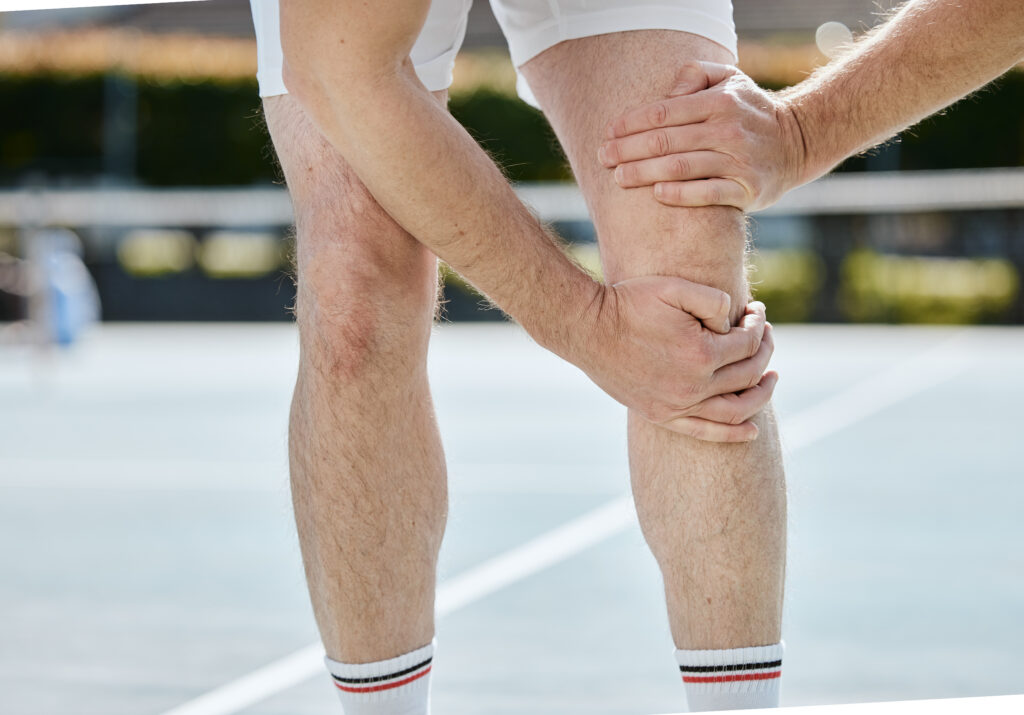
Patellar tendinopathy is a load-related tendon disorder that commonly causes pain just below the kneecap. It is frequently called jumper’s knee.
Jumping, running, squatting, and stair climbing can aggravate symptoms. The tendon is particularly stressed during activities requiring the quadriceps to control or produce force.
The condition is not limited to athletes. Recreational exercise, sudden increases in activity, and repetitive loading can contribute.
Patellar tendinopathy is different from patellofemoral pain and knee arthritis. The exact location of tenderness and the activities that reproduce symptoms help distinguish these conditions.
Complete rest is rarely the best long-term solution. Progressive tendon loading is generally a central component of rehabilitation.
Recovery often takes weeks to months. Persistent symptoms require reassessment, and sudden pain with loss of the ability to straighten the knee may indicate a tendon rupture requiring urgent medical evaluation.
Why Does Your Knee Hurt Just Below the Kneecap?
You bend your knees to pick something up from the floor and feel a sharp discomfort just beneath your kneecap.
You straighten your legs, and the pain fades.
Later, you notice the same sensation while walking upstairs.
Perhaps you have recently increased your exercise routine, started playing pickleball, or returned to basketball after several months away.
The knee feels reasonably comfortable during ordinary walking, but squatting, jumping, or pushing off the affected leg brings the discomfort back.
You may assume the problem is arthritis or cartilage damage.
However, when pain is concentrated near the lower edge of the kneecap and consistently appears during activities that load the quadriceps, another possibility is patellar tendinopathy.
Often called jumper’s knee, patellar tendinopathy involves pain and impaired load tolerance in the tendon connecting the kneecap to the shinbone.
At Doyle Chiropractic in Huntersville, North Carolina, Dr. Geoffrey Doyle evaluates anterior knee pain by identifying the structures involved and determining whether symptoms arise from the tendon, kneecap joint, surrounding muscles, or another condition.
Understanding how the patellar tendon functions helps explain why certain activities cause pain and why appropriate rehabilitation is usually more effective than simply avoiding movement.
What Is the Patellar Tendon?
The patellar tendon is a strong band of connective tissue located along the front of the knee.
It connects the lower portion of the patella, or kneecap, to the tibial tuberosity on the shinbone.
Although commonly called a tendon, it is sometimes referred to as the patellar ligament because it connects two bones.
Functionally, it forms an essential part of the knee’s extensor mechanism.
How the Quadriceps and Patellar Tendon Work Together
The quadriceps muscles are located along the front of the thigh.
They connect to the kneecap through the quadriceps tendon.
The patellar tendon continues from the kneecap to the shinbone.
Together, these structures allow the quadriceps to straighten the knee and control knee bending during weight-bearing activity.
For example, when you lower yourself into a squat, the quadriceps help control the movement.
When you rise from the squat, they generate force to straighten the knee.
The patellar tendon transfers this force through the kneecap to the lower leg.
During jumping, landing, sprinting, and rapid changes of direction, the tendon experiences substantial loading.
This makes it particularly important in sports and activities involving repeated knee extension.
What Is Patellar Tendinopathy?
Patellar tendinopathy is a condition characterized by localized tendon pain and reduced tolerance for activities that load the knee extensor mechanism.
It most commonly affects the proximal patellar tendon near its attachment to the lower edge of the kneecap.
The condition often develops gradually rather than following a single identifiable injury.
Patients may initially notice discomfort only after strenuous activity.
Over time, symptoms may begin during exercise or interfere with everyday movements.
Is Patellar Tendinopathy the Same as Patellar Tendinitis?
The terms are often used interchangeably, but they do not mean exactly the same thing.
Tendinitis suggests an inflammatory process.
Tendinopathy is a broader term describing tendon-related pain and impaired function.
In longstanding cases, tendon changes may involve altered collagen organization, changes in tendon structure, and impaired adaptation to loading rather than a straightforward inflammatory injury.
Inflammation may still play a role in some stages, but chronic patellar tendon pain should not be understood simply as persistent inflammation.
This distinction matters because treatment often focuses on improving the tendon’s ability to tolerate force rather than relying exclusively on anti-inflammatory measures.
Why Is It Called Jumper’s Knee?
Patellar tendinopathy is particularly associated with sports involving repeated jumping and landing.
Basketball and volleyball are common examples.
During jumping, the quadriceps generate substantial force through the patellar tendon.
During landing, the quadriceps help control knee bending while absorbing impact.
Repeated exposure to these demands can contribute to tendon symptoms when loading exceeds the tendon’s current capacity to recover and adapt.
However, the term jumper’s knee can be misleading.
You do not have to play a jumping sport to develop patellar tendinopathy.
Squatting, hill running, stair climbing, resistance training, and other repetitive activities may also place significant demands on the tendon.
Where Does Patellar Tendinopathy Hurt?
The most characteristic location is directly below the kneecap, near the tendon attachment at the inferior pole of the patella.
Patients can often point to a relatively small area of discomfort.
Tenderness may be reproduced when the affected portion of the tendon is pressed.
However, tenderness alone does not establish the diagnosis.
Why Pain Location Matters
Pain directly over the proximal patellar tendon suggests a different problem from discomfort located behind or around the kneecap.
Similarly, pain along the inner or outer knee joint line may indicate a meniscus or joint-related condition.
Pain near the tibial tuberosity may involve a different portion of the extensor mechanism.
Identifying the precise location helps narrow the possibilities before selecting treatment.
What Does Patellar Tendinopathy Feel Like?
Patients commonly describe an aching or sharp discomfort near the lower edge of the kneecap.
Symptoms may occur during activities such as:
- Squatting or lunging.
- Jumping and landing.
- Running, especially with changes in speed or direction.
- Climbing stairs.
- Rising from a low chair.
- Performing leg presses or knee-extension exercises.
- Participating in sports involving repeated acceleration and deceleration.
Some patients experience discomfort at the beginning of exercise that temporarily improves after warming up.
The pain may return later during activity or become more noticeable afterward.
Why Pain Can Improve During a Warm-Up
A temporary reduction in discomfort during exercise does not necessarily mean the tendon has recovered.
Changes in movement, tissue temperature, and pain processing may influence symptoms during activity.
The tendon may still be experiencing more loading than it can comfortably tolerate.
This is why athletes sometimes complete an activity despite tendon pain and experience increased discomfort later that day or the following morning.
Monitoring the response after exercise is an important part of rehabilitation.
What Causes Patellar Tendinopathy?
Patellar tendinopathy is generally associated with a mismatch between tendon loading and the capacity to tolerate that loading.
The problem is not necessarily that the tendon is inherently weak.
Rather, the demands placed on it may increase faster than it can adapt.
Sudden Increases in Exercise
A person who rapidly increases jumping, running, or resistance training may expose the tendon to substantially greater loading than usual.
Examples include returning to basketball after a long break, increasing the number of weekly pickleball sessions, or adding heavy squats to a new exercise routine.
A gradual increase in activity generally gives the tendon more opportunity to adapt.
Repetitive High-Force Loading
Some activities repeatedly require the quadriceps to generate or absorb substantial force.
Jumping, landing, sprinting, and rapid direction changes are particularly demanding.
The cumulative effect of these activities can contribute to symptoms, especially when recovery between sessions is inadequate.
Strength and Movement Capacity
Quadriceps strength, lower-extremity muscle function, and the ability to control force during landing or squatting may influence tendon loading.
However, there is no single movement pattern or muscle imbalance that explains every case.
A patient should not automatically be told that their patellar tendon pain is caused by weak glutes, tight hamstrings, or poor tracking of the kneecap.
These factors may be relevant in selected individuals, but they must be evaluated rather than assumed.
Age and Tendon Health
Patellar tendinopathy can occur in adolescents and adults, although other growth-related conditions must be considered in younger patients.
Tendon capacity may also be influenced by age, previous injury, overall health, and training history.
Some systemic medical conditions and medications can affect tendon health.
These factors become particularly important when symptoms are persistent or when a tendon injury occurs with relatively little force.
Patellar Tendinopathy Versus Patellofemoral Pain Syndrome
Both conditions can cause discomfort during squatting, stair climbing, and other knee-loading activities.
However, the primary source of pain is different.
Patellar Tendinopathy
Pain is typically localized near the patellar tendon, often just below the kneecap.
Symptoms are closely associated with loading the knee extensor mechanism.
Patellofemoral Pain
Patellofemoral pain generally produces discomfort around or behind the kneecap.
Patients may notice pain during squatting, stair climbing, running, or prolonged sitting with the knee bent.
The pain may be more diffuse and difficult to pinpoint.
Can Both Conditions Occur Together?
Yes.
A patient may have patellar tendon pain and patellofemoral joint symptoms at the same time.
The examination must consider the location of tenderness, activities that reproduce pain, and the overall clinical pattern.
Patellar Tendinopathy Versus Knee Arthritis
Knee osteoarthritis can also produce pain during stairs, squatting, and rising from a chair.
However, arthritis involves changes within the knee joint rather than primarily affecting the patellar tendon.
Patients with osteoarthritis may experience joint stiffness, reduced range of motion, swelling, or more generalized knee discomfort.
Patellar tendinopathy often produces more localized pain near the tendon attachment.
Age alone does not determine the diagnosis.
A middle-aged or older adult can develop patellar tendinopathy, and an athlete can have joint-related knee pain.
The examination should identify the most likely source rather than assuming that all knee discomfort in an older patient is arthritis.
Could the Pain Be a Patellar Tendon Tear?
A patellar tendon tear is different from chronic patellar tendinopathy.
Tendinopathy usually develops gradually and produces activity-related pain.
A significant tendon tear may occur suddenly during jumping, landing, or another forceful movement.
Warning signs include:
- A sudden pop or tearing sensation.
- Immediate pain and swelling.
- Difficulty bearing weight.
- Inability to actively straighten the knee.
- Inability to lift the straightened leg off the examination table.
- A visible or palpable defect in the tendon region.
A complete patellar tendon rupture disrupts the knee extensor mechanism and generally requires urgent orthopedic evaluation.
Patients with sudden loss of active knee extension should not attempt to exercise through the symptoms or wait for routine conservative treatment.
Why Imaging Findings Do Not Always Explain Tendon Pain
Ultrasound and MRI can demonstrate structural changes within the patellar tendon.
These may include tendon thickening, altered tissue appearance, or areas of abnormal signal.
However, tendon abnormalities are sometimes present in people who have no knee pain.
Similarly, symptom severity does not always correspond directly with the degree of structural change visible on imaging.
This means a scan showing patellar tendinopathy does not automatically establish that the tendon is responsible for every symptom.
The diagnosis should be supported by the patient’s history, localized tenderness, and characteristic response to tendon loading.
Imaging is especially useful when the diagnosis is uncertain, symptoms fail to improve as expected, or a partial tear or other structural injury is suspected.
Why Rest Alone May Not Solve the Problem
When patellar tendon pain develops, reducing aggravating activities may provide temporary relief.
However, avoiding all loading for an extended period can reduce muscle strength and tendon-loading capacity.
When normal activity resumes, symptoms may return because the tendon has not been adequately prepared for the demands placed on it.
This is why progressive rehabilitation is generally central to managing patellar tendinopathy.
The objective is not to repeatedly provoke significant pain.
It is to introduce appropriate loading that gradually improves the ability of the tendon and surrounding muscles to handle everyday and athletic demands.
At Doyle Chiropractic, Dr. Doyle evaluates whether the clinical presentation is consistent with patellar tendinopathy or whether another knee condition requires a different approach.
Progressive swelling, mechanical locking, significant instability, or persistent unexplained pain may warrant additional medical assessment.
The most important distinction is identifying whether the problem involves tendon-loading intolerance, patellofemoral joint pain, arthritis, or an injury that requires more urgent treatment.
That determination guides the rehabilitation plan and helps patients return to activity without repeatedly aggravating the same painful structure.
How Doyle Chiropractic Evaluates Patellar Tendinopathy
When a patient comes to Doyle Chiropractic with pain below the kneecap, Dr. Geoffrey Doyle begins by identifying the precise location of discomfort and determining which activities reproduce the symptoms.
The evaluation considers whether the problem developed gradually through repetitive loading or began suddenly following an injury.
This distinction helps separate patellar tendinopathy from conditions such as patellofemoral pain, meniscus injuries, arthritis, and patellar tendon tears.
Examining the Patellar Tendon
Dr. Doyle evaluates tenderness along the patellar tendon, particularly near its attachment to the lower edge of the kneecap.
The examination may include controlled squatting, resisted knee extension, and other movements that load the knee extensor mechanism.
A single-leg decline squat is sometimes used to assess load-related anterior knee pain.
However, no individual test confirms patellar tendinopathy.
Tenderness and pain during squatting must be interpreted alongside the patient’s history and the remainder of the examination.
Evaluating Strength and Movement
The quadriceps play a central role in transferring force through the patellar tendon.
Dr. Doyle may assess quadriceps strength, knee range of motion, and the ability to control movements such as squatting or stepping down.
Hip and ankle mobility may also be evaluated when they appear relevant to the patient’s activity limitations.
The purpose is not to assume that every case results from poor movement mechanics.
Instead, the examination identifies functional limitations that may influence rehabilitation.
When Imaging Is Appropriate
Patellar tendinopathy is often diagnosed clinically without immediate imaging.
Ultrasound or MRI may be considered when symptoms are persistent, the diagnosis remains uncertain, or a partial tendon tear is suspected.
These studies can demonstrate tendon thickening and structural changes.
However, imaging abnormalities may also appear in people without symptoms.
A scan should not be interpreted independently of the clinical examination.
Sudden loss of active knee extension or concern for a significant tendon rupture requires urgent orthopedic evaluation.
Treatment Options for Patellar Tendinopathy
The central principle of patellar tendinopathy treatment is improving the tendon’s ability to tolerate loading.
For most patients, this involves adjusting aggravating activities while gradually rebuilding strength and functional capacity.
Complete inactivity is generally not necessary unless another injury or medical condition requires protection.
Activity Modification Without Complete Rest
A patient who develops pain after increasing basketball, pickleball, or resistance training may benefit from temporarily reducing the most demanding activities.
This could mean limiting repeated jumping, deep loaded squats, or high-intensity running.
However, comfortable walking, selected strengthening exercises, and other tolerable activities can often continue.
The goal is to reduce excessive loading without allowing the leg to become unnecessarily deconditioned.
Isometric Strengthening
Isometric exercises involve producing muscle force without substantial joint movement.
For example, a patient may perform a controlled quadriceps contraction while maintaining a relatively fixed knee position.
Some patients experience short-term pain relief with isometric loading.
However, research has not consistently demonstrated that isometric exercise provides superior pain relief compared with other appropriate strengthening approaches.
It can be a useful option when selected according to the patient’s symptoms and functional capacity.
Progressive Resistance Training
Progressive strengthening is a major component of patellar tendinopathy rehabilitation.
Exercises may include modified squats, leg presses, step-ups, and other movements that progressively load the quadriceps and patellar tendon.
The resistance, range of motion, and frequency are adjusted according to the patient’s response.
Heavy slow resistance training is one established rehabilitation approach.
Eccentric exercises, which emphasize controlled muscle lengthening under load, are another option.
Neither approach is appropriate for every patient at every stage.
The important principle is gradual, structured progression rather than repeatedly performing exercises that cause substantial symptom aggravation.
Returning to Jumping and Sports
For patients who participate in jumping or running sports, rehabilitation eventually needs to address the demands of those activities.
Strengthening alone may not fully prepare the tendon for rapid force production and landing.
Later stages may include controlled jumping, landing drills, acceleration, and changes of direction.
These activities are introduced progressively after the patient demonstrates adequate strength and tolerance for earlier exercises.
Returning to full sports participation too quickly may contribute to recurring symptoms.
Chiropractic Care and Manual Therapy
At Doyle Chiropractic, Dr. Doyle may evaluate knee, hip, and ankle mobility when the examination identifies relevant restrictions or associated musculoskeletal dysfunction.
Selected manual techniques or chiropractic adjustments may help accompanying joint stiffness or movement-related discomfort.
However, manipulation has not been established as a treatment that directly repairs patellar tendon abnormalities.
Manual therapy should be considered an adjunct when appropriate, not a replacement for progressive tendon-loading rehabilitation.
Class IV Laser Therapy
Doyle Chiropractic offers Summus Class IV laser therapy for selected musculoskeletal conditions.
Photobiomodulation has been studied for various tendon disorders, but evidence specifically supporting Class IV laser therapy for patellar tendinopathy remains limited and inconsistent.
It has not been established as a substitute for progressive strengthening.
If considered, it should be discussed as an adjunctive treatment with uncertain condition-specific benefit.
Patellar Tendon Straps and Bracing
Some patients experience temporary symptom relief from an infrapatellar strap positioned below the kneecap.
The strap may alter local loading or pain perception during activity.
However, it does not correct the underlying tendon-loading problem.
A strap may be useful for selected activities, but rehabilitation remains important.
Injections and Other Medical Treatments
Patients with persistent symptoms may be referred for additional medical evaluation.
Several injection-based treatments have been investigated, including platelet-rich plasma and corticosteroid injections.
Evidence supporting platelet-rich plasma for patellar tendinopathy is inconsistent, and routine use is not clearly established.
Corticosteroid injections may provide short-term pain relief in some tendon disorders but can carry risks, including tendon weakening, and are generally approached cautiously around the patellar tendon.
Extracorporeal shockwave therapy has also been studied, with mixed results.
These treatments should not automatically replace an appropriately structured rehabilitation program.
When Surgery Is Considered
Surgery is uncommon for routine patellar tendinopathy.
It may be considered in selected patients with persistent, substantially limiting symptoms despite a prolonged course of appropriate nonsurgical treatment.
The decision requires careful orthopedic assessment.
Surgical outcomes vary, and recovery may require several months of rehabilitation.
Recovery and Functional Outcomes
Patellar tendinopathy often requires patience because tendon-loading capacity improves gradually.
Some patients notice meaningful improvement within several weeks.
Others require three to six months or longer of progressive rehabilitation, particularly when symptoms have been present for an extended period.
The timeline depends on the severity of symptoms, training demands, overall health, and consistency of rehabilitation.
Why Some Discomfort During Exercise May Be Acceptable
Rehabilitation does not always require every exercise to be completely pain-free.
Some structured tendon-loading programs allow mild, manageable discomfort during exercise.
However, pain should remain controlled and should not lead to a sustained increase in symptoms afterward.
A commonly used approach is to monitor discomfort during exercise and reassess symptoms over the following 24 hours.
If pain becomes substantially worse or remains elevated the next day, the loading program may need adjustment.
The objective is progressive adaptation, not repeatedly provoking severe pain.
Measuring Improvement
Recovery is evaluated through both symptoms and function.
A patient may initially struggle with stairs, squatting, or rising from a low chair.
Progress may include improved quadriceps strength, greater tolerance for loaded knee bending, and fewer symptoms after activity.
For recreational athletes in Huntersville and the Lake Norman area, later goals may include returning to pickleball, basketball, running, or resistance training.
A successful return requires sufficient tendon capacity for the demands of the activity rather than simply waiting until the knee stops hurting at rest.
The Dr. Doyle Perspective
When someone tells me they have pain in the front of their knee, I want to know exactly where they feel it.
Pain directly below the kneecap raises different possibilities than discomfort behind the kneecap or along the knee joint line.
That distinction helps guide the examination.
I also want to know what the patient was doing before symptoms developed.
If someone recently increased their running mileage, began playing pickleball several times a week, or returned to heavy squats after a long break, I consider whether the patellar tendon has been exposed to more loading than it was prepared to tolerate.
But I do not assume that every active patient with anterior knee pain has patellar tendinopathy.
Patellofemoral pain, arthritis, meniscus problems, and other conditions can produce overlapping symptoms.
I examine the tendon, evaluate knee movement, and consider how the patient responds to activities that load the quadriceps.
One point I emphasize is that tendons need appropriate loading to remain strong.
Simply avoiding every activity that causes discomfort may reduce symptoms temporarily, but it does not necessarily prepare the tendon for returning to normal exercise.
At the same time, repeatedly pushing through significant pain is not a good rehabilitation strategy.
I prefer a measured approach.
We identify which activities are aggravating the tendon, reduce excessive loading, and progressively rebuild strength.
As the patient improves, we work toward the specific activities they want to resume.
For one person, that may mean climbing stairs comfortably.
For another, it may mean returning to basketball or completing a demanding leg workout.
I also explain that an MRI showing tendon degeneration does not automatically mean the tendon is severely damaged or that surgery is necessary.
Imaging findings must be considered alongside symptoms and functional ability.
If a patient experiences sudden pain, significant weakness, or an inability to actively straighten the knee, that is a different situation.
Those findings raise concern for a structural injury that requires prompt medical evaluation.
My goal is to identify the actual source of anterior knee pain and help patients rebuild the strength and loading tolerance necessary for the activities that matter to them.
Our Clinical Experience
The following hypothetical examples illustrate how similar knee complaints may require different treatment approaches.
Presentation One: Knee Pain After Increasing Pickleball
A recreational pickleball player develops gradually increasing pain just below the kneecap after adding several weekly sessions.
The discomfort is most noticeable during quick starts, stops, and lunging movements.
The examination identifies localized patellar tendon tenderness and pain during selected loading activities.
This presentation may be consistent with patellar tendinopathy.
Management could involve temporarily reducing high-demand court activity while beginning a progressive strengthening program.
Presentation Two: Pain Behind the Kneecap
Another patient reports diffuse discomfort around the front of the knee when walking downstairs or sitting for prolonged periods.
The pain is not clearly localized to the patellar tendon.
The examination suggests a patellofemoral pain pattern.
This patient may benefit from a rehabilitation program directed toward quadriceps and hip strength, movement tolerance, and activity modification rather than a tendon-specific loading program alone.
Presentation Three: Sudden Injury During Basketball
A patient experiences a sudden pop in the front of the knee while jumping.
The knee becomes painful and swollen, and the patient cannot actively straighten the leg.
This presentation raises concern for a significant injury to the knee extensor mechanism, including patellar tendon rupture.
Urgent orthopedic evaluation is necessary.
These examples are hypothetical and illustrate clinical reasoning rather than actual patient histories or guaranteed outcomes.
Frequently Asked Questions
Is patellar tendinopathy the same as jumper’s knee?
Yes. Jumper’s knee is the common name for patellar tendinopathy, a load-related condition affecting the patellar tendon.
Can I keep exercising with patellar tendinopathy?
Often, yes, with appropriate modifications. Activities that substantially aggravate symptoms may need to be reduced while a progressive strengthening program is introduced.
Should I stretch my patellar tendon?
Gentle mobility exercises may help associated stiffness, but stretching alone does not reliably restore tendon-loading capacity. Progressive strengthening is generally more important.
How long does patellar tendinopathy take to heal?
Recovery varies. Some patients improve within several weeks, while longstanding cases may require several months or longer of rehabilitation.
Does patellar tendinopathy show up on MRI?
MRI and ultrasound may demonstrate tendon thickening or structural abnormalities. However, similar findings can occur in people without pain, so imaging must be interpreted alongside the clinical examination.
Can patellar tendinopathy turn into a tendon rupture?
Chronic tendon abnormalities may be associated with reduced tendon capacity, but most patients with patellar tendinopathy do not experience a complete rupture. Sudden pain accompanied by loss of active knee extension requires urgent evaluation.
Can chiropractic care help patellar tendinopathy?
Chiropractic care may help associated knee, hip, or ankle dysfunction when clinically relevant. However, adjustments do not directly repair the tendon, and progressive loading remains a central component of rehabilitation.
Final Thoughts
Patellar tendinopathy is a common cause of pain just below the kneecap, particularly during jumping, squatting, running, and stair climbing.
It often develops when the demands placed on the patellar tendon exceed its current ability to tolerate repetitive loading.
Although reducing aggravating activities may help control symptoms, complete rest alone rarely restores the strength and capacity needed for long-term recovery.
Progressive rehabilitation is generally the foundation of treatment.
At Doyle Chiropractic in Huntersville, North Carolina, Dr. Geoffrey Doyle evaluates anterior knee pain by considering tendon tenderness, quadriceps function, knee mechanics, and other possible sources of discomfort.
For patients throughout Huntersville, Cornelius, Davidson, and the Lake Norman area, the goal is to identify the correct diagnosis, restore functional strength, and support a gradual return to normal activity.
Whether the objective is climbing stairs without discomfort, returning to recreational sports, or completing a regular exercise program, successful recovery depends on matching tendon loading to the patient’s current capacity and progressing appropriately.
The goal is not simply to make the knee feel better at rest, but to help the tendon tolerate the activities the patient wants to perform.