Key Takeaways
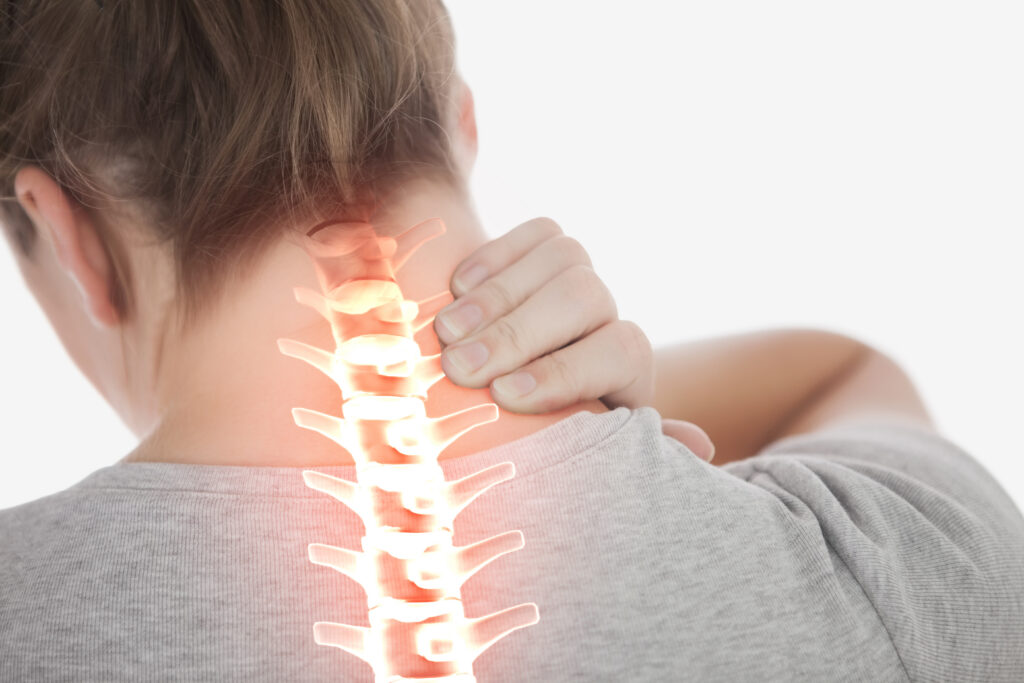
- Cervical radiculopathy occurs when a nerve root in the neck becomes irritated or compressed. Symptoms can travel into the shoulder, arm, forearm, or hand, sometimes with surprisingly little neck pain.
- Disc herniations and degenerative narrowing are common structural contributors. However, an abnormal cervical MRI does not automatically establish which nerve is causing symptoms.
- The pattern of pain, numbness, reflex changes, and muscle weakness helps identify possible nerve-root involvement. These findings must be interpreted together because symptoms do not always follow perfect textbook distributions.
- Many patients improve with appropriate nonsurgical management. Education, activity modification, therapeutic exercise, selected manual treatment, and other conservative measures may be reasonable depending on neurological findings and symptom severity.
- Progressive weakness, significant neurological deficits, spinal cord symptoms, or other concerning findings change the treatment pathway. Some patients require prompt MRI, medical management, specialist consultation, or surgery.
- Cervical radiculopathy is different from cervical myelopathy. Nerve-root irritation primarily affects structures supplied by the involved nerve, while spinal cord compression can affect walking, balance, hand coordination, and other neurological functions.
“My Arm Hurts, but They Keep Telling Me It’s Coming From My Neck.”
A patient may arrive at Doyle Chiropractic and explain:
“My shoulder and arm have been hurting for weeks. I thought I injured my shoulder, but someone told me I have a pinched nerve in my neck.”
Sometimes the patient has neck pain.
Sometimes the neck barely hurts at all.
The main complaint may be:
- Burning pain down the arm
- Tingling in the fingers
- Numbness in part of the hand
- Pain around the shoulder blade
- Weakness when lifting or gripping
- Symptoms that worsen in certain neck positions
That can be confusing because the most painful location may be far from the actual source.
To understand why, we need to look at how the cervical nerves travel from the spine into the arm.
What Is Cervical Radiculopathy?
The cervical spine contains seven vertebrae, labeled C1 through C7.
Spinal nerve roots exit the cervical region and contribute to the nerves supplying the:
- Shoulders
- Arms
- Forearms
- Hands
Cervical radiculopathy describes a condition in which a cervical nerve root becomes irritated or compressed, producing neurological symptoms along its distribution.
These symptoms may include:
- Radiating pain
- Numbness
- Tingling
- Altered sensation
- Muscle weakness
- Reflex changes
The condition is often informally described as a pinched nerve in the neck.
That phrase is understandable, although nerve-root irritation does not always require a nerve to be physically trapped between two structures.
Inflammatory and mechanical factors can both contribute.
Why a Neck Problem Can Hurt All the Way Into Your Hand
Nerves carry information between the spinal cord and the rest of the body.
Sensory fibers transmit information such as touch and sensation.
Motor fibers contribute to muscle activation.
When a cervical nerve root becomes irritated, the brain may perceive symptoms along the nerve’s distribution rather than only at the neck.
That helps explain why someone can experience significant arm pain even when the cervical spine itself feels relatively comfortable.
For example, a patient may report:
“The pain starts near my shoulder blade, travels down the back of my arm, and sometimes reaches my fingers.”
That distribution raises questions about cervical nerve involvement.
But the pattern must still be examined rather than assumed.
A Pinched Nerve Is Not the Same as a Tight Muscle
Muscles around the neck and shoulder can produce referred pain.
Trigger points and other musculoskeletal problems may cause discomfort extending away from the original tissue.
However, true cervical radiculopathy involves a nerve root.
That distinction becomes especially important when the patient develops:
- Objective sensory changes
- Reflex abnormalities
- Muscle weakness
- Characteristic radiating symptoms
A painful muscle and an irritated nerve root may produce overlapping complaints, but they are not the same diagnosis.
They also may not require the same treatment.
The Two Common Structural Contributors: Disc Herniation and Degenerative Narrowing
Cervical radiculopathy can develop through several mechanisms.
Two important contributors are cervical disc pathology and degenerative narrowing around the nerve roots.
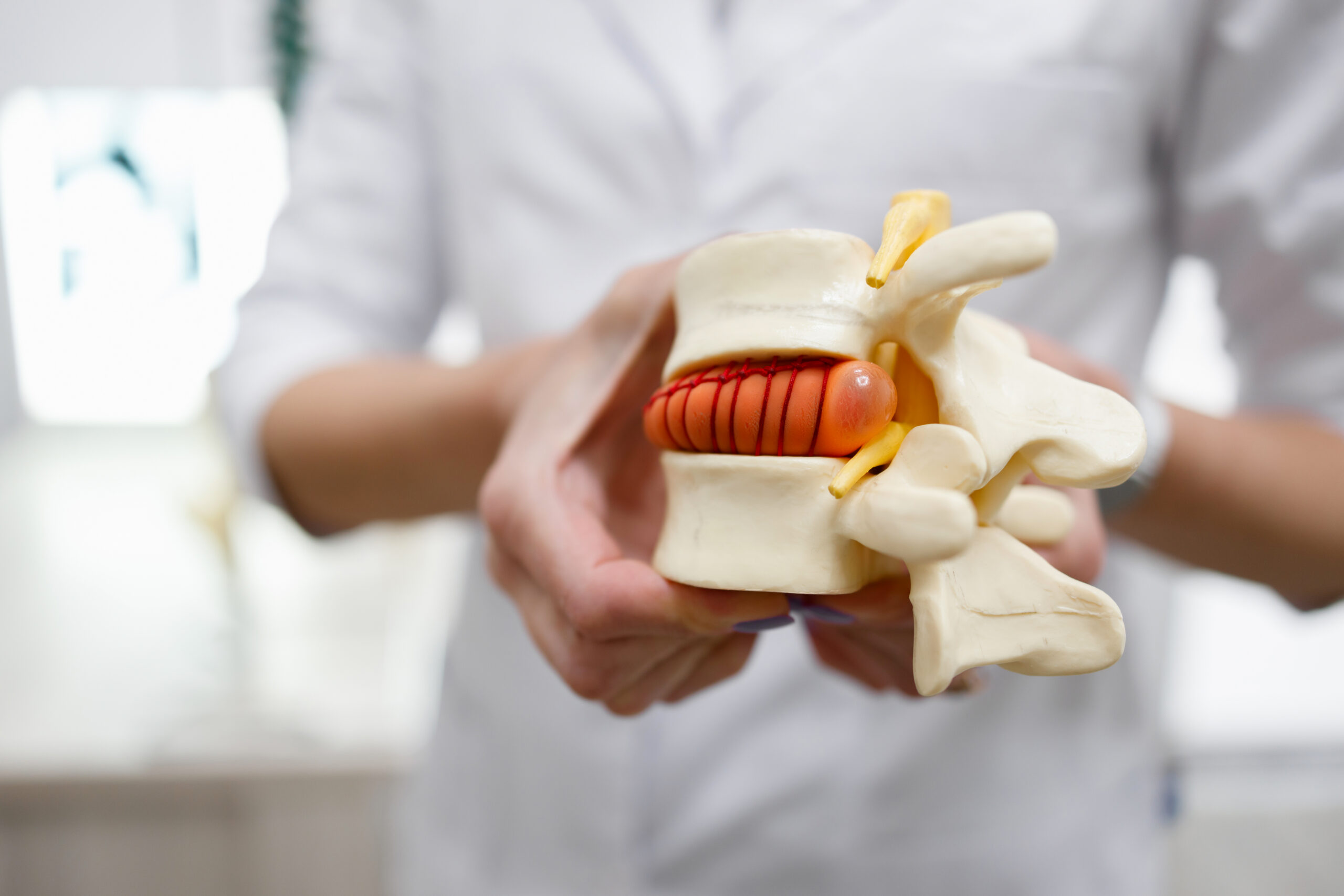
Cervical disc herniation
Intervertebral discs sit between most cervical vertebrae.
When disc material protrudes or herniates into a region occupied by a nerve root, it may contribute to:
- Mechanical compression
- Local inflammation
- Nerve-root irritation
Disc herniations can occur in younger or middle-aged adults as well as older individuals.
A herniation does not always produce radiculopathy.
Its significance depends on the relationship between the disc, the nerve, and the patient’s symptoms.
Cervical foraminal stenosis
The neural foramina are openings through which nerve roots exit the spine.
Age-related changes can narrow these openings.
Contributing structures may include:
- Disc-height loss
- Osteophytes
- Degenerative joint changes
- Other anatomical changes
When narrowing affects a nerve root, radicular symptoms may develop.
But foraminal narrowing on an MRI can also exist without symptoms.
The imaging must match the clinical findings.
Which Cervical Nerve Is Involved?
Different cervical nerve roots contribute to different muscle groups, sensory regions, and reflexes.
Clinicians use these relationships to help localize possible nerve-root involvement.
The patterns are useful, but they are not absolute.
| Nerve root | Common symptom region | Possible motor or reflex findings |
|---|---|---|
| C5 | Shoulder and lateral upper arm | Deltoid weakness; possible biceps reflex changes |
| C6 | Lateral forearm, thumb, and sometimes index finger | Biceps or wrist-extension weakness; brachioradialis reflex changes |
| C7 | Posterior arm or forearm, often toward the middle finger | Triceps weakness; triceps reflex changes |
| C8 | Medial forearm and ulnar-side fingers | Finger-flexion or grip-related weakness |
These are simplified clinical patterns.
Real patients do not always follow a perfectly defined dermatome.
C8 findings can also overlap with symptoms caused by ulnar nerve problems farther down the arm.
That is why a clinician should not diagnose a particular cervical nerve root solely from which finger feels numb.
Pain Distribution Is a Clue, Not a Final Diagnosis
Suppose a patient reports tingling in the thumb and index finger.
That could raise concern for C6 nerve-root involvement.
But other conditions, including median nerve problems, can produce symptoms in overlapping regions.
Similarly, symptoms involving the ring and little fingers may raise questions about:
- C8 nerve-root involvement
- Ulnar neuropathy
- Other neurological conditions
The physical examination helps distinguish these possibilities.
The goal is to identify the anatomical source rather than simply matching one symptom to a chart.
Why Cervical Radiculopathy Sometimes Feels Like a Shoulder Injury
The shoulder and cervical spine share overlapping symptom regions.
A patient with cervical radiculopathy may feel pain around the:
- Shoulder blade
- Upper shoulder
- Lateral arm
That can resemble certain shoulder disorders.
The difference often becomes clearer when we examine how symptoms respond to movement.
A shoulder problem may be reproduced by particular shoulder movements or resisted muscle testing.
A cervical nerve-root problem may respond more strongly to neck positioning or neurological provocation.
However, these patterns are not absolute.
A patient can also have both a shoulder disorder and cervical radiculopathy.
The Shoulder Blade Can Be the First Place Symptoms Appear
Some patients with cervical radiculopathy report pain near the scapula before they develop obvious arm symptoms.
They may initially describe:
“A deep ache underneath my shoulder blade.”
Over time, symptoms may extend farther down the arm.
This does not mean every case of shoulder-blade pain originates from the cervical spine.
Muscular, thoracic, shoulder, and other conditions can cause pain in the same region.
But when scapular pain is accompanied by radiating arm symptoms, cervical involvement becomes an important possibility.
Neck Position Can Change Arm Symptoms
Certain cervical movements may increase or decrease nerve-root symptoms.
For example, a patient may notice increased arm pain when:
- Looking upward
- Turning toward the symptomatic side
- Holding the neck in one position for a prolonged period
Some patients find temporary relief in different positions.
These changes can provide useful information during the examination.
However, symptom relief or reproduction with one movement does not independently confirm cervical radiculopathy.
The findings must be considered together.
Why Looking Up or Turning Your Head Can Make Symptoms Worse
The cervical foramina change dimensions during neck movement.
Certain combinations of extension and rotation can reduce available space around some nerve roots.
In a patient with relevant foraminal narrowing or nerve sensitivity, those positions may reproduce familiar arm symptoms.
That is one reason a clinician may carefully assess neck motion.
But provocative movements should not be forced aggressively, particularly when neurological symptoms are severe or concerning.
The objective is to gather useful information safely.
Arm Pain Can Be More Severe Than Neck Pain
A patient may be surprised that the neck is identified as the source when most of the discomfort is in the arm.
But cervical radiculopathy does not require severe neck pain.
Some patients experience predominantly:
- Arm pain
- Forearm burning
- Hand tingling
- Finger numbness
The relative absence of neck pain does not exclude cervical nerve-root involvement.
Similarly, having neck pain and arm pain does not automatically prove radiculopathy.
The neurological findings and clinical pattern remain essential.
Numbness and Tingling Deserve More Specific Questions
Patients frequently use the words numbness and tingling interchangeably.
During evaluation, it helps to clarify whether the patient experiences:
- Pins and needles
- Burning
- Reduced touch sensation
- Electric sensations
- Complete loss of sensation
- Intermittent symptoms
- Constant symptoms
We also want to know:
- Which fingers are involved?
- Is the entire hand affected?
- Does the symptom travel down the arm?
- Does neck movement change it?
- Does elbow or wrist positioning change it?
Those details help distinguish cervical radiculopathy from peripheral nerve entrapment and other neurological problems.
Weakness Is Different From Pain-Limited Movement
A patient may say:
“My arm feels weak.”
But weakness can mean several things.
Sometimes the arm hurts so much that the patient avoids using it.
Other times there is genuine loss of muscular force because nerve function is impaired.
That distinction matters.
Objective weakness may be identified through:
- Muscle testing
- Grip assessment
- Comparison with the opposite arm
- Functional testing
- Other neurological examination findings
True motor weakness associated with cervical radiculopathy can change the urgency of evaluation.
Progressive weakness deserves particularly prompt attention.
Reflex Changes Can Help Identify Nerve-Root Involvement
Certain reflexes provide information about neurological pathways.
For example:
- Biceps reflex
- Brachioradialis reflex
- Triceps reflex
may be evaluated when cervical radiculopathy is suspected.
An abnormal reflex does not independently establish the diagnosis.
But when reflex findings correspond with weakness, sensory changes, symptoms, and imaging, they can strengthen the clinical assessment.
Cervical Radiculopathy Is Not the Same as Carpal Tunnel Syndrome
Carpal tunnel syndrome involves the median nerve at the wrist.
Cervical radiculopathy involves a nerve root near the cervical spine.
Both can produce:
- Hand tingling
- Numbness
- Discomfort
- Weakness in certain circumstances
But their anatomical origins are different.
A patient whose symptoms occur primarily during sustained wrist positioning may require a different evaluation from someone whose symptoms clearly change with cervical movement and extend from the neck or shoulder into the arm.
The two conditions can also coexist.
Cubital Tunnel Syndrome Can Create Similar Confusion
Cubital tunnel syndrome involves irritation or compression of the ulnar nerve near the elbow.
It commonly affects sensation toward the:
- Ring finger
- Little finger
That can overlap with symptoms associated with lower cervical nerve-root involvement.
A patient who experiences symptoms primarily when the elbow remains bent may raise suspicion for a peripheral ulnar nerve problem.
A patient with associated neck pain, radiating arm symptoms, and corresponding neurological findings may raise greater concern for cervical involvement.
Again, examination is necessary.
What About “Double Crush Syndrome”?
Patients sometimes hear that a nerve is being compressed in two places.
The term double crush syndrome is used when proximal and distal nerve problems are thought to coexist or interact.
For example, a patient might have cervical nerve-root pathology along with carpal tunnel syndrome.
Coexisting problems are possible.
However, the mechanisms and clinical significance of double crush remain complex, and the term should not become a blanket explanation for every patient with neck pain and hand numbness.
Each suspected site requires appropriate evaluation.
MRI Findings Need to Match the Neurological Examination
A cervical MRI may show:
- Disc degeneration
- Disc bulging
- Disc herniation
- Foraminal narrowing
- Spinal canal stenosis
But degenerative findings are common, especially with age.
The question is whether the finding corresponds to the symptomatic nerve root.
For example, if a patient has a clinical pattern consistent with C7 radiculopathy, a relevant finding at C6-C7 may support that assessment.
But a report showing multilevel degeneration does not mean every abnormal level is producing symptoms.
This is the same principle that applies throughout musculoskeletal imaging:
The scan and the patient must tell a reasonably consistent story.
When Is an MRI Appropriate?
Not every patient with suspected cervical radiculopathy requires an immediate MRI.
For an uncomplicated presentation without significant or progressive neurological deficits or other concerning findings, an initial period of appropriate conservative management may be reasonable.
MRI becomes more important when there is concern for:
- Progressive neurological loss
- Significant motor weakness
- Cervical spinal cord involvement
- Serious underlying pathology
- Persistent symptoms despite appropriate management
- A structural problem that may require specialist intervention
The decision depends on the patient’s history, examination, and clinical course.
Cervical Radiculopathy and Cervical Myelopathy Must Be Distinguished
This is one of the most important safety distinctions in cervical spine care.
Cervical radiculopathy involves a spinal nerve root.
Cervical myelopathy involves dysfunction of the spinal cord, often related to compression.
Myelopathy may produce symptoms such as:
- Difficulty walking
- Balance problems
- Hand clumsiness
- Trouble with buttons or handwriting
- Loss of fine motor control
- Abnormal reflexes
- Weakness affecting multiple regions
These findings require a different level of concern.
A patient with suspected degenerative cervical myelopathy should receive prompt medical and specialist evaluation rather than routine treatment for uncomplicated mechanical neck pain.
Dropping Objects Can Mean More Than One Thing
Patients sometimes report:
“I’ve started dropping things.”
That may occur because of:
- Pain
- Reduced grip strength
- Peripheral nerve dysfunction
- Cervical radiculopathy
- Cervical spinal cord dysfunction
- Other neurological conditions
The symptom deserves clarification.
Is the patient dropping objects because gripping hurts?
Because the fingers are numb?
Because the hand is genuinely weak?
Or because fine motor coordination has deteriorated?
Those distinctions can substantially change the clinical pathway.
Not Every Arm Symptom Comes From a Pinched Nerve
A careful evaluation must also consider other possible causes of arm symptoms.
Depending on the history, these may include:
- Shoulder disorders
- Peripheral nerve entrapment
- Brachial plexus disorders
- Musculoskeletal referred pain
- Certain vascular conditions
- Other neurological or systemic disorders
Sudden arm weakness or numbness associated with facial drooping, speech difficulty, or other stroke-like symptoms requires emergency evaluation.
Chest pressure, shortness of breath, or other symptoms suggesting a cardiovascular emergency also require immediate medical attention.
The presence of arm pain does not automatically make the cervical spine responsible.
Many Patients Improve Without Surgery
One reassuring aspect of cervical radiculopathy is that many patients experience substantial improvement over time with appropriate nonsurgical management.
Depending on the condition, conservative care may involve:
- Education
- Activity modification
- Therapeutic exercise
- Progressive strengthening
- Selected manual treatment
- Medical management when appropriate
- Other diagnosis-specific interventions
However, improvement is not guaranteed, and the expected course depends on the underlying cause and neurological findings.
Patients with progressive motor loss, myelopathy, or other concerning conditions should not simply be told to wait for spontaneous recovery.
The Goal Is More Than Making the Arm Stop Tingling
Symptom reduction is important.
But recovery should also address the patient’s ability to:
- Sleep comfortably
- Work at a computer
- Drive
- Lift
- Exercise
- Perform household activities
- Use the hand normally
- Return to recreational activities
For someone with neurological involvement, improvement in strength and function may be particularly important.
The plan should reflect the actual deficits rather than focusing only on neck pain.
When Cervical Radiculopathy Deserves Prompt Evaluation
A patient should seek timely evaluation when symptoms include:
- Persistent radiating arm pain
- Ongoing numbness or tingling
- Noticeable weakness
- Increasing difficulty gripping
- Symptoms that are progressively worsening
- Significant functional limitation
More urgent assessment is appropriate for:
- Progressive motor weakness
- New significant neurological deficits
- Difficulty walking or maintaining balance
- Increasing hand clumsiness
- Suspected spinal cord involvement
- Significant trauma
- Fever or other signs suggesting serious pathology
Sudden stroke-like symptoms require emergency medical evaluation.
The Most Important Question Is Not Simply “Do I Have a Pinched Nerve?”
A more useful clinical discussion asks:
Does the symptom pattern suggest a cervical nerve root?
Which neurological findings support that possibility?
Could the symptoms instead be coming from the shoulder, elbow, wrist, or another source?
Does imaging, when indicated, match the examination?
Is the nerve irritated, or is there evidence of significant functional loss?
Is conservative management appropriate, or does the patient need medical, neurological, or surgical evaluation?
Those questions turn a familiar phrase—pinched nerve—into a more precise diagnosis and treatment plan.
How Doyle Chiropractic Evaluates Cervical Radiculopathy
When a patient comes to Doyle Chiropractic with neck pain, radiating arm symptoms, or numbness in the fingers, the first priority is determining whether the presentation is consistent with cervical nerve-root involvement.
Dr. Geoffrey Doyle evaluates the relationship between the patient’s symptoms, neurological findings, movement patterns, and any available imaging.
The history helps establish whether symptoms began:
- Suddenly after an injury
- Gradually without a clear event
- Following an increase in physical activity
- During prolonged work or computer use
- Alongside progressive weakness or sensory changes
The examination then looks for findings that help distinguish cervical radiculopathy from shoulder disorders, peripheral nerve entrapments, and other neurological conditions.
An important part of that evaluation is determining whether the patient is an appropriate candidate for conservative care or needs additional medical investigation.
The Neurological Examination Helps Determine the Treatment Pathway
When cervical radiculopathy is suspected, the examination may include assessment of muscle strength, sensation, reflexes, and neurological function.
Particular attention may be given to the:
- Deltoid
- Biceps
- Wrist extensors
- Triceps
- Finger flexors
- Small muscles of the hand
These muscles receive contributions from different neurological pathways.
Testing can help identify patterns consistent with particular cervical nerve roots.
The examination may also include selected provocative tests, such as Spurling’s test, and tests that assess symptom responses to cervical positioning or neural loading.
No single test establishes cervical radiculopathy with certainty.
The diagnosis becomes more convincing when the history, neurological examination, and imaging—when indicated—support the same conclusion.
Importantly, progressive weakness or findings suggesting spinal cord dysfunction should change the treatment plan rather than simply prompting more intensive conservative treatment.
Conservative Treatment Begins With the Correct Diagnosis
For patients with uncomplicated cervical radiculopathy who do not have progressive neurological deficits or other concerning findings, nonsurgical treatment may be appropriate.
The plan depends on:
- Symptom severity
- Irritability
- Neurological findings
- Functional limitations
- Underlying structural contributors
- Response to treatment
Early management may emphasize reducing activities or positions that repeatedly aggravate symptoms while maintaining comfortable movement.
As symptoms improve, treatment can progress toward strengthening, conditioning, and restoration of normal function.
The goal is not to immobilize the neck indefinitely.
It is to help the patient return to ordinary activities without repeatedly provoking significant nerve-related symptoms.
Therapeutic Exercise and Progressive Rehabilitation
Exercise is commonly incorporated into conservative management of cervical radiculopathy.
Depending on the patient’s examination, rehabilitation may address:
- Comfortable cervical movement
- Neck muscle endurance
- Deep cervical flexor function
- Scapular strength
- Shoulder function
- Thoracic mobility
- General physical conditioning
These regions work together during everyday activities.
For example, a patient who spends much of the day at a computer may benefit from improved neck and shoulder endurance along with adjustments to prolonged positioning.
Someone whose symptoms developed during physical work may eventually require a program emphasizing lifting, carrying, and upper-extremity strength.
Exercise selection should be guided by the patient’s neurological status and symptom response.
Exercises that repeatedly produce substantial worsening of arm pain, progressive numbness, or weakness should not simply be pushed through.
Nerve Mobility Exercises Require Individualization
Some rehabilitation programs incorporate exercises commonly called nerve glides or neural mobilization.
These movements are intended to introduce controlled movement and loading through portions of the nervous system.
They may be appropriate for selected patients.
However, nerve-related symptoms can be highly irritable.
Aggressive stretching or repeatedly forcing the arm into positions that reproduce severe tingling or burning may worsen symptoms.
Neural mobilization is not a technique for physically pulling a compressed nerve out from between two bones.
It is a carefully dosed rehabilitation strategy that may help selected patients tolerate movement more comfortably.
Chiropractic and Manual Treatment
Chiropractic or manual treatment may be incorporated into the care of appropriately selected patients with cervical radiculopathy.
Depending on the examination, treatment may address mechanical findings involving the:
- Cervical spine
- Thoracic spine
- Shoulder girdle
- Surrounding musculature
Potential goals include improving comfort, mobility, and participation in rehabilitation.
However, manual treatment should not be presented as mechanically pushing a herniated disc back into place or permanently opening a narrowed neural foramen.
Cervical manipulation is not automatically appropriate for every patient with radiculopathy.
Treatment selection must account for neurological deficits, structural abnormalities, vascular and other contraindications, and the possibility of cervical myelopathy.
Patients with suspected spinal cord compression, progressive neurological loss, instability, fracture, or other serious pathology require appropriate medical evaluation rather than routine cervical manipulation.
When manual treatment is considered, its potential benefits, alternatives, and risks should be discussed with the patient.
Cervical Traction and Nonsurgical Spinal Decompression
Cervical traction may be considered as part of conservative management for selected patients with cervical radiculopathy.
Some patients experience symptom relief when gentle traction reduces mechanical loading or changes forces around the cervical structures.
Traction may be used alongside therapeutic exercise and other conservative interventions.
However, responses vary.
It should not be assumed that every patient with a disc herniation or foraminal narrowing will benefit.
Commercially marketed nonsurgical spinal decompression should also be distinguished from surgical decompression.
These are fundamentally different interventions.
Nonsurgical traction-based treatment does not physically remove an osteophyte, permanently enlarge a stenotic foramen, or reliably reverse a disc herniation.
Patients with suspected myelopathy, instability, significant neurological deterioration, or other contraindications require a different pathway.
Class IV Laser Therapy
Class IV laser therapy may be considered as an adjunct for selected musculoskeletal symptoms when clinically appropriate.
In a patient with cervical radiculopathy, its potential role should be evaluated in the context of the underlying diagnosis and overall treatment plan.
Evidence supporting laser treatment specifically for cervical nerve-root compression is limited and does not establish that laser can reverse significant structural compression.
Laser therapy should not be represented as a treatment that:
- Removes a cervical disc herniation
- Eliminates bony foraminal stenosis
- Restores progressive neurological weakness
- Reverses cervical myelopathy
- Replaces necessary surgical decompression
When used, it should remain an adjunct rather than the foundation of management for significant neurological pathology.
The Dr. Doyle Perspective
“When somebody comes in telling me they have a pinched nerve in their neck, I want to know what that actually means for them. Is it pain running down the arm? Are certain fingers numb? Is there weakness? Does turning their head reproduce it? I also want to know whether the MRI findings match what I’m seeing on the examination. If their strength is good, their neurological findings are stable, and the symptoms behave like an uncomplicated radiculopathy, conservative treatment may be very reasonable. But if they’re losing strength, having trouble with their hands, or developing balance problems, that’s a different situation. The goal isn’t to treat every pinched nerve the same way. It’s to recognize which patients can reasonably improve with conservative care and which patients need something more.”
— Dr. Geoffrey Doyle, DC
Our Clinical Experience
Consider a patient who develops neck discomfort followed by pain traveling into the shoulder and down the arm.
The symptoms worsen during prolonged computer work and certain neck positions. Neurological testing reveals no progressive weakness or spinal cord findings.
That patient may be an appropriate candidate for a carefully monitored conservative treatment program.
Another patient may have very little neck pain but experience persistent tingling into the thumb and index finger. Examination may raise suspicion for cervical nerve-root involvement, but carpal tunnel syndrome or another peripheral nerve condition must also be considered.
A third patient may have cervical foraminal stenosis on MRI, radiating arm pain, and weakness corresponding to the affected nerve root. Depending on severity and progression, medical or spine-specialist consultation may become more important.
And another patient may report difficulty buttoning a shirt, worsening balance, and increasing hand clumsiness.
That presentation raises concern for possible cervical spinal cord involvement.
It should not be managed as an ordinary pinched nerve without appropriate medical investigation.
These patients may all describe their condition as:
“A nerve problem in my neck.”
But the clinical implications are very different.
Medication Can Be an Appropriate Part of Treatment
Some patients prefer to avoid medication when possible.
Others require medical symptom management to sleep, function, or participate in rehabilitation.
Depending on the patient’s condition and medical history, a prescribing clinician may consider medications for:
- Pain
- Inflammatory symptoms
- Neuropathic pain
- Other associated symptoms
The benefits and risks depend on the medication.
Certain drugs used for neuropathic pain may have limited or inconsistent benefits for radicular symptoms and can cause adverse effects.
Medication decisions should therefore be individualized.
Conservative rehabilitation and medical treatment are not necessarily competing approaches.
A patient may benefit from coordinated care involving both.
When Cervical Epidural Steroid Injections May Be Considered
Some patients with persistent cervical radicular pain may be referred for consideration of an epidural steroid injection.
These injections are intended to deliver medication near relevant spinal structures.
They may provide symptom relief for selected patients, although benefits can vary and are often temporary.
Cervical epidural procedures also carry risks, including rare but serious complications.
They should be performed only by appropriately qualified clinicians after careful patient selection and informed consent.
An injection does not necessarily correct the structural cause of nerve compression.
In some cases, symptom reduction may allow the patient to participate more comfortably in rehabilitation.
When Surgery May Be Appropriate
Most patients with uncomplicated cervical radiculopathy do not automatically require surgery.
However, surgical evaluation may become appropriate when there is:
- Progressive motor weakness
- Significant neurological impairment
- Persistent disabling radicular pain despite appropriate nonsurgical management
- Structural nerve compression that corresponds with the clinical presentation
- Other surgically remediable pathology
The specific surgical procedure depends on the anatomy and diagnosis.
Options may include:
- Anterior cervical discectomy and fusion (ACDF)
- Cervical disc replacement in selected patients
- Posterior cervical foraminotomy in selected cases
These procedures have different indications, benefits, limitations, and risks.
A spine surgeon can help determine which approach, if any, is appropriate.
Cervical Myelopathy Changes the Conversation
If a patient has evidence of spinal cord dysfunction, treatment decisions become more urgent and potentially more complex.
Degenerative cervical myelopathy can be progressive.
Depending on severity and clinical findings, surgical decompression may be recommended to prevent further neurological deterioration.
Symptoms that raise concern include:
- Increasing hand clumsiness
- Difficulty walking
- Balance deterioration
- Progressive weakness
- Abnormal reflex patterns
- Other signs of spinal cord dysfunction
Patients with suspected myelopathy require prompt medical and spine-specialist evaluation.
Routine conservative treatment for uncomplicated neck pain should not delay that assessment.
Recovery Is About Restoring Neurological and Functional Capacity
Pain reduction is important, but it is not the only measure of progress.
Depending on the patient’s original deficits, recovery may be monitored through:
- Arm pain intensity
- Frequency of tingling
- Sensory changes
- Muscle strength
- Reflex findings
- Cervical movement
- Sleep quality
- Work tolerance
- Ability to lift or carry
- Hand function
A patient whose pain decreases but whose weakness continues to worsen is not necessarily improving overall.
That distinction is particularly important in neurological conditions.
Improvement May Occur Before Every Symptom Disappears
Recovery from cervical radiculopathy is not always perfectly linear.
A patient may first notice that:
- Arm pain becomes less intense
- Symptoms travel less frequently into the hand
- Sleep improves
- Neck movement becomes more comfortable
Sensory symptoms may persist longer in some cases.
The timeline varies depending on the cause, severity, duration, and individual patient.
Persistent numbness or weakness should be reassessed rather than automatically assumed to be harmless residual symptoms.
Follow-Up Examinations Help Determine Whether the Plan Is Working
For a patient receiving conservative treatment, periodic reassessment should evaluate more than whether the patient feels somewhat better.
Depending on the presentation, follow-up may include:
- Rechecking muscle strength
- Reviewing sensory symptoms
- Reassessing reflexes when indicated
- Monitoring symptom distribution
- Evaluating functional improvement
- Screening for new neurological findings
If symptoms are improving and neurological function remains stable, continuing an appropriate conservative plan may be reasonable.
If deficits progress or the patient fails to improve as expected, the diagnosis and treatment pathway should be reconsidered.
When Additional Testing May Be Necessary
MRI is often the preferred imaging modality when detailed evaluation of cervical discs, nerve roots, and spinal cord structures is clinically indicated.
Other tests may be appropriate in selected circumstances.
For example, electrodiagnostic testing, including nerve conduction studies and needle electromyography, may help when the diagnosis remains unclear or when clinicians need to distinguish cervical radiculopathy from peripheral nerve disorders.
These tests have limitations.
A normal electrodiagnostic study does not exclude every case of cervical radiculopathy, particularly when symptoms are predominantly sensory or the timing is early.
Testing should be selected because it can help answer a meaningful diagnostic or management question.
Frequently Asked Questions
What is cervical radiculopathy?
Cervical radiculopathy occurs when a nerve root in the neck becomes irritated or compressed, potentially causing pain, tingling, numbness, weakness, or reflex changes in the shoulder, arm, forearm, or hand.
Is cervical radiculopathy the same as a pinched nerve?
The phrase pinched nerve is commonly used to describe cervical radiculopathy. However, nerve-root symptoms can involve inflammatory irritation as well as mechanical compression.
Can a pinched nerve in my neck cause hand numbness?
Yes. Cervical nerve-root irritation can cause sensory symptoms extending into the hand. Carpal tunnel syndrome, ulnar neuropathy, and other conditions can produce similar symptoms, so the pattern requires evaluation.
Can I have cervical radiculopathy without neck pain?
Yes. Some patients experience predominantly shoulder, arm, or hand symptoms with relatively little neck discomfort.
Which fingers are affected by cervical radiculopathy?
The distribution depends on the involved nerve root. C6 symptoms may involve the thumb region, C7 may involve the middle finger, and C8 may involve the ring or little finger region. However, real-world distributions overlap, and finger symptoms alone cannot establish the diagnosis.
Can a herniated cervical disc heal without surgery?
Some cervical disc herniations and associated radicular symptoms improve without surgery. The likelihood and timing of improvement depend on the patient’s condition, neurological findings, and other factors.
Can cervical arthritis cause arm pain?
Yes. Degenerative changes may narrow the openings around cervical nerve roots and contribute to radicular symptoms when the anatomy and clinical findings correspond.
Does cervical radiculopathy always require an MRI?
No. Immediate MRI is not necessary for every uncomplicated presentation. Imaging becomes more important when neurological deficits are significant or progressive, symptoms persist despite appropriate management, or serious pathology is suspected.
Can chiropractic care help cervical radiculopathy?
Some patients with uncomplicated cervical radiculopathy may benefit from a conservative program incorporating exercise, activity modification, and appropriately selected manual treatment. The neurological examination and structural findings determine whether this approach is suitable.
Is neck manipulation safe if I have a pinched nerve?
It is not automatically appropriate. Cervical manipulation requires careful screening for neurological deficits, myelopathy, instability, vascular concerns, and other contraindications. Alternative treatment approaches may be preferable depending on the clinical presentation.
Can spinal decompression fix a pinched nerve?
Selected patients may experience symptom relief with cervical traction-based treatment. However, nonsurgical decompression does not reliably reverse structural stenosis or eliminate a herniated disc, and it is not appropriate for every patient.
How long does cervical radiculopathy take to improve?
Many patients improve over weeks to months, but recovery varies. Some symptoms may persist, and progressive neurological deficits require reassessment rather than simply waiting.
What does it mean if my arm is getting weaker?
Increasing weakness may indicate worsening motor nerve involvement or another neurological condition. Progressive weakness deserves prompt medical evaluation.
How is cervical radiculopathy different from cervical myelopathy?
Radiculopathy affects a spinal nerve root. Myelopathy affects the spinal cord and may cause hand clumsiness, gait problems, balance changes, abnormal reflexes, and other neurological deficits.
When is surgery necessary?
Surgical evaluation may be appropriate for progressive neurological loss, significant structural compression, persistent disabling symptoms despite appropriate nonsurgical care, or certain other conditions. Suspected cervical myelopathy requires prompt specialist assessment.
When should I seek emergency care?
Emergency evaluation is appropriate for sudden stroke-like symptoms, major acute neurological changes, or other serious symptoms. New severe neurological dysfunction, particularly involving walking, widespread weakness, or bowel and bladder control, also requires urgent medical assessment.