
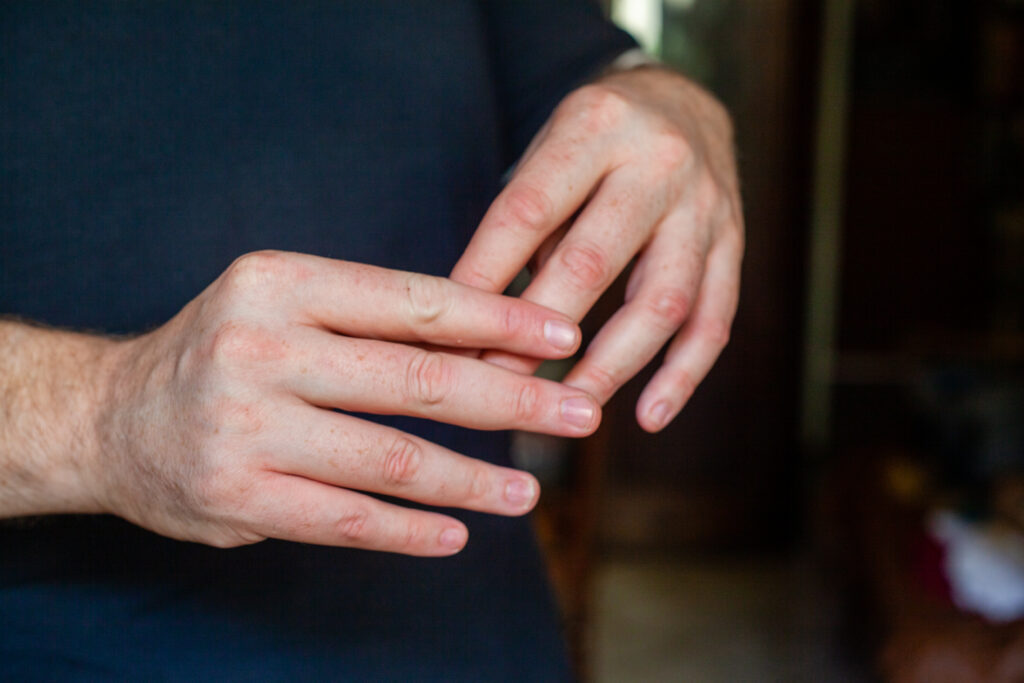
Key Takeaways
Cubital tunnel syndrome involves irritation or compression of the ulnar nerve near the elbow. It commonly produces numbness or tingling in the little finger and the ulnar side of the ring finger.
Keeping the elbow bent for long periods can aggravate symptoms. Sleeping with bent elbows, talking on the phone, and certain desk activities may increase irritation.
The ulnar nerve controls more than sensation. Significant compression can affect grip strength, finger coordination, and the small muscles within the hand.
Not every case of finger numbness originates at the elbow. Cervical radiculopathy, compression at the wrist, and other neurological conditions may produce overlapping symptoms.
Early treatment often focuses on reducing nerve irritation. Activity modification, nighttime elbow positioning, and selected rehabilitation strategies may help patients with mild symptoms.
Persistent numbness or developing weakness deserves prompt evaluation. Prolonged nerve compression can sometimes produce lasting neurological deficits.
Why Do Your Ring and Little Fingers Go Numb?
You wake up during the night and notice that your little finger and part of your ring finger feel numb.
You shake your hand, straighten your arm, and wait for the sensation to return.
Perhaps the symptoms disappear after a few minutes.
But the following night, the same thing happens.
You may also notice tingling while talking on the phone, driving with your elbow bent, or leaning your arm against a desk.
Some patients describe an electrical sensation near the inside of the elbow. Others experience numbness primarily in the fingers without significant elbow pain.
A common assumption is that the problem must be carpal tunnel syndrome.
However, numbness involving the ring and little fingers often suggests irritation of a different nerve: the ulnar nerve.
One possible diagnosis is cubital tunnel syndrome.
At Doyle Chiropractic in Huntersville, North Carolina, Dr. Geoffrey Doyle evaluates hand numbness by considering the entire nerve pathway, from the cervical spine through the shoulder, elbow, wrist, and hand.
The location of numbness provides an important clue, but it does not establish the diagnosis by itself.
Understanding where the ulnar nerve travels helps explain why symptoms may begin at the elbow yet be felt primarily in the fingers.
Understanding the Ulnar Nerve
The ulnar nerve is one of the major nerves supplying the forearm and hand.
It originates from the brachial plexus, a network of nerves extending from the lower cervical and upper thoracic spinal nerve roots.
The nerve travels down the arm, passes behind the inner portion of the elbow, and continues toward the hand.
Near the elbow, it passes through a region called the cubital tunnel.
This area is located close to the medial epicondyle, the bony prominence on the inside of the elbow.
Because the nerve travels relatively close to the surface here, it can be sensitive to pressure and stretching.
You may already be familiar with this location.
When someone accidentally strikes the inside of the elbow and experiences an electrical sensation traveling toward the hand, they have often irritated the ulnar nerve.
This is commonly called hitting the funny bone.
Despite the name, the sensation comes from a nerve rather than a bone.
What Does the Ulnar Nerve Control?
The ulnar nerve provides sensation to the little finger and the ulnar portion of the ring finger, along with portions of the hand.
It also supplies several muscles responsible for fine finger movements.
These muscles help spread the fingers apart, bring them together, and coordinate certain gripping activities.
The ulnar nerve also supplies muscles in the forearm that contribute to wrist and finger movement.
Because the nerve performs both sensory and motor functions, significant compression can produce more than tingling.
Patients with advanced involvement may experience weakness, reduced coordination, or wasting of certain hand muscles.
That is why persistent symptoms should not be dismissed as ordinary temporary numbness.
What Is Cubital Tunnel Syndrome?
Cubital tunnel syndrome occurs when the ulnar nerve becomes irritated or compressed as it travels through the region around the elbow.
The nerve normally moves and accommodates changes in elbow position.
However, bending the elbow changes the mechanical environment around the cubital tunnel.
Elbow flexion can increase tension on the ulnar nerve and alter pressure within the surrounding tissues.
In susceptible individuals, prolonged or repeated elbow flexion may contribute to symptoms.
Direct pressure over the inside of the elbow can also aggravate the nerve.
For example, someone who frequently rests their elbow on a hard desk may experience intermittent tingling extending toward the little finger.
Another patient may develop symptoms after sleeping with the elbow tightly bent for several hours.
These activities do not necessarily cause permanent nerve damage.
However, repeated irritation can contribute to persistent symptoms in some patients.
Why Cubital Tunnel Syndrome Often Gets Worse at Night
Nighttime numbness is a common complaint among patients with cubital tunnel syndrome.
During sleep, many people naturally bend their elbows.
Some place a hand beneath the pillow or sleep with the arm folded near the head.
Others tuck their hands toward the chest.
These positions may be comfortable initially, but prolonged elbow flexion can increase mechanical stress on the ulnar nerve.
Because people remain in these positions without consciously changing them, symptoms may develop gradually.
A patient may wake up with tingling in the ring and little fingers, straighten the elbow, and notice improvement.
This pattern can be suggestive of cubital tunnel syndrome.
However, nighttime hand numbness can also occur with carpal tunnel syndrome, cervical nerve irritation, and other conditions.
The distribution of symptoms and examination findings help distinguish the possibilities.
Why Straightening the Elbow May Help
When the elbow is straightened, tension and pressure affecting the ulnar nerve may decrease.
For some patients, this allows tingling to subside.
That is one reason nighttime elbow-positioning strategies are sometimes recommended for mild cubital tunnel syndrome.
The objective is not to immobilize the elbow permanently.
Instead, it is to reduce prolonged positions that repeatedly aggravate the nerve while allowing normal daytime movement.
Early Symptoms Versus More Advanced Ulnar Nerve Compression
Cubital tunnel syndrome does not affect every patient in the same way.
Early symptoms may be intermittent.
A patient might notice occasional tingling in the little finger while driving or talking on the phone.
The sensation may resolve after changing position.
As irritation becomes more persistent, numbness may occur more frequently or remain present between activities.
Some patients begin noticing difficulty with tasks requiring fine hand coordination.
Buttoning clothing, typing, or manipulating small objects may become more challenging.
Grip strength may also decline, although weakness can have several possible causes.
Why Hand Weakness Is an Important Finding
The ulnar nerve supplies many of the small intrinsic muscles of the hand.
When motor nerve function becomes impaired, patients may experience difficulty spreading the fingers apart or maintaining certain gripping positions.
In more advanced cases, visible muscle wasting may develop between the thumb and index finger or along the little-finger side of the hand.
These findings raise concern for significant neurological involvement.
Persistent sensory loss, progressive weakness, or visible muscle atrophy should prompt timely medical evaluation.
Conservative treatment may be appropriate for selected mild cases, but significant motor deficits require a different level of attention.
Cubital Tunnel Syndrome Versus Carpal Tunnel Syndrome
Cubital tunnel syndrome and carpal tunnel syndrome are both peripheral nerve compression conditions.
However, they involve different nerves and different anatomical locations.
Carpal tunnel syndrome affects the median nerve at the wrist.
It commonly produces numbness or tingling involving the thumb, index finger, middle finger, and the thumb-side portion of the ring finger.
Cubital tunnel syndrome affects the ulnar nerve near the elbow.
It more commonly produces symptoms involving the little finger and the opposite side of the ring finger.
Both conditions may become noticeable at night.
Both may also produce weakness when nerve compression becomes significant.
The difference lies primarily in the nerve involved and the distribution of symptoms.
However, symptom patterns are not always perfectly defined, and some patients may have more than one neurological condition.
A careful examination is more reliable than attempting to diagnose the problem solely by identifying which fingers feel numb.
Could a Pinched Nerve in Your Neck Cause the Same Symptoms?
Yes.
A cervical nerve-root problem can sometimes produce symptoms resembling ulnar nerve compression.
The C8 and T1 nerve roots contribute to the nerve pathways that eventually supply portions of the hand.
Irritation involving these pathways may produce numbness, tingling, pain, or weakness extending into the arm and hand.
For example, a patient with cervical radiculopathy may experience symptoms along the inner forearm and into the hand.
Neck pain may also be present, although it is not required.
In cubital tunnel syndrome, symptoms may be more strongly associated with elbow positioning or pressure near the cubital tunnel.
In cervical radiculopathy, certain neck movements may reproduce or aggravate the symptoms.
However, these are general patterns rather than definitive rules.
Neurological testing helps determine whether the findings suggest a nerve-root problem, peripheral nerve compression, or another condition.
Why Examining Only the Elbow Can Miss the Problem
A patient may point to the little finger and assume the elbow must be responsible.
But the nerve pathway begins much higher, near the cervical spine.
Symptoms may originate from irritation at the nerve root, brachial plexus, elbow, or wrist.
The examination should consider these possibilities rather than automatically treating the elbow.
This is particularly important when symptoms include neck discomfort, widespread arm weakness, or sensory changes that do not match a typical ulnar nerve distribution.
Can the Ulnar Nerve Become Compressed at the Wrist?
Yes.
The ulnar nerve can also become compressed near the wrist in a region called Guyon’s canal.
This condition is sometimes referred to as ulnar tunnel syndrome.
Patients may experience numbness, tingling, or weakness involving portions of the hand.
However, the exact sensory and motor findings can differ from cubital tunnel syndrome because certain nerve branches leave the ulnar nerve before it reaches the wrist.
For example, sensation over the back of the ulnar side of the hand may be preserved in some cases of compression at Guyon’s canal.
A detailed neurological examination can help identify these distinctions.
Certain repetitive activities, prolonged pressure against the palm, or structural abnormalities may contribute to compression at the wrist.
The important point is that numbness in the little finger does not automatically establish compression at the elbow.
Why the Location of Nerve Compression Matters
Cubital tunnel syndrome is a relatively common cause of numbness involving the ring and little fingers.
However, several neurological conditions can produce overlapping symptoms.
A patient whose tingling appears primarily when the elbow remains bent may have a different problem from someone whose symptoms are triggered by neck movement.
Another patient may experience numbness from compression near the wrist.
The treatment strategies differ because the anatomical locations and contributing factors are different.
At Doyle Chiropractic, Dr. Doyle evaluates the pattern of sensory changes, muscular function, cervical spine findings, and the relationship between symptoms and elbow positioning.
The objective is to determine whether the ulnar nerve is likely being irritated at the elbow, whether another location is involved, and whether the severity of symptoms warrants additional testing or medical referral.
Identifying the correct location is especially important when symptoms become persistent or begin affecting hand strength and coordination.
How Doyle Chiropractic Evaluates Cubital Tunnel Syndrome
When a patient comes to Doyle Chiropractic with numbness involving the ring and little fingers, Dr. Geoffrey Doyle begins by determining whether the ulnar nerve is being irritated at the elbow or somewhere else along its pathway.
The distribution of numbness provides an important clue, but the diagnosis requires more than identifying which fingers are affected.
Dr. Doyle asks when the symptoms began, whether they occur at night, and whether prolonged elbow bending or pressure against the inside of the elbow makes them worse.
He also considers whether the patient experiences neck pain, symptoms extending through the forearm, or difficulty gripping and manipulating objects.
These details help distinguish cubital tunnel syndrome from cervical radiculopathy, ulnar nerve compression at the wrist, and other neurological conditions.
Examining the Elbow, Wrist, and Cervical Spine
The examination may include assessment of elbow mobility, tenderness near the cubital tunnel, wrist function, and cervical range of motion.
Dr. Doyle evaluates whether certain elbow positions reproduce the patient’s familiar tingling.
Gentle percussion over the ulnar nerve near the elbow may produce an electrical sensation extending toward the ring and little fingers. This is commonly called Tinel’s sign.
An elbow flexion test may also be performed to determine whether sustained bending reproduces symptoms.
However, neither test is sufficiently accurate to establish the diagnosis independently.
The examination must also consider the cervical spine because nerve-root irritation can produce similar symptoms.
Evaluating Sensation and Hand Strength
Neurological testing is particularly important when symptoms are persistent.
Dr. Doyle may assess sensation along the little finger, ring finger, and ulnar side of the hand.
He also evaluates muscles supplied by the ulnar nerve, including those responsible for spreading and bringing the fingers together.
Selected examination findings may include weakness during finger abduction or a positive Froment’s sign, which can suggest weakness of the adductor pollicis muscle.
Visible wasting of the muscles between the thumb and index finger or along the little-finger side of the hand is particularly concerning.
These findings may indicate more advanced nerve dysfunction and warrant timely medical evaluation.
When Nerve Testing or Imaging Is Appropriate
Electrodiagnostic testing, including nerve conduction studies and electromyography, may help identify the location and severity of ulnar nerve dysfunction.
These studies can also help distinguish cubital tunnel syndrome from cervical radiculopathy or other peripheral nerve disorders.
However, mild or intermittent cubital tunnel syndrome may not always produce abnormal electrodiagnostic findings.
Ultrasound may be useful in selected cases to assess nerve enlargement, anatomical abnormalities, or movement of the ulnar nerve around the elbow.
MRI is not routinely necessary for uncomplicated presentations but may be considered when another structural problem is suspected.
Persistent numbness, progressive weakness, or visible muscle atrophy should prompt referral to an appropriate medical specialist rather than prolonged observation alone.
Treatment Options for Cubital Tunnel Syndrome
Treatment depends on the severity of nerve irritation, the presence of neurological deficits, and the factors contributing to compression.
Patients with mild, intermittent symptoms may improve with conservative management.
However, significant weakness or progressive sensory loss may require more specialized evaluation.
Reducing Pressure on the Ulnar Nerve
One of the most practical early strategies is reducing prolonged pressure over the inside of the elbow.
Patients who frequently rest their elbows on hard desks or armrests may benefit from changing how they position their arms.
A person who spends several hours working at a computer may notice that symptoms become more frequent when leaning on one elbow.
Adjusting the workstation and avoiding sustained pressure may help reduce irritation.
The objective is not to eliminate normal elbow movement but to limit positions that repeatedly reproduce symptoms.
Nighttime Elbow Positioning
Because prolonged elbow flexion can aggravate cubital tunnel syndrome, nighttime positioning may be particularly helpful.
Some patients benefit from a properly fitted nighttime elbow splint that limits excessive bending.
A loosely secured towel around the elbow may also help remind the patient not to sleep with the arm tightly flexed.
Any positioning aid should be comfortable and should not place additional pressure on the ulnar nerve or restrict circulation.
The goal is to reduce prolonged nerve irritation during sleep while allowing comfortable rest.
Therapeutic Exercise and Nerve Mobility
Selected rehabilitation exercises may be appropriate for patients with mild symptoms.
These may include gentle elbow mobility, strengthening of surrounding muscles, and carefully prescribed nerve-gliding exercises.
Nerve-gliding exercises are intended to encourage controlled movement of the nerve relative to surrounding tissues.
However, they should not reproduce persistent tingling, significant pain, or increasing numbness.
Aggressive stretching of an irritated ulnar nerve can aggravate symptoms.
Dr. Doyle considers the patient’s neurological findings and symptom response before recommending these exercises.
Evidence supporting individual conservative techniques varies, so treatment should be reassessed if improvement does not occur.
Chiropractic Care and Associated Musculoskeletal Problems
At Doyle Chiropractic, treatment may also address associated cervical, thoracic, or upper-extremity mechanical dysfunction when examination findings support doing so.
For example, a patient may have both ulnar nerve irritation at the elbow and mechanical neck discomfort.
Appropriate treatment of the neck may improve the associated musculoskeletal complaint, but it should not be represented as a direct correction of ulnar nerve compression at the elbow.
Chiropractic adjustments have not been established as a definitive treatment for cubital tunnel syndrome.
Similarly, manual therapy should not involve aggressive pressure over the irritated ulnar nerve.
The primary objective is to reduce nerve irritation, preserve neurological function, and improve comfortable use of the arm and hand.
Class IV Laser Therapy and Other Adjunctive Treatments
Doyle Chiropractic offers Summus Class IV laser therapy for selected musculoskeletal conditions.
Although photobiomodulation has been investigated for some peripheral nerve disorders, evidence specifically supporting Class IV laser therapy for cubital tunnel syndrome remains limited.
It should not replace established strategies for reducing nerve compression or delay referral when neurological deficits are present.
Treatment decisions should reflect the patient’s examination findings, available evidence, and response to care.
When Surgery May Be Necessary
Patients with persistent symptoms despite appropriate conservative treatment may require evaluation by a hand surgeon or other qualified specialist.
Progressive weakness, significant sensory loss, or muscle wasting can increase concern about ongoing nerve injury.
Surgical treatment generally aims to reduce compression of the ulnar nerve.
Depending on the clinical situation, procedures may include cubital tunnel release or, in selected cases, ulnar nerve transposition.
Not every patient requires surgery, and the appropriate procedure depends on the anatomy, severity of nerve dysfunction, and specialist assessment.
Importantly, prolonged severe nerve injury may not fully recover even after decompression.
This is one reason progressive weakness should not be ignored.
Recovery and Functional Outcomes
Recovery from cubital tunnel syndrome varies according to symptom duration and the severity of nerve involvement.
Patients with mild, intermittent tingling may notice improvement over several weeks or months after reducing aggravating positions and following an appropriate treatment plan.
More persistent cases may require additional testing or specialist management.
When significant nerve damage has occurred, recovery can be slower and may be incomplete.
At Doyle Chiropractic, functional improvement is considered alongside symptom reduction.
A patient may notice that sleeping through the night becomes easier, driving no longer produces finger tingling, or computer work becomes more comfortable.
For someone whose work requires prolonged typing, tool use, or repetitive elbow movement, successful recovery may involve returning to these activities without recurring neurological symptoms.
Why Numbness and Weakness Must Be Monitored Separately
A reduction in tingling is encouraging, but it does not necessarily mean that nerve function has fully recovered.
Dr. Doyle considers whether sensation, muscular strength, and hand coordination are improving.
Persistent numbness or worsening weakness may indicate that the nerve remains compromised.
Patients should report increasing difficulty spreading the fingers, gripping objects, or performing fine motor tasks.
The objective is not simply to make the elbow feel better but to preserve the function of the nerve and the muscles it supplies.
The Dr. Doyle Perspective
When someone tells me their little finger and half of their ring finger keep going numb, the ulnar nerve is one of the first structures I consider.
But I still want to determine where that nerve may be irritated.
I begin by asking whether the symptoms occur while sleeping, driving, talking on the phone, or leaning on the elbow.
If the patient consistently develops tingling when the elbow remains bent and notices relief after straightening it, cubital tunnel syndrome becomes a strong consideration.
However, I do not stop there.
I want to know whether the patient has neck pain, whether turning the head changes the symptoms, and whether the numbness extends beyond the expected ulnar nerve distribution.
Those findings may suggest that the problem originates somewhere other than the elbow.
I also pay close attention to muscular strength.
Occasional tingling that resolves after changing position is different from persistent numbness accompanied by difficulty spreading the fingers or gripping objects.
When weakness develops, I become more concerned about the possibility of significant nerve dysfunction.
One thing I explain to patients is that nerves do not always respond well to being repeatedly irritated.
If a particular position causes tingling every night, continuing to sleep in that position may prolong the problem.
Sometimes relatively simple changes, such as avoiding prolonged elbow flexion or direct pressure over the cubital tunnel, can make a meaningful difference.
But I also want patients to understand that conservative care has limitations.
If the nerve is significantly compressed or muscular weakness is progressing, referral for additional testing or surgical evaluation may be the most appropriate recommendation.
I am comfortable recommending that evaluation because preserving nerve function is more important than continuing a treatment that is not adequately addressing the problem.
My goal is to identify where the ulnar nerve is being affected, determine how much neurological function may be compromised, and help the patient choose an appropriate treatment before potentially reversible symptoms become more difficult to resolve.
Our Clinical Experience
Numbness involving the ring and little fingers illustrates why similar complaints can require different approaches.
Consider three hypothetical presentations.
Presentation One: Nighttime Finger Tingling
A patient frequently wakes with numbness in the little finger and part of the ring finger.
Symptoms improve after straightening the elbow.
The examination does not identify persistent sensory loss or muscular weakness.
This presentation may be consistent with mild cubital tunnel syndrome.
Initial management could include nighttime positioning, reducing pressure over the elbow, and monitoring neurological function.
Presentation Two: Numbness Associated With Neck Movement
Another patient experiences tingling along the inner forearm and into the hand.
The symptoms become more noticeable with certain neck movements, and the examination suggests possible cervical nerve-root involvement.
In this situation, cervical radiculopathy may be a more likely explanation than isolated cubital tunnel syndrome.
Additional neurological assessment would guide treatment decisions.
Presentation Three: Persistent Numbness and Hand Weakness
A third patient reports constant numbness involving the little finger and increasing difficulty spreading the fingers apart.
The examination identifies weakness of ulnar-innervated hand muscles.
These findings raise concern for more significant nerve dysfunction.
Timely medical referral and electrodiagnostic evaluation may be appropriate rather than relying exclusively on conservative treatment.
These examples are hypothetical and illustrate clinical reasoning rather than actual patient histories or guaranteed outcomes.
Frequently Asked Questions
Why do my ring and little fingers go numb?
Numbness in these fingers commonly suggests involvement of the ulnar nerve, although cervical nerve-root irritation and other neurological conditions can produce similar symptoms.
Is cubital tunnel syndrome the same as carpal tunnel syndrome?
No. Cubital tunnel syndrome affects the ulnar nerve near the elbow, while carpal tunnel syndrome affects the median nerve at the wrist.
Why does my hand go numb when I sleep with my elbow bent?
Prolonged elbow flexion can increase mechanical stress on the ulnar nerve. In susceptible individuals, this may contribute to nighttime tingling or numbness.
Can cubital tunnel syndrome cause permanent nerve damage?
Severe or prolonged ulnar nerve compression can produce lasting sensory loss, weakness, or muscle atrophy. Progressive neurological symptoms warrant timely evaluation.
Should I stretch my ulnar nerve?
Gentle nerve-mobility exercises may be appropriate for selected patients, but aggressive stretching can aggravate symptoms. Exercises should not produce persistent or worsening numbness.
Can chiropractic care help cubital tunnel syndrome?
Conservative management may help selected patients with mild symptoms, particularly through activity modification and appropriate rehabilitation. Chiropractic adjustments have not been established as a definitive treatment for ulnar nerve compression.
Does cubital tunnel syndrome always require surgery?
No. Many mild cases are initially managed conservatively. Persistent symptoms, progressive weakness, or significant nerve dysfunction may require surgical evaluation.
Final Thoughts
Cubital tunnel syndrome is an important cause of numbness and tingling involving the ring and little fingers.
The condition develops when the ulnar nerve becomes irritated or compressed near the elbow, often producing symptoms during prolonged elbow flexion or direct pressure.
However, similar symptoms may originate from the cervical spine, wrist, or other portions of the nerve pathway.
A careful examination helps determine the likely location of nerve involvement and whether conservative treatment or additional medical evaluation is appropriate.
At Doyle Chiropractic in Huntersville, North Carolina, Dr. Geoffrey Doyle evaluates hand numbness by considering elbow function, cervical spine findings, sensory changes, and muscular strength.
For patients throughout Huntersville, Cornelius, Davidson, and the Lake Norman area, the goal is to identify the likely cause of symptoms, explain available treatment options, and recognize neurological changes that require timely referral.
Whether numbness occurs while sleeping, driving, typing, or performing everyday activities, appropriate care begins with understanding where the nerve is being affected and protecting its long-term function.