
Arthritis Is One of the Most Misunderstood Diagnoses
If you’ve been told you have arthritis, you may have immediately thought:
- “I’m just getting old.”
- “It’s bone-on-bone.”
- “Nothing can be done.”
- “I’ll eventually need surgery.”
These are some of the most common statements we hear from new patients.
While arthritis is extremely common, it is also one of the most misunderstood conditions in healthcare.
Having arthritis does not automatically mean you’ll always have pain.
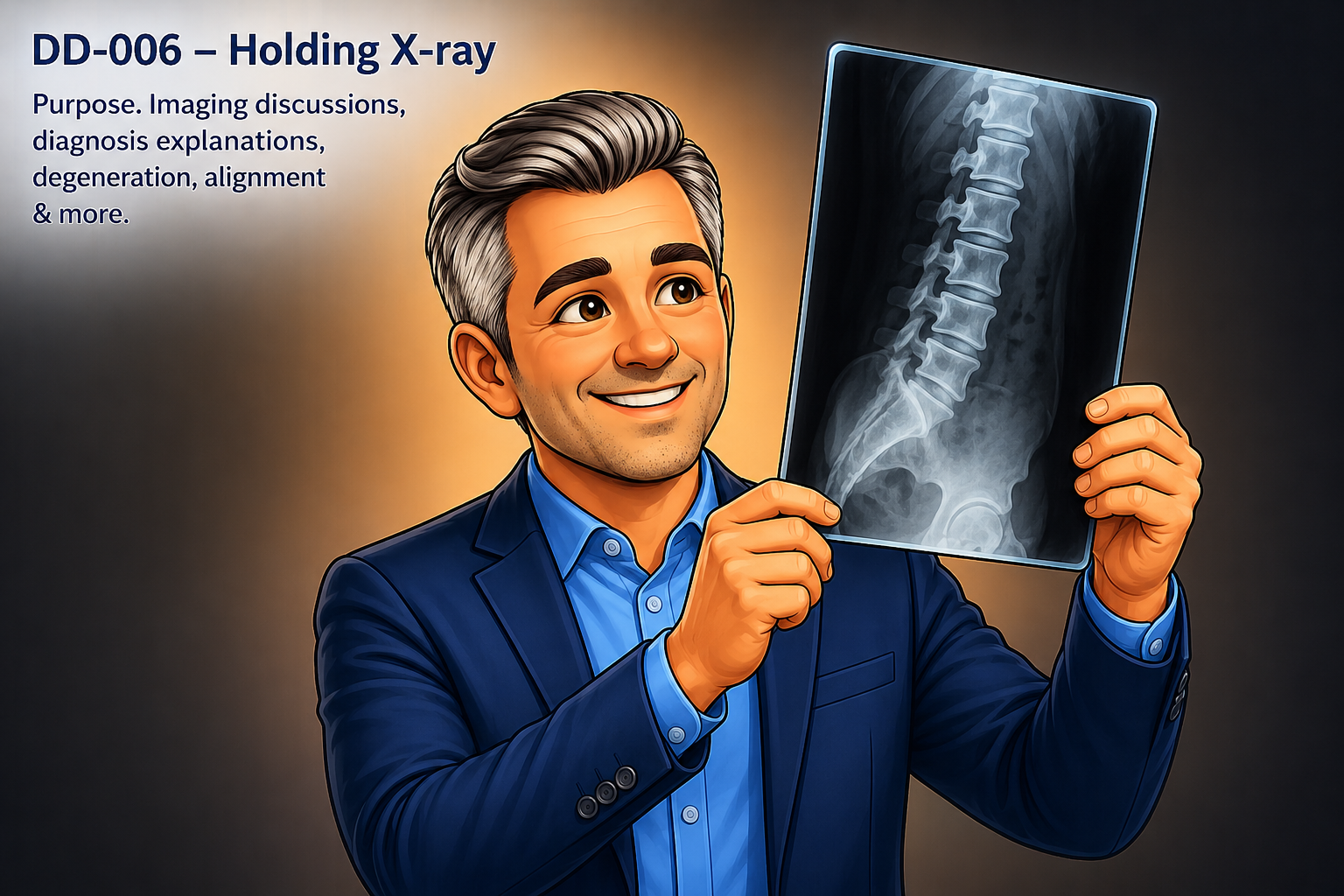
Likewise, severe arthritis on an X-ray does not necessarily predict how much discomfort someone experiences.
One person may have advanced arthritis and continue playing golf several times each week.
Another may have relatively mild arthritis yet struggle with daily activities.
That difference tells us something important:
Arthritis is only one piece of the puzzle.
At Doyle Chiropractic, our goal is not simply to look at an X-ray.
Our goal is to understand how your arthritis is affecting your movement, your nervous system, your muscles, your joints, and ultimately your quality of life.
What Is Arthritis?
The word arthritis simply means inflammation involving a joint.
There are many different types of arthritis.
The most common form we see is osteoarthritis, often called degenerative joint disease or wear-and-tear arthritis.
Over time, the cartilage that normally allows joints to glide smoothly may begin changing.
The body often responds by:
- Thickening surrounding bone
- Forming bone spurs
- Reducing joint space
- Creating stiffness
- Limiting normal motion
These changes usually develop gradually over many years rather than appearing suddenly.
Although these structural changes cannot currently be reversed, many of the symptoms associated with arthritis can often improve significantly with appropriate conservative care.
Arthritis Is More Than Cartilage
Many people believe arthritis is simply “bone rubbing on bone.”
The reality is much more complex.
An arthritic joint also affects:
- Muscles
- Ligaments
- Tendons
- Joint capsules
- Connective tissue
- Nerves
- Blood flow
- Movement patterns
As one joint becomes stiffer, nearby joints frequently begin compensating.
Muscles tighten.
Other muscles weaken.
Balance changes.
Walking patterns change.
The body adapts in remarkable ways.
Sometimes those compensations become more painful than the arthritis itself.
This is one reason we evaluate the entire neuromusculoskeletal system, not just the arthritic joint.
What Causes Arthritis?
Several factors contribute to arthritis.
Some are unavoidable.
Others can often be influenced through healthy lifestyle choices and appropriate conservative care.
Common contributing factors include:
Aging
As we get older, joints naturally experience years of accumulated stress.
This is completely normal.
However, aging alone does not determine how well your joints will function.
Many active adults maintain excellent mobility well into their later years.
Previous Injuries
Old sports injuries.
Motor vehicle accidents.
Falls.
Fractures.
Ligament injuries.
Joint injuries often change how forces travel through the body, increasing the likelihood of degenerative changes over time.
Repetitive Stress
Certain occupations and hobbies repeatedly load the same joints.
Construction workers.
Office workers.
Golfers.
Tennis players.
Pickleball enthusiasts.
Runners.
Mechanics.
Healthcare professionals.
Over thousands of repetitions, those stresses may contribute to joint degeneration.
Genetics
Some people appear genetically predisposed to developing arthritis earlier or more extensively than others.
While genetics influence risk, they do not determine how well someone can function.
Excess Body Weight
Additional body weight increases mechanical stress on weight-bearing joints such as the knees, hips, ankles, and lower back.
Even modest weight reduction may significantly decrease joint loading during everyday activities.
Common Symptoms of Arthritis
Symptoms vary depending on the joint involved, but commonly include:
- Joint stiffness
- Pain with movement
- Aching after activity
- Morning stiffness
- Decreased flexibility
- Swelling
- Grinding sensations
- Reduced range of motion
- Difficulty standing after sitting
- Difficulty climbing stairs
- Changes in walking
Many patients notice that symptoms fluctuate.
Some days they feel surprisingly good.
Other days they become much more uncomfortable.
This variability often reflects changes in inflammation, activity level, sleep quality, stress, weather sensitivity, and surrounding muscle function—not simply progression of the arthritis itself.
Is Arthritis Inevitable?
One of the biggest myths surrounding arthritis is that it always gets worse and nothing can be done.
That simply has not been our experience.
While we cannot promise to stop the aging process, we often help patients improve:
- Joint motion
- Flexibility
- Muscle function
- Balance
- Walking
- Activity tolerance
- Overall quality of life
Many patients are surprised by how much better they function after improving the health of the tissues surrounding an arthritic joint.
Our goal isn’t to make your birthday disappear.
Our goal is to help your body function as well as possible regardless of your age.
Why Movement Matters
Many people instinctively avoid movement because they believe movement causes arthritis to worsen.
In many situations, the opposite is true.
Healthy joints were designed to move.
Movement helps circulate nutrients through cartilage, improves lubrication within joints, strengthens surrounding muscles, and helps maintain flexibility.
The key is finding the right type of movement for your specific condition.
That is one reason individualized treatment plans are so important.
Rather than telling every patient to simply “exercise more,” we determine which movements are appropriate, which activities should be modified, and which treatments may help you move more comfortably before asking your body to do more.
How Doyle Chiropractic Approaches Arthritis
One of the things that makes Doyle Chiropractic different is that we don’t view arthritis as a single problem with a single solution.
Instead, we ask:
- Which joint is involved?
- How much motion has been lost?
- Which muscles are compensating?
- Is inflammation driving the symptoms?
- Is there nerve irritation?
- Is the patient’s balance changing?
- Are other joints beginning to compensate?
Answering those questions allows us to create an individualized treatment plan rather than simply treating everyone with arthritis the same way.
Depending on your examination findings, recommendations may include one or more conservative treatment options.
Chiropractic Adjustments
Adjustments remain the cornerstone of care in our office.
Healthy joints are designed to move. As arthritis progresses, motion often becomes more restricted.
Restoring healthy joint motion may help improve flexibility, reduce abnormal mechanical stress, improve function, and allow surrounding muscles to work more efficiently.
Dr. Geoffrey Doyle adjusts not only the spine but virtually every joint in the body when clinically appropriate, including the shoulders, elbows, wrists, hands, hips, knees, ankles, feet, ribs, jaw (TMJ), and pelvis.
Class IV Laser Therapy
Laser therapy is one of the treatments we most frequently combine with chiropractic care for arthritis.
While adjustments improve motion, laser therapy focuses on supporting the health of the surrounding tissues.
In our experience, laser therapy may help:
- Reduce inflammation
- Improve circulation
- Support tissue repair
- Improve comfort
- Help patients remain active
For many patients, combining laser therapy with chiropractic adjustments provides better long-term results than either treatment alone.
Spinal Decompression
When arthritis involves the spine—particularly when degenerative disc disease or nerve compression is also present—spinal decompression may become an important part of treatment.
Unlike chiropractic adjustments, which restore joint motion, decompression gently reduces compressive forces between spinal segments.
The two treatments perform different jobs and often complement one another.
Cupping Therapy
Many patients with arthritis also develop significant muscle tightness and fascial restrictions.
Cupping therapy may help improve soft tissue mobility while decreasing muscular tension surrounding the affected joint.
Therapeutic Exercise
Movement is medicine—when it’s the right movement.
Specific exercises help strengthen muscles, improve balance, maintain flexibility, and support long-term joint health.
Rather than giving every patient the same exercise program, we tailor recommendations to the individual’s diagnosis, age, activity level, and goals.
The Dr. Doyle Perspective
“One of the biggest misconceptions I hear is that arthritis means your body is simply wearing out and there’s nothing you can do. After treating more than 20,000 patients, I can tell you that’s rarely the whole story. We can’t stop birthdays, but we can often improve how the body moves, functions, and feels. Our focus is helping patients stay active, independent, and doing the things they love for as long as possible.”
— Dr. Geoffrey Doyle, DC
Our Clinical Experience
In our practice, we’ve also tracked our own clinical outcomes.
Based on our internal observations:
- Chiropractic adjustments alone have produced approximately a 92% clinical success rate for many common arthritic and degenerative neuromusculoskeletal conditions when patients report at least a 50% improvement.
- When Class IV laser therapy is added, our observed success rate increases to approximately 94%, with many patients maintaining improvements longer.
- For carefully selected patients receiving chiropractic adjustments, Class IV laser therapy, spinal decompression, and supportive soft-tissue care, our observed success rate has approached 97%.
These are internal clinical observations from Doyle Chiropractic and should not be interpreted as guarantees or as published scientific outcome data. Every patient’s condition, diagnosis, health status, and response to treatment are unique.
What Your Doctor May Have Meant
Many patients tell us:
“My doctor said I’m bone-on-bone.”
Or…
“They told me I’ll eventually need a joint replacement.”
Those conversations are often accurate within the context of that physician’s specialty.
An orthopedic surgeon evaluates whether surgery is appropriate.
A primary care physician may focus on medication management and referrals.
A rheumatologist manages inflammatory arthritis.
Each healthcare provider brings valuable expertise.
At Doyle Chiropractic, our specialty is different.
Our focus is helping patients maximize function through conservative neuromusculoskeletal care before more invasive options become necessary—or alongside medical treatment when appropriate.
That doesn’t mean surgery is never needed.
It means many people benefit from understanding all of their conservative options before concluding that nothing more can be done.
Frequently Asked Questions
Can chiropractic cure arthritis?
No. Arthritis cannot currently be cured. However, many patients experience significant improvements in pain, mobility, and daily function through appropriate conservative treatment.
Can I exercise if I have arthritis?
In many cases, yes. The key is choosing exercises appropriate for your condition and current level of function.
Will my arthritis continue getting worse?
Arthritis often progresses over time, but progression varies greatly from person to person. Staying active, maintaining joint mobility, and addressing surrounding muscle function may help improve long-term quality of life.
Is surgery inevitable?
Not always. Many patients successfully manage arthritis for years through conservative treatment. Others eventually require surgery. Our role is to help you understand your options and determine what is most appropriate for your individual situation.