Key Takeaways
Hand numbness while driving is often caused by nerve irritation or compression. The problem may originate at the wrist, elbow, or cervical spine, even though the symptoms are felt in the fingers.
Which fingers become numb provides important clues. Thumb, index, and middle-finger symptoms often suggest median nerve involvement, while ring- and little-finger numbness may indicate ulnar nerve irritation.
Carpal tunnel syndrome commonly causes numbness during driving and sleep. Sustained wrist positioning can aggravate pressure on the median nerve, particularly when the wrist remains bent for extended periods.
Elbow position matters. Prolonged elbow bending or pressure against a vehicle door or armrest may aggravate the ulnar nerve and cause tingling in the ring and little fingers.
A pinched nerve in the neck can cause hand numbness without significant neck pain. Cervical radiculopathy may produce symptoms extending into the shoulder, arm, and hand.
The correct diagnosis determines the appropriate treatment. Wrist splinting, activity modification, rehabilitation, chiropractic care, and medical treatment have different roles depending on where the nerve is affected.
Persistent numbness, progressive weakness, or loss of hand coordination deserves evaluation. These symptoms may indicate more significant neurological dysfunction rather than temporary positional irritation.
Why Your Hand Falls Asleep Behind the Steering Wheel
You’re driving along I-77 between Huntersville and Charlotte when you begin noticing a familiar tingling sensation in your hand. At first, it feels like a couple of fingers are falling asleep. You adjust your grip on the steering wheel, shake your hand a few times, and the sensation gradually disappears. A few miles later, it happens again.
Perhaps it only occurs during longer drives. Maybe it happens every morning on your way to work. Some people notice the same sensation while holding a phone, working at a computer, or sleeping at night.
The natural assumption is that something must be wrong with the hand. After all, that is where the numbness is occurring.
But one of the interesting things about the nervous system is that the location where you feel a symptom is not necessarily the location where the problem originates.
The nerves supplying your fingers begin much farther up the body. They originate from nerve roots near the spinal cord, travel through the shoulder and arm, and eventually reach the hand. Along that pathway, they pass through several anatomical spaces where irritation or compression can occur.
This means that numbness in your fingertips may be caused by a problem at your wrist, elbow, or cervical spine. Occasionally, more than one location is involved.
At Doyle Chiropractic in Huntersville, North Carolina, Dr. Geoffrey Doyle evaluates hand numbness by considering the entire neurological pathway rather than assuming that the problem must be located where the patient feels it.
Understanding which fingers become numb, what positions reproduce the symptoms, and whether the sensation changes with movement can provide valuable clues about the underlying condition.
Why Driving Can Trigger Numbness in Your Fingers
Driving doesn’t seem like a particularly demanding activity. You’re sitting comfortably, your arms aren’t lifting anything especially heavy, and your hands are simply resting on the steering wheel.
However, driving requires several parts of the upper extremity to remain in relatively consistent positions for extended periods.
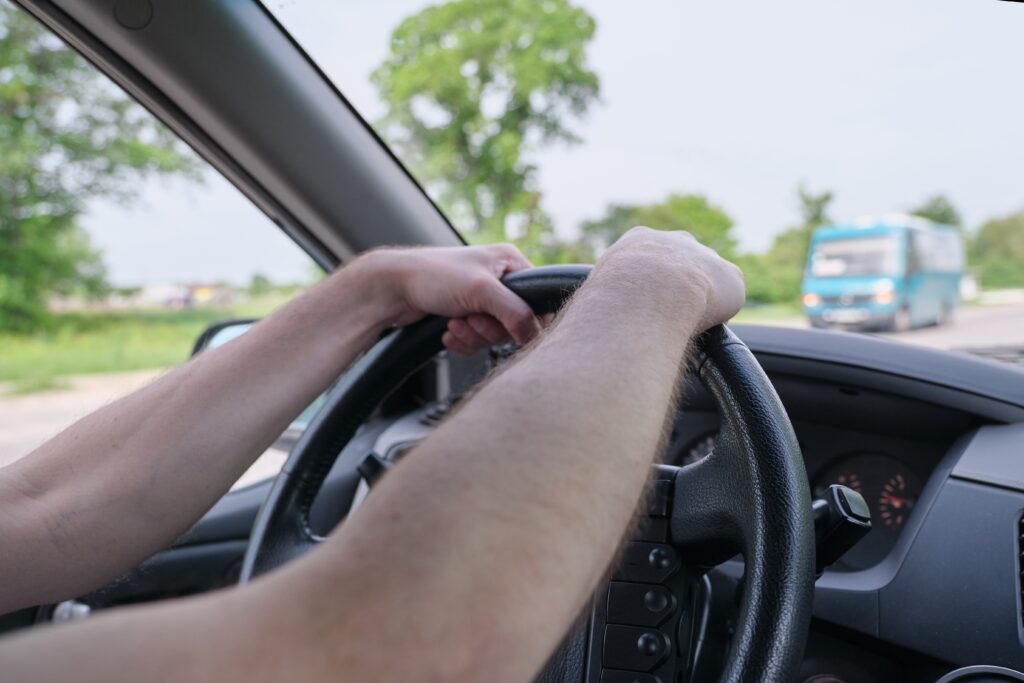
Your shoulders are positioned forward, your elbows remain partially bent, and your wrists maintain contact with the steering wheel. Depending on how you hold the wheel, your wrists may be bent backward or angled toward one side. Meanwhile, your neck and upper back work to maintain your head position while you watch traffic.
For most people, these positions are comfortable. But when a nerve is already irritated, maintaining one position long enough may reproduce symptoms.
Nerves are living structures that require an adequate blood supply and the ability to move within surrounding tissues. Certain positions can increase pressure or tension around a nerve, particularly where it passes through a narrow anatomical space.
Consider what happens when your foot falls asleep after sitting with your legs crossed. The problem isn’t necessarily in your foot. Pressure on a nerve farther up the leg may temporarily interfere with normal sensation. Changing positions often allows the feeling to return.
A similar principle can apply to the hand.
When the wrist remains bent, pressure may increase around the median nerve. When the elbow stays flexed, the ulnar nerve may become irritated. Certain cervical spine positions can also aggravate symptoms when a nerve root in the neck is already sensitive.
The important distinction is that driving may not have caused the underlying condition. It may simply be the activity that makes an existing nerve problem noticeable.
Why the Fingers Affected Matter
One of the first questions Dr. Doyle considers is exactly which fingers become numb.
If the thumb, index finger, and middle finger are primarily involved, the median nerve becomes an important consideration. This is the nerve affected in carpal tunnel syndrome.
If the ring and little fingers are affected, attention often turns toward the ulnar nerve, which can become compressed near the elbow or wrist.
If numbness extends through the arm, changes with neck movement, or is accompanied by shoulder discomfort, cervical nerve-root irritation becomes another possibility.
These patterns are useful because different nerves supply different portions of the hand. However, their sensory territories overlap, and symptoms do not always follow a perfect anatomical pattern.
The finger distribution provides the starting point. The examination helps determine whether the suspected nerve is actually responsible.
Understanding the Nerves That Supply Your Hand
A useful way to understand nerve-related symptoms is to think about the electrical wiring in a house.
If a light begins flickering, the problem might be at the light fixture, somewhere along the wiring, or closer to the electrical panel. The flickering tells you that something is interfering with the electrical pathway, but it doesn’t identify exactly where the interruption is occurring.
The nervous system presents a similar diagnostic challenge.
The spinal cord carries neurological information between the brain and the body. Nerve roots branch away from the spinal cord and contribute to the peripheral nerves that travel into the arms and hands.
In the upper extremity, these nerve roots form a network called the brachial plexus. From there, several major nerves travel down the arm.
The median nerve supplies sensation to much of the thumb, index finger, middle finger, and part of the ring finger. It also helps control muscles involved in thumb movement and hand coordination.
The ulnar nerve supplies much of the little finger and the adjacent portion of the ring finger. It also controls several small muscles responsible for finger coordination and grip.
The radial nerve contributes to sensation over portions of the back of the hand and controls muscles involved in extending the wrist and fingers.
Each nerve follows a different anatomical pathway. Some pass through relatively confined spaces where compression can occur.
The median nerve travels through the carpal tunnel at the wrist. The ulnar nerve passes around the inner elbow and through another narrow passageway near the wrist. The cervical nerve roots can become irritated before these peripheral nerves have even reached the shoulder.
Understanding these pathways helps explain why three patients with seemingly identical complaints may require three different treatment approaches.
Carpal Tunnel Syndrome: When the Problem Is at the Wrist
Carpal tunnel syndrome is one of the most common explanations for hand numbness while driving.
The carpal tunnel is a narrow passageway located at the wrist. Its boundaries are formed by the wrist bones and a strong ligament called the transverse carpal ligament. Several tendons responsible for bending the fingers travel through this space along with the median nerve.
Because the tunnel has limited room, increased pressure within it can interfere with normal median nerve function.
Patients commonly experience tingling, numbness, burning, or discomfort involving the thumb, index finger, middle finger, and thumb-side portion of the ring finger. Some describe their fingers as feeling swollen even when there is no visible swelling. Others experience an electrical sensation that seems to travel through the hand.
Early symptoms are often intermittent. They may occur during certain activities and disappear after the hand changes position. As the condition progresses, the episodes may become more frequent or last longer.
Why Driving and Sleeping Can Produce Similar Symptoms
One of the more recognizable features of carpal tunnel syndrome is that symptoms often occur during both driving and sleep.
While driving, the wrist may remain extended or angled for an extended period. These positions can increase pressure within the carpal tunnel in susceptible individuals.
During sleep, people frequently bend their wrists without realizing it. Some tuck their hands beneath a pillow or curl their wrists toward the body. Maintaining these positions may aggravate median nerve compression.
This explains why some patients awaken during the night with numb fingers and instinctively shake their hands until the sensation improves.
The behavior is sometimes called the flick sign, and it can be a useful clue when evaluating carpal tunnel syndrome.
However, the condition is not necessarily caused by driving or sleeping position alone. Diabetes, inflammatory conditions, pregnancy-related fluid changes, and certain repetitive or forceful hand activities can influence the likelihood of developing median nerve compression.
The steering wheel may simply be aggravating a nerve that is already vulnerable.
When Carpal Tunnel Syndrome Becomes More Significant
Mild carpal tunnel syndrome may cause occasional tingling without measurable weakness. More advanced compression, however, can affect the muscles supplied by the median nerve.
These include muscles near the base of the thumb that contribute to grasping and manipulating objects.
Patients may begin noticing difficulty handling small items, reduced thumb strength, or changes in fine motor coordination. In more severe cases, visible muscle wasting may develop near the base of the thumb.
Persistent numbness or progressive weakness deserves particular attention because prolonged severe nerve compression can result in lasting neurological impairment.
This is one reason Dr. Doyle distinguishes intermittent positional symptoms from evidence of significant nerve dysfunction. The severity of the findings helps determine whether conservative management is reasonable or whether additional testing and medical evaluation should occur sooner.
Cubital Tunnel Syndrome: When the Elbow Causes Finger Numbness
Not every patient whose hand becomes numb while driving has carpal tunnel syndrome.
When the ring and little fingers are primarily involved, the ulnar nerve becomes an important consideration.
This nerve travels along the inner side of the elbow, passing through a region called the cubital tunnel. It is located near the area commonly referred to as the funny bone. Anyone who has struck that part of the elbow and experienced an electrical sensation traveling toward the little finger has felt how sensitive the ulnar nerve can be.
Cubital tunnel syndrome develops when the ulnar nerve becomes irritated or compressed near the elbow.
Unlike carpal tunnel syndrome, which is commonly influenced by wrist position, cubital tunnel symptoms are often associated with prolonged elbow bending or pressure around the inner elbow.
Consider someone driving with one elbow resting against the vehicle door while holding the steering wheel. The elbow remains bent, and pressure may be applied near the ulnar nerve. After several minutes, tingling begins in the little finger and part of the ring finger.
When the driver straightens the arm and changes position, the sensation improves.
That pattern raises suspicion for ulnar nerve irritation near the elbow.
The same symptoms may occur while holding a phone, reading with the elbows bent, or sleeping with an arm tucked beneath a pillow.
Why Elbow Position Makes a Difference
As the elbow bends, the ulnar nerve must accommodate changes in the surrounding tissues. In susceptible individuals, prolonged flexion can increase pressure or tension on the nerve.
This doesn’t mean that bending the elbow is harmful. It is a normal movement performed throughout the day.
The concern arises when a nerve is already irritated and certain positions repeatedly reproduce symptoms.
As with carpal tunnel syndrome, mild ulnar neuropathy may initially cause intermittent tingling. However, more significant compression can interfere with muscular function.
The ulnar nerve supplies several small muscles within the hand that contribute to finger coordination and grip. Advanced dysfunction may cause weakness, difficulty manipulating objects, or visible muscle wasting.
Recognizing these changes is important because the treatment approach and urgency of evaluation may differ from those appropriate for mild positional irritation.
Can the Ulnar Nerve Be Compressed at the Wrist?
Yes. The ulnar nerve can also become compressed near the wrist in a passageway called Guyon’s canal.
This condition may produce numbness involving the ring and little fingers, similar to cubital tunnel syndrome. However, the location of compression is different.
Sustained pressure through the palm, such as certain cycling or gripping positions, can aggravate the nerve near the wrist.
The examination may help distinguish wrist compression from elbow compression by evaluating the sensory distribution and specific muscles affected. When the findings remain uncertain, nerve conduction studies may help identify the location of the problem.
This distinction matters because treatment directed toward the elbow may provide limited benefit when the primary compression is actually occurring at the wrist.
When the Numbness May Be Coming From Your Neck
Carpal tunnel syndrome and ulnar nerve compression explain many cases of driving-related hand numbness, but they do not account for every presentation.
Sometimes the symptoms extend farther up the arm. A patient may experience tingling in the fingers along with discomfort around the shoulder or upper arm. In other cases, the numbness changes when the person turns or extends the neck.
These findings raise consideration of cervical radiculopathy, a condition involving irritation or dysfunction of a nerve root in the cervical spine.
Cervical disc herniation, degenerative changes, and narrowing around the nerve openings can contribute to this problem.
What makes cervical radiculopathy particularly interesting is that significant neck pain is not always present. A patient may primarily notice symptoms in the hand even though the source is located in the cervical spine.
This creates an important clinical distinction.
A person with thumb numbness may have median nerve compression at the wrist, or the symptoms may be associated with irritation of the C6 nerve root in the neck. Similarly, ring- and little-finger numbness may involve the ulnar nerve or a cervical nerve root such as C8.
The clinical examination helps distinguish these possibilities by considering associated muscular weakness, reflex changes, sensory findings, and whether cervical movements reproduce the familiar symptoms.
Identifying that difference is essential because the treatment for a compressed nerve at the wrist is not necessarily the treatment for a nerve root irritated by a cervical disc or foraminal narrowing.
The next step is understanding how Dr. Doyle distinguishes these conditions during an examination, when additional diagnostic testing is appropriate, and how the findings determine which conservative or medical treatments are most likely to help.
Cervical Radiculopathy: When a Pinched Nerve in the Neck Causes Hand Numbness
One of the more surprising aspects of cervical radiculopathy is that the most noticeable symptom may occur far away from the neck. A patient may have very little neck discomfort yet experience tingling, numbness, or weakness extending into the arm and hand.
The cervical nerve roots exit the spinal canal through small openings between adjacent vertebrae called neural foramina. These openings provide passageways for the nerves that eventually contribute to sensation and movement in the upper extremities.
When a cervical disc herniates or degenerative changes narrow one of these openings, a nerve root may become irritated or compressed. The resulting symptoms can travel along the neurological pathway, producing discomfort in areas that seem unrelated to the neck.
For example, irritation of the C6 nerve root may produce symptoms extending toward the thumb, while C7 involvement may affect the middle finger. C8 nerve-root irritation may produce symptoms along the ring- and little-finger side of the hand.
These distributions overlap with the territories supplied by the median and ulnar nerves. That is why a patient with thumb numbness does not automatically have carpal tunnel syndrome, and someone with little-finger tingling does not necessarily have cubital tunnel syndrome.
The examination must look for additional clues.
A patient with cervical radiculopathy may notice that turning or extending the neck reproduces symptoms extending down the arm. Certain muscles may demonstrate weakness, or selected deep tendon reflexes may be reduced. These findings can help distinguish cervical nerve-root dysfunction from compression of a peripheral nerve.
Driving can aggravate cervical radiculopathy because the head, neck, and shoulders remain in relatively sustained positions. However, the relationship varies among patients. Some experience increased symptoms with particular neck movements, while others notice relief when they reposition the arm or shoulder.
The important consideration is whether the symptoms and examination findings correspond to a recognizable cervical neurological pattern.
Cervical Arthritis, Disc Herniation, and Foraminal Stenosis
Several structural conditions can contribute to cervical radiculopathy.
A cervical disc herniation occurs when disc material extends beyond its usual boundaries and may irritate or compress a nearby nerve root. Foraminal stenosis develops when the opening surrounding a nerve root becomes narrowed, often through a combination of disc degeneration, bone spurs, and arthritic changes.
However, an abnormal MRI does not automatically establish the source of hand numbness. Degenerative changes are common in adults who have no neurological symptoms.
Dr. Doyle considers whether imaging findings correspond to the patient’s symptoms and examination rather than assuming that every visible abnormality requires treatment.
This distinction helps prevent a patient from receiving treatment directed toward the cervical spine when the primary problem is actually at the wrist or elbow.
How Doyle Chiropractic Evaluates Hand Numbness While Driving
At Doyle Chiropractic, Dr. Geoffrey Doyle approaches hand numbness by first determining whether the symptoms are most consistent with peripheral nerve compression, cervical nerve-root irritation, or another neurological condition.
The history is particularly valuable. Understanding which fingers become numb, how long the symptoms last, whether they occur during sleep, and which positions improve or aggravate them helps establish the direction of the examination.
The clinical evaluation may include cervical range of motion, selected orthopedic tests, sensation, muscle strength, and deep tendon reflexes. When appropriate, the wrist and elbow are examined for findings consistent with median or ulnar nerve compression.
The goal is not simply to reproduce the patient’s tingling. It is to understand which neurological structure is involved and whether nerve function has been significantly affected.
For example, weakness involving muscles supplied by a cervical nerve root may suggest a different source than isolated weakness of muscles controlled by the median nerve. Similarly, sensory changes over specific portions of the hand may help distinguish ulnar nerve compression at the elbow from compression near the wrist.
Some patients have more than one neurological condition. Carpal tunnel syndrome and cervical radiculopathy, for example, may occur together. When symptoms suggest multiple sources, the examination should consider each rather than assuming one diagnosis explains everything.
When Additional Testing Is Necessary
When the diagnosis remains uncertain, nerve conduction studies and electromyography (EMG) may help identify the location and severity of certain neurological disorders.
Nerve conduction studies evaluate how electrical signals travel through peripheral nerves, while EMG examines electrical activity in selected muscles. Together, these tests may help distinguish median nerve compression, ulnar neuropathy, and certain cervical nerve-root disorders.
Cervical MRI may be appropriate when significant or progressive neurological deficits are present, spinal cord involvement is suspected, or persistent symptoms require further investigation.
Not every patient needs these tests. The decision depends on the examination findings and whether the results would change treatment.
Neurological Warning Signs
Most episodes of intermittent hand numbness during driving are not medical emergencies. However, persistent sensory loss, progressive weakness, visible muscle wasting, or increasing difficulty manipulating objects warrants timely evaluation.
Hand numbness accompanied by worsening coordination, difficulty walking, or other signs of spinal cord dysfunction raises concern for cervical myelopathy, which requires prompt medical assessment.
Sudden numbness accompanied by facial weakness, speech difficulty, or other acute neurological changes may indicate stroke and requires emergency care. A suddenly cold, pale, painful hand with weakness or sensory loss may indicate a serious circulation problem and also requires emergency evaluation.
Other conditions, including peripheral neuropathy and thoracic outlet syndrome, may be considered when the symptom pattern does not fit a typical wrist, elbow, or cervical nerve disorder.
Recognizing these differences helps determine when conservative care is reasonable and when medical evaluation should take priority.
Treatment Options for Hand Numbness While Driving
There is no single treatment that is appropriate for every patient whose hand becomes numb while driving. The most effective approach depends on which nerve is involved, where irritation is occurring, how severe the symptoms have become, and whether neurological function has been affected.
A patient with mild carpal tunnel syndrome may respond to changes in wrist positioning and nighttime splinting. Someone with ulnar nerve compression may benefit from reducing sustained elbow flexion or pressure. Cervical radiculopathy may require a broader approach involving spinal mobility, therapeutic exercise, and selected conservative treatments.
The important distinction is that treatment should address the source of nerve irritation rather than simply the location where numbness is felt.
Conservative Care for Carpal Tunnel Syndrome
For patients with mild to moderate carpal tunnel syndrome, conservative treatment often begins with reducing positions that increase pressure on the median nerve.
A neutral-position wrist splint worn during sleep can be particularly helpful for patients whose symptoms occur at night. Keeping the wrist relatively straight may reduce pressure within the carpal tunnel and decrease nighttime episodes of numbness.
During driving, patients may benefit from adjusting their grip, avoiding prolonged wrist extension, and taking occasional breaks to change hand position. These changes are intended to reduce symptom-provoking pressure rather than eliminate normal wrist movement.
Selected therapeutic exercises may also be appropriate. Tendon-gliding and nerve-gliding exercises are sometimes used to encourage controlled movement of structures passing through the carpal tunnel, although evidence for their added benefit is mixed and they should not aggravate symptoms.
When symptoms persist, medical treatment may include a corticosteroid injection. This can provide temporary relief for some patients, but recurrence is possible. In more severe cases, particularly when significant weakness or muscle wasting develops, surgical carpal tunnel release may be recommended to relieve pressure on the median nerve.
The decision should consider symptom severity, objective neurological findings, functional limitations, and the patient’s preferences.
Treatment for Ulnar Nerve Compression
When the ulnar nerve is irritated near the elbow, reducing prolonged elbow flexion and direct pressure is often an important starting point.
For example, a patient who routinely rests an elbow against the vehicle door may benefit from changing that position. Someone who sleeps with the elbow tightly bent may benefit from nighttime positioning strategies that limit excessive flexion.
Selected rehabilitation exercises may help maintain mobility and function without placing unnecessary stress on the nerve. However, aggressive stretching or repeated movements that reproduce tingling may worsen symptoms in some individuals.
Ulnar nerve compression at the wrist requires a somewhat different approach because the source of pressure is located near the palm rather than the elbow.
When significant weakness, persistent sensory loss, or muscle wasting is present, medical or surgical consultation may be appropriate. Severe nerve compression should not be allowed to progress while relying solely on activity modification.
Chiropractic Care for Cervical Radiculopathy
When examination findings indicate that hand numbness is associated with cervical nerve-root irritation, conservative spinal care may be appropriate.
At Doyle Chiropractic, treatment is individualized according to the suspected cause, neurological findings, and the patient’s tolerance.
Selected chiropractic adjustments or mobilization techniques may be considered when appropriate for the patient’s condition. These treatments may help address associated joint restriction, muscular discomfort, and limitations in cervical movement.
However, spinal manipulation is not a universal treatment for neurological symptoms. Significant or progressive neurological deficits, suspected cervical myelopathy, instability, or other contraindications require a different approach.
Cervical traction or spinal decompression may also be considered for selected patients with radicular symptoms. These approaches may help reduce symptoms by modifying mechanical forces affecting cervical structures. Results vary, and decompression should not be presented as a guaranteed method of reversing disc degeneration or permanently enlarging narrowed nerve openings.
Therapeutic exercise is another important component of conservative management. Depending on the findings, rehabilitation may address cervical mobility, postural endurance, scapular control, and progressive strengthening.
The goal is to improve the patient’s ability to tolerate daily activities while reducing recurring mechanical irritation.
Class IV Laser Therapy and Other Supportive Treatments
Doyle Chiropractic also offers Summus Class IV laser therapy, which may be considered as an adjunct for selected musculoskeletal complaints.
Photobiomodulation has been investigated for pain modulation and tissue-related responses. However, evidence varies by condition, and Class IV laser therapy has not been established as a definitive treatment for significant median nerve compression, ulnar neuropathy, or cervical radiculopathy.
It should not replace indicated medical treatment or surgical decompression when significant neurological compromise is present.
Manual therapy, cupping, acupuncture, or dry needling may be considered for selected associated muscular or pain complaints when appropriate. These treatments should be chosen according to the patient’s examination findings rather than routinely included in every neurological treatment plan.
The purpose of having several treatment options is not to use all of them. It is to select the approaches that are most relevant to the condition.
Recovery and Functional Outcomes
Recovery depends on the cause and severity of the neurological problem.
A patient with mild, intermittent carpal tunnel symptoms may notice improvement after modifying wrist position or using an appropriate nighttime splint. Someone with cervical radiculopathy may improve gradually over several weeks or months with suitable conservative management.
More significant nerve compression can require longer recovery, particularly when weakness or persistent sensory loss has developed.
It is also important to distinguish symptom relief from neurological recovery.
A patient may experience less tingling before normal sensation or muscular function has fully returned. Conversely, persistent numbness may indicate that nerve function remains impaired even when pain has decreased.
At Doyle Chiropractic, meaningful improvement is evaluated through practical outcomes, including greater driving tolerance, fewer nighttime interruptions, improved grip or hand coordination, better functional mobility, and changes in objective neurological findings when deficits were present.
For someone whose hand becomes numb after ten minutes of driving, being able to complete a normal commute comfortably is meaningful progress. For another patient, sleeping through the night without repeatedly awakening to shake the hand may be equally important.
When improvement does not occur as expected, the diagnosis and treatment plan should be reconsidered. Persistent or progressive neurological deficits may warrant further testing or specialist evaluation.
Practical Changes That May Help While Driving
Patients can often reduce symptom-provoking positions through relatively simple adjustments.
Maintaining a comfortable, neutral wrist position may help reduce median nerve irritation. Avoiding sustained pressure against the inner elbow may be useful when ulnar nerve symptoms are suspected.
Adjusting the seat and steering wheel can also help reduce unnecessary strain through the shoulders and neck. During longer drives, taking safe breaks allows the arms and hands to change position.
Any adjustments should preserve a secure grip and full control of the vehicle. Patients should not attempt nerve stretches or other exercises while actively driving.
These strategies may help reduce symptoms, but they do not replace evaluation when numbness is recurrent, persistent, or associated with weakness.
The Dr. Doyle Perspective
One of the most important things I want patients to understand about hand numbness is that the location of a symptom does not necessarily identify where the problem originates.
Think again about the electrical wiring in a house. If a light begins flickering, replacing the light bulb may not solve the problem if the interruption is somewhere else along the circuit. The sensible approach is to determine where the electrical signal is being affected before deciding what needs repair.
The nervous system requires similar reasoning.
When someone tells me that their hand becomes numb while driving, I am particularly interested in which fingers are involved and what they do to make the symptoms disappear.
If the thumb, index, and middle fingers become numb during driving and sleep, I am thinking about the median nerve and carpal tunnel syndrome. If the ring and little fingers become numb when the elbow remains bent, I am considering the ulnar nerve. If the symptoms change with neck movement or extend through the shoulder and arm, I want to evaluate the cervical spine.
Those are different problems, even though the patient may describe all of them using exactly the same words.
Another important consideration is whether the nerve is simply becoming irritated during certain positions or whether neurological function is actually being lost.
Occasional tingling that resolves after changing position is different from persistent numbness, progressive weakness, or visible muscle wasting. Those findings can change both the treatment recommendation and the urgency of additional evaluation.
My approach is to explain what the findings suggest, what conservative options are reasonable, and when additional medical evaluation may provide a better answer.
Sometimes that means recommending chiropractic care or rehabilitation. Sometimes it means suggesting a wrist splint, changing a particular activity, or obtaining nerve conduction studies. And sometimes the appropriate recommendation is consultation with a medical specialist.
The objective is not to assume that every hand symptom originates in the spine or that chiropractic care is the answer to every neurological complaint.
The objective is to identify the problem accurately enough that the treatment makes sense.
Our Clinical Experience
At Doyle Chiropractic, evaluating neurological complaints involves understanding the relationship between symptoms, movement, neurological function, and everyday activities.
Driving-related hand numbness is a particularly useful example because the same activity can aggravate several different conditions.
Consider three hypothetical presentations.
Presentation One: Numbness in the Thumb and First Two Fingers
A person experiences numbness in the thumb, index, and middle fingers after holding the steering wheel for fifteen minutes. The same symptoms frequently occur during sleep, and shaking the hand provides temporary relief.
That history raises suspicion for carpal tunnel syndrome. If the examination supports median nerve compression at the wrist, wrist positioning, nighttime splinting, and appropriate carpal tunnel management may be more relevant than cervical treatment.
Presentation Two: Numbness in the Ring and Little Fingers
Another person develops tingling primarily in the ring and little fingers during longer drives. The symptoms become more noticeable when the elbow rests against the vehicle door and improve after the arm is straightened.
That presentation suggests possible ulnar nerve irritation near the elbow. Treatment may emphasize reducing sustained elbow pressure, modifying nighttime positioning, and selecting appropriate rehabilitation.
Presentation Three: Hand Numbness Associated With Neck Movement
A third person experiences numbness extending into the hand along with discomfort through the shoulder and upper arm. Certain cervical movements reproduce the symptoms, and neurological findings suggest nerve-root involvement.
For that individual, a cervical-focused evaluation and treatment strategy may be more appropriate.
These examples illustrate clinical reasoning rather than actual patient histories or guaranteed outcomes.
The important lesson is that three people can describe the same complaint—my hand goes numb when I drive—yet have three different underlying conditions.
Understanding those differences allows treatment to be selected according to the actual neurological findings rather than the symptom alone.
Frequently Asked Questions
Why does my hand go numb after only a few minutes of driving?
Sustained wrist, elbow, or neck positioning may aggravate an already sensitive nerve. Symptoms that appear quickly can occur when relatively brief positioning reproduces an existing nerve irritation. The pattern of numbness and examination findings help determine the source.
Why does my right hand go numb when I drive but not my left?
One-sided symptoms may reflect differences in wrist position, elbow pressure, underlying nerve compression, or cervical nerve-root involvement. Carpal tunnel syndrome and ulnar neuropathy can affect one side more than the other.
Why do both hands go numb while driving?
Bilateral carpal tunnel syndrome is one possibility. However, symptoms involving both hands may also occur with peripheral neuropathy or cervical spinal cord disorders. Associated weakness, coordination changes, or walking difficulties deserve particular attention.
Is hand numbness while driving usually carpal tunnel syndrome?
Carpal tunnel syndrome is a common explanation, particularly when the thumb, index, and middle fingers are involved and nighttime symptoms also occur. However, ulnar nerve compression and cervical radiculopathy can produce similar complaints.
Can a pinched nerve in my neck make my fingers numb?
Yes. Cervical radiculopathy can produce numbness, tingling, pain, or weakness extending into the arm and hand. Significant neck pain is not always present.
Which fingers go numb with carpal tunnel syndrome?
Carpal tunnel syndrome typically affects the thumb, index finger, middle finger, and thumb-side portion of the ring finger. However, patients sometimes describe broader hand symptoms, so the distribution alone is not diagnostic.
Why do my pinky and ring fingers go numb when driving?
These fingers are commonly associated with the ulnar nerve. Compression near the elbow or wrist may cause symptoms, although cervical nerve-root involvement and other neurological conditions can produce overlapping complaints.
Why does shaking my hand make the numbness disappear?
Changing hand position may temporarily reduce irritation of a sensitive nerve. Shaking or flicking the hand is particularly associated with carpal tunnel syndrome, but it does not prove the diagnosis.
Can arthritis in my neck cause hand numbness?
Yes. Cervical degenerative changes may narrow the openings surrounding nerve roots and contribute to radiculopathy. However, arthritis visible on imaging does not necessarily explain the symptoms, since many degenerative findings occur in people without neurological complaints.
Can carpal tunnel syndrome and cervical radiculopathy occur together?
Yes. A patient may have median nerve compression at the wrist and cervical nerve-root dysfunction simultaneously. Each condition should be evaluated according to its own clinical findings.
Should I wear a wrist brace while driving?
A wrist brace may help selected patients with carpal tunnel syndrome, but any brace worn while driving must not interfere with grip, steering control, or safe vehicle operation. Nighttime splinting is often a more practical initial strategy.
Will chiropractic adjustments help hand numbness?
They may be considered for selected patients whose symptoms are associated with appropriate cervical musculoskeletal or radicular conditions. However, chiropractic adjustments do not directly release the median nerve within the carpal tunnel or the ulnar nerve at the elbow. Treatment should match the diagnosis.
Can spinal decompression help a pinched nerve causing hand numbness?
Selected patients with cervical radiculopathy may benefit from traction-based conservative care. Results vary, and decompression should not be presented as a guaranteed way to reverse a disc herniation or permanently enlarge a narrowed nerve opening.
Does Class IV laser therapy repair compressed nerves?
Class IV laser therapy has been investigated for pain and tissue-related effects, but evidence does not establish that it reliably repairs significant nerve compression or replaces indicated medical or surgical decompression. Its potential role should be considered individually.
When should I have an EMG or nerve conduction study?
These tests may be appropriate when the diagnosis remains uncertain, symptoms persist, significant weakness is present, or distinguishing peripheral nerve compression from cervical radiculopathy would influence treatment decisions.
When is surgery necessary for hand numbness?
Surgery may be considered for severe or persistent nerve compression, particularly when significant neurological deficits develop or appropriate conservative treatment has not provided sufficient improvement. The decision depends on the diagnosis, severity, functional limitations, and specialist assessment.
Can hand numbness become permanent?
Severe or longstanding nerve compression can sometimes produce lasting sensory loss or weakness. Recognizing progressive neurological deficits early allows appropriate intervention before additional impairment develops.
When should I seek medical attention for hand numbness?
Recurrent or persistent numbness deserves evaluation, particularly when symptoms are worsening. Progressive weakness, muscle wasting, or loss of hand coordination requires timely assessment. Sudden neurological symptoms suggesting stroke or acute vascular compromise require emergency care.