Key Takeaways
Morning finger stiffness does not automatically mean arthritis. Joint degeneration, tendon irritation, swelling, and inflammatory conditions can produce similar symptoms.
How long the stiffness lasts provides an important clue. Brief stiffness that improves with movement may suggest a different problem from prolonged stiffness accompanied by swollen joints.
The location of discomfort matters. Pain around the finger joints may indicate arthritis, while catching or locking during movement may suggest trigger finger.
Osteoarthritis and rheumatoid arthritis are different conditions. One primarily involves degenerative joint changes, while the other is an autoimmune inflammatory disease that may require specialized medical treatment.
Finger stiffness can affect everyday function. Difficulty gripping a coffee cup, making a fist, opening containers, or handling small objects may reveal which structures are involved.
Treatment depends on the diagnosis. Joint mobility exercises, appropriate strengthening, activity modification, splinting, and medical treatment may help different conditions.
Why Are Your Fingers So Stiff When You Wake Up?
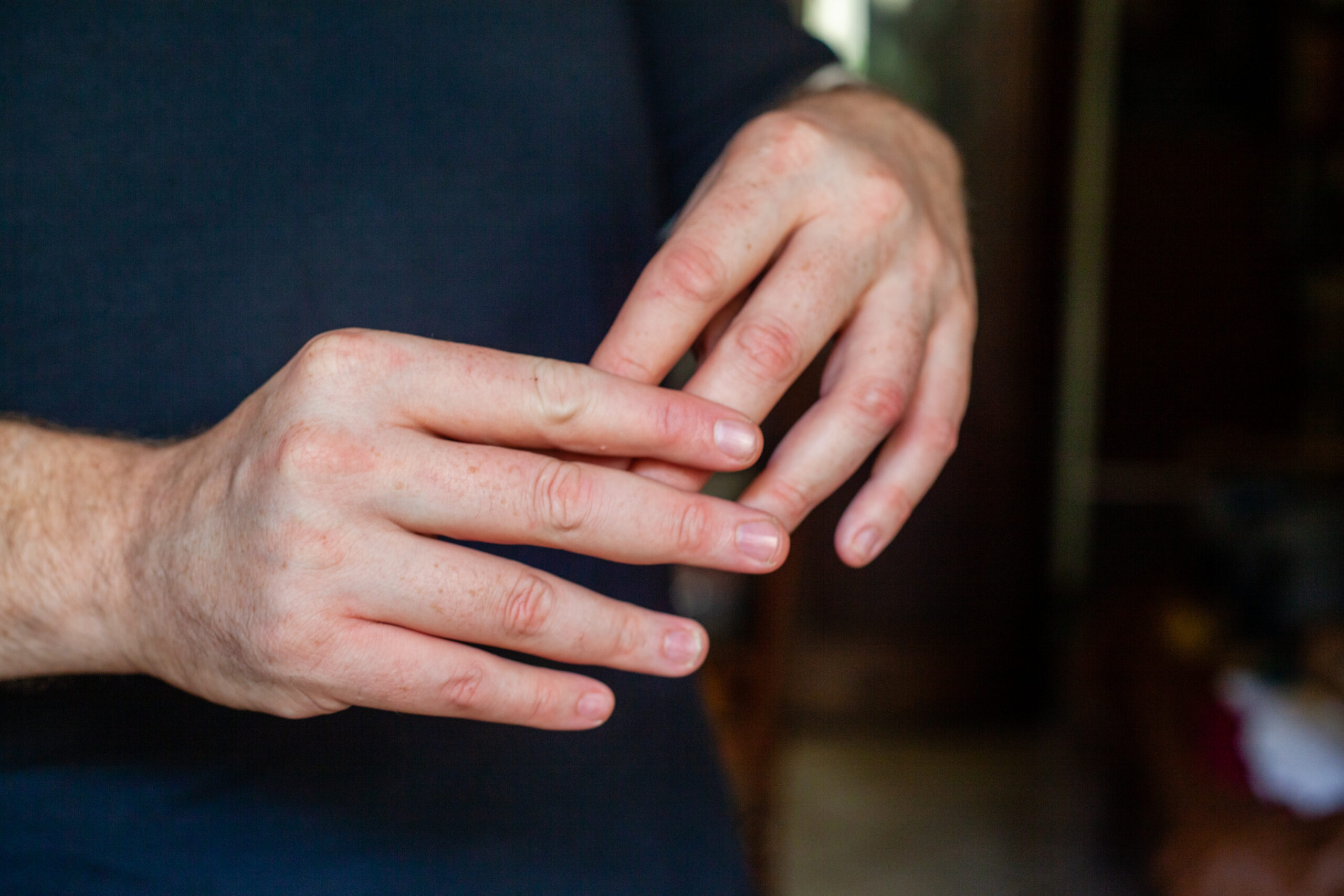
You wake up in the morning and reach for your phone, but your fingers don’t seem to move quite normally.
Making a fist feels uncomfortable. The knuckles seem tight, and bending your fingers takes more effort than usual.
Perhaps you notice that your wedding ring feels tighter in the morning, or that gripping your coffee cup is difficult until you’ve been moving around for a while.
After several minutes, the stiffness begins to ease.
For some people, the problem is mild and occasional. For others, morning finger stiffness becomes a daily frustration that interferes with dressing, cooking, working, or performing ordinary household activities.
The natural assumption is that arthritis must be developing.
Arthritis is certainly one possibility, but it is not the only explanation.
At Doyle Chiropractic in Huntersville, North Carolina, Dr. Geoffrey Doyle evaluates hand stiffness by considering which joints are involved, how long the symptoms last, and whether the fingers also experience swelling, pain, catching, or locking.
These details help distinguish common degenerative changes from tendon disorders and inflammatory joint conditions.
Understanding the difference is important because treatment that helps one condition may be inadequate or inappropriate for another.
Why Fingers Can Feel Stiff After Sleeping
The fingers contain numerous small joints, tendons, ligaments, and supporting soft tissues that work together to produce precise movements.
Each finger has joints that allow bending and straightening, while tendons connect the muscles of the forearm and hand to the bones of the fingers.
The flexor tendons allow the fingers to curl into a fist. Extensor tendons help straighten them.
These tendons move through surrounding tissues and, in certain locations, pass beneath specialized structures called pulleys that keep them close to the bones.
During sleep, the hands often remain relatively still for several hours.
When joints or tendons are already irritated, this prolonged period of inactivity may make the first movements of the morning feel uncomfortable.
Mild fluid accumulation or swelling can also contribute to a sensation of tightness.
Movement may gradually improve comfort by activating muscles and moving the joints and tendons through their available range.
However, the fact that stiffness improves with movement does not establish a particular diagnosis.
Both degenerative and inflammatory conditions can produce morning stiffness, although the duration and associated findings may differ.
Hand Osteoarthritis: When Small Joints Become Stiff and Painful
Osteoarthritis is a common cause of finger stiffness, particularly as people get older.
The condition involves changes affecting cartilage, bone, and other tissues within the joint.
In the hands, osteoarthritis frequently affects the distal interphalangeal joints near the fingertips, the proximal interphalangeal joints in the middle of the fingers, and the joint at the base of the thumb.
Patients may notice stiffness after inactivity, discomfort when gripping objects, or enlargement of certain finger joints.
Some develop firm bony prominences called Heberden’s nodes near the fingertips or Bouchard’s nodes around the middle finger joints.
These changes can make the fingers appear enlarged or slightly crooked over time.
Why Osteoarthritis Often Feels Worse After Rest
A joint affected by osteoarthritis may become uncomfortable after remaining in one position for an extended period.
The first few movements can feel stiff, but gentle activity may improve comfort.
This is sometimes called gelling, a term used to describe stiffness following inactivity.
However, excessive or prolonged gripping can also aggravate symptoms because the affected joints must tolerate repeated mechanical loading.
For example, someone may experience stiffness when first waking up, feel better after moving the fingers, and then develop discomfort after gardening or using hand tools for an extended period.
This pattern suggests that both inactivity and mechanical demand influence the symptoms.
It is also important to recognize that the severity of arthritis visible on X-rays does not always match the amount of pain a patient experiences.
Some individuals have substantial degenerative changes with relatively little discomfort, while others experience meaningful limitations with less dramatic imaging findings.
The examination must therefore consider function rather than relying exclusively on structural changes.
Trigger Finger: When a Finger Catches or Locks During Movement
Trigger finger, medically called stenosing flexor tenosynovitis, is another common explanation for morning finger stiffness.
Unlike osteoarthritis, which involves the joints, trigger finger primarily affects the movement of a flexor tendon through its surrounding pulley system.
The flexor tendons pass beneath small fibrous pulleys that hold them close to the finger bones.
When the tendon or pulley becomes thickened or irritated, the tendon may not glide smoothly.
The result can be catching, clicking, or locking when bending or straightening the finger.
Some patients wake up with a finger stuck in a bent position and must use the opposite hand to straighten it.
Others notice a painful snapping sensation when making a fist.
Why Trigger Finger Can Be Worse in the Morning
Trigger finger symptoms are frequently more noticeable after prolonged inactivity.
During sleep, the affected finger may remain in a flexed position, and the tendon may become temporarily more difficult to move through the narrowed pulley.
When the patient first attempts to straighten the finger, the tendon may catch before suddenly releasing.
Tenderness is often located along the palm near the base of the affected finger, rather than directly over the finger joints.
A small tender nodule may sometimes be felt in this region.
This distinction helps separate trigger finger from arthritis.
A patient with osteoarthritis may experience generalized joint stiffness, while someone with trigger finger may describe one particular finger that catches or locks.
Both conditions can coexist, particularly in older adults.
Rheumatoid Arthritis: When Morning Stiffness Reflects Inflammation
Rheumatoid arthritis is an autoimmune inflammatory disease that can affect multiple joints, including those of the hands and wrists.
Unlike osteoarthritis, which is associated with degenerative joint changes, rheumatoid arthritis involves immune-mediated inflammation of the joint lining, called the synovium.
This inflammation can produce pain, swelling, warmth, and stiffness.
Patients may notice that several finger joints feel swollen or difficult to move, particularly in the morning.
The metacarpophalangeal joints, located where the fingers meet the hand, and the proximal interphalangeal joints are commonly affected.
Symptoms often involve both hands, although the pattern can vary.
Why the Duration of Morning Stiffness Matters
One useful distinction is how long the stiffness lasts.
Osteoarthritis commonly produces relatively brief stiffness after inactivity.
Inflammatory arthritis may produce more prolonged morning stiffness, sometimes lasting an hour or longer.
However, duration alone cannot reliably distinguish the conditions.
A patient with rheumatoid arthritis may also report fatigue, persistent joint swelling, or discomfort involving the wrists and other joints.
These findings deserve appropriate medical evaluation.
Early recognition is important because rheumatoid arthritis can cause progressive joint damage if inflammation is not adequately controlled.
Disease-modifying antirheumatic drugs, commonly called DMARDs, are central to medical management because they target the underlying inflammatory disease process.
Chiropractic care, manual therapy, or exercise should not be presented as substitutes for this treatment.
When Dr. Doyle identifies a pattern concerning for inflammatory arthritis, coordination with a primary care provider or rheumatologist may be appropriate.
Other Reasons Your Fingers May Feel Stiff
Not every episode of finger stiffness originates from osteoarthritis, rheumatoid arthritis, or trigger finger.
Several other conditions may produce similar complaints.
Tendon Irritation and Overuse
Repeated gripping, lifting, or tool use may irritate tendons and surrounding tissues.
Someone who spends long hours working with hand tools, gardening, or performing repetitive manual tasks may develop discomfort and stiffness after periods of rest.
Symptoms may be more noticeable in particular fingers or during specific gripping movements.
The examination helps determine whether the discomfort originates from a joint, tendon, or another structure.
Swelling and Fluid Retention
Fluid accumulation can make the fingers feel tight or swollen, particularly in the morning.
Patients may notice difficulty removing rings or making a complete fist.
The cause may involve local inflammation, medication effects, or a broader medical condition.
Persistent or unexplained swelling, particularly when it affects both hands or occurs with swelling elsewhere, may warrant medical evaluation.
Other Inflammatory Joint Conditions
Psoriatic arthritis, gout, and other inflammatory disorders can also affect the fingers.
Psoriatic arthritis may involve swollen fingers, sometimes described as dactylitis, in which an entire digit becomes enlarged.
Gout can produce sudden episodes of intense joint pain, redness, and swelling, although it is less commonly associated with the typical gradual morning stiffness described by patients with hand osteoarthritis.
A suddenly hot, red, severely painful finger joint—especially with fever—requires prompt medical assessment because infection must also be considered.
Why the Pattern of Finger Stiffness Matters
One of the most useful aspects of evaluating morning finger stiffness is recognizing how different conditions affect different structures.
A patient whose fingertips and middle finger joints are enlarged and stiff may have a pattern consistent with osteoarthritis.
Someone whose ring finger catches and locks when making a fist may have trigger finger.
Another patient with prolonged morning stiffness, persistent swelling across several knuckles, and fatigue may require evaluation for inflammatory arthritis.
These complaints may initially sound similar, but they lead to different diagnostic considerations.
At Doyle Chiropractic, Dr. Doyle places particular emphasis on identifying whether the problem is primarily mechanical, tendon-related, inflammatory, or associated with a broader medical condition.
That distinction determines whether conservative joint care, rehabilitation, splinting, additional testing, or medical referral is the most appropriate next step.
How Doyle Chiropractic Evaluates Morning Finger Stiffness
When a patient comes to Doyle Chiropractic describing stiff fingers in the morning, Dr. Geoffrey Doyle begins by determining whether the symptoms originate from the joints, tendons, or an underlying inflammatory condition.
The pattern of stiffness often provides valuable information.
A patient whose fingers feel tight for several minutes after waking may have a different problem from someone experiencing prolonged stiffness, visible swelling, and difficulty making a fist for much of the morning.
Dr. Doyle considers which fingers are affected, whether symptoms occur in one or both hands, and whether the patient experiences catching, locking, numbness, or persistent joint pain.
The examination also considers how symptoms affect everyday activities such as gripping, writing, buttoning clothing, or opening containers.
Examining the Finger Joints and Tendons
The physical examination may include inspection of the hands for swelling, joint enlargement, redness, and changes in finger alignment.
Dr. Doyle evaluates active and passive finger movement to determine whether stiffness originates primarily from the joints or from difficulty with tendon movement.
For example, a patient with hand osteoarthritis may demonstrate tenderness and restricted movement involving specific finger joints.
Someone with trigger finger may have tenderness near the base of a finger, along with catching during flexion or extension.
When inflammatory arthritis is suspected, the examination looks for persistent swelling, warmth, tenderness across multiple joints, and patterns involving both hands.
Grip strength and functional hand movements may also be assessed.
The goal is not simply to determine whether the fingers are stiff, but to identify which anatomical structures are contributing to the problem.
When X-Rays, Blood Tests, or Medical Referral Are Appropriate
X-rays may be useful when joint degeneration, deformity, or another bony condition is suspected.
However, not every patient with finger stiffness requires imaging.
When symptoms suggest rheumatoid arthritis or another inflammatory disease, medical evaluation may include laboratory testing and additional imaging.
Blood tests such as rheumatoid factor, anti-CCP antibodies, and inflammatory markers may contribute to the assessment, but no single blood test establishes or excludes rheumatoid arthritis.
Persistent joint swelling, prolonged morning stiffness, or symptoms affecting multiple joints may warrant evaluation by a primary care provider or rheumatologist.
Early identification of inflammatory arthritis is particularly important because appropriate medical treatment can help prevent progressive joint damage.
Treatment Options for Morning Finger Stiffness
The appropriate treatment depends on whether the symptoms involve osteoarthritis, trigger finger, tendon irritation, or an inflammatory joint condition.
At Doyle Chiropractic, Dr. Doyle considers the diagnosis, severity of symptoms, and functional limitations before recommending conservative treatment.
Improving Joint Mobility and Hand Function
For patients with hand osteoarthritis or mechanical stiffness, gentle range-of-motion exercises may help maintain movement and reduce discomfort after inactivity.
Exercises may include slowly opening and closing the hand, bending individual finger joints, and performing comfortable tendon-gliding movements.
The goal is to encourage movement without repeatedly aggravating sensitive tissues.
Some patients may also benefit from appropriately selected strengthening exercises to improve grip function and hand endurance.
However, exercises should be modified when joints are significantly swollen or painful.
More forceful stretching is not necessarily more effective, particularly when inflammation is present.
Chiropractic Care and Manual Therapy
Selected patients with mechanical hand or wrist complaints may benefit from conservative care addressing associated joint restrictions or muscular dysfunction.
Depending on the examination findings, Dr. Doyle may consider gentle joint mobilization, selected extremity adjustments, or soft-tissue treatment.
These approaches may help address associated discomfort and movement limitations in appropriate patients.
However, they do not reverse established joint degeneration or treat the underlying autoimmune process responsible for rheumatoid arthritis.
The evidence supporting manual treatment for specific finger conditions is limited, so these interventions should be considered adjuncts rather than definitive treatment.
The objective is to improve comfortable function while recognizing when other treatment approaches are more appropriate.
Treatment for Trigger Finger
Trigger finger often requires a different approach from ordinary joint stiffness.
Reducing repetitive gripping or other aggravating activities may help decrease irritation around the affected flexor tendon.
Selected patients may benefit from splinting that limits triggering, particularly during sleep.
Gentle tendon movement may also be useful when it does not repeatedly reproduce painful catching.
If symptoms persist, medical treatment may include corticosteroid injection around the affected tendon sheath.
For severe or persistent cases, a relatively small surgical procedure to release the constricted pulley may be considered.
The important distinction is that trigger finger involves impaired tendon gliding. Repeatedly forcing a locked finger through painful movement may worsen irritation rather than improve the condition.
Treatment for Hand Osteoarthritis
Management of hand osteoarthritis often combines joint protection, appropriate exercise, and symptom control.
Patients may benefit from modifying activities that require prolonged forceful gripping, using tools with larger handles, or taking breaks during repetitive hand tasks.
Warmth may temporarily improve stiffness for some patients, while cold application may be more comfortable during episodes of swelling or increased irritation.
Selected splints or orthoses may be helpful, particularly for arthritis involving the base of the thumb.
Medical treatment may include topical anti-inflammatory medications when appropriate.
More advanced joint problems may require evaluation by a hand specialist.
At Doyle Chiropractic, conservative treatment is directed toward maintaining movement and function rather than claiming to restore lost cartilage.
When Inflammatory Arthritis Requires Medical Treatment
Rheumatoid arthritis and other inflammatory joint diseases require particular attention because they may cause progressive structural damage.
Although appropriate exercise and rehabilitation can support mobility and function, they do not replace medications that control the underlying disease process.
Patients with suspected rheumatoid arthritis should receive timely medical evaluation, particularly when persistent swelling and prolonged morning stiffness affect multiple joints.
The role of conservative musculoskeletal care is supportive when appropriate and coordinated with the patient’s medical treatment.
Recovery and Functional Outcomes
Recovery depends on the cause of the finger stiffness.
Patients with mild mechanical stiffness may experience improvement through movement, activity modification, and appropriate rehabilitation.
Hand osteoarthritis is generally a chronic condition, but symptoms and functional limitations can often be managed even though the underlying degenerative changes remain.
Trigger finger may improve with activity modification or splinting, while persistent cases sometimes require medical intervention.
Inflammatory arthritis requires ongoing medical management, with outcomes influenced by early diagnosis and effective control of inflammation.
At Doyle Chiropractic, functional improvement is considered alongside symptom relief.
A patient may notice that making a fist becomes easier, gripping a coffee cup is less uncomfortable, or handling small objects requires less effort.
For someone who enjoys gardening, woodworking, or playing golf around Lake Norman, improvement may mean returning to those activities with better hand comfort and endurance.
The objective is not simply to eliminate morning stiffness temporarily. It is to preserve the ability to use the hands comfortably throughout the day.
The Dr. Doyle Perspective
When a patient tells me their fingers are stiff every morning, one of the first questions I ask is how long it takes before their hands begin moving normally.
That answer can help guide the examination.
If someone describes several minutes of stiffness involving enlarged finger joints, I may be thinking about osteoarthritis or another mechanical joint problem.
If one finger catches or locks when the patient tries to straighten it, I become more interested in the flexor tendon and pulley system.
But if a patient describes significant swelling across several knuckles, prolonged morning stiffness, and difficulty using both hands, I want to consider whether an inflammatory disease may be present.
Those distinctions matter because the treatment approaches are different.
I also pay attention to what the patient means by stiffness.
Sometimes the joints are genuinely restricted. Other times, movement is limited because bending the fingers causes pain. In trigger finger, the problem may involve a tendon that cannot glide smoothly through its normal pathway.
Each situation requires a different explanation.
One concern I have is that patients sometimes assume every hand problem is simply arthritis associated with getting older.
While osteoarthritis is common, I do not want to overlook rheumatoid arthritis or another inflammatory condition that may benefit from early medical treatment.
I also explain that arthritis visible on an X-ray does not automatically mean the patient will lose the ability to use their hands.
Many people maintain excellent function despite degenerative changes.
My goal is to identify which structures are involved, explain the available treatment options, and help the patient preserve comfortable movement and independence.
Sometimes that means recommending joint mobility exercises or activity modifications. Sometimes splinting or a hand specialist may be appropriate. And when the examination suggests inflammatory arthritis, medical evaluation becomes an important priority.
The key is understanding why the fingers are stiff rather than assuming every case of morning stiffness represents the same condition.
Our Clinical Experience
Morning finger stiffness provides a useful example of how similar complaints can originate from different anatomical structures.
Consider three hypothetical presentations.
Presentation One: Stiff and Enlarged Finger Joints
A patient notices that several finger joints have gradually become enlarged and uncomfortable.
The stiffness is most noticeable after waking but improves after gentle movement.
The examination identifies tenderness and reduced motion involving joints commonly affected by osteoarthritis.
Treatment may focus on comfortable joint mobility, activity modification, and strategies to maintain hand function.
Presentation Two: A Finger That Locks in the Morning
Another patient wakes with the ring finger bent and experiences a painful snapping sensation when trying to straighten it.
Tenderness is located near the base of the finger on the palm.
This presentation raises consideration of trigger finger rather than primary joint arthritis.
Splinting, activity modification, or referral for additional medical treatment may be appropriate depending on severity.
Presentation Three: Prolonged Stiffness With Swollen Knuckles
A third patient describes stiffness lasting more than an hour, persistent swelling involving several knuckles, and discomfort affecting both hands.
The examination raises concern for an inflammatory joint condition.
In this situation, timely medical evaluation is important because treatment directed at the underlying inflammatory process may help prevent joint damage.
These examples are hypothetical and illustrate clinical decision-making rather than actual patient histories or guaranteed treatment outcomes.
The important lesson is that the duration, location, and associated symptoms of finger stiffness help determine which condition may be responsible.
Frequently Asked Questions
Why are my fingers stiff when I wake up?
Morning stiffness may result from osteoarthritis, tendon irritation, trigger finger, inflammatory arthritis, or swelling. The duration and location of symptoms help distinguish the possibilities.
Does morning finger stiffness always mean arthritis?
No. Tendon disorders and other soft-tissue conditions can produce stiffness without primary joint arthritis.
How long does morning stiffness from osteoarthritis usually last?
Osteoarthritis commonly produces relatively brief stiffness after inactivity, often improving within approximately 30 minutes. However, symptom duration varies and is not diagnostic by itself.
Why does one finger lock when I wake up?
A finger that catches or locks may have trigger finger, a condition involving impaired flexor tendon movement through its pulley system.
Can rheumatoid arthritis cause stiff fingers in the morning?
Yes. Rheumatoid arthritis commonly causes morning stiffness, joint swelling, and pain, often involving multiple joints in both hands.
Can finger exercises help arthritis?
Gentle mobility and appropriately selected strengthening exercises may help maintain function and reduce stiffness in some patients. Exercises should be modified when joints are acutely inflamed.
Should I use heat or ice for stiff fingers?
Warmth may help relieve stiffness, while cold may be more comfortable during episodes of swelling or irritation. The best approach depends on the condition and individual response.
Can chiropractic care help finger stiffness?
Selected conservative treatments may help associated mechanical discomfort or restricted movement. However, chiropractic care does not reverse arthritis or replace medical treatment for inflammatory joint diseases.
When should I see a rheumatologist?
Persistent swelling involving multiple joints, prolonged morning stiffness, or other findings suggesting inflammatory arthritis warrant medical evaluation and possible rheumatology referral.
When should finger stiffness be evaluated urgently?
A suddenly hot, red, severely painful joint, particularly with fever, requires prompt medical assessment. Rapidly worsening swelling, severe pain, or new loss of finger function also deserves timely evaluation.
Final Thoughts
Morning finger stiffness is common, but the underlying cause is not always the same.
Some patients experience stiffness associated with osteoarthritis, while others have tendon problems such as trigger finger. Persistent swelling and prolonged stiffness may suggest an inflammatory joint condition requiring medical evaluation.
The location of discomfort, duration of stiffness, and presence of catching, locking, or swelling provide important diagnostic clues.
At Doyle Chiropractic in Huntersville, North Carolina, Dr. Geoffrey Doyle evaluates hand complaints by considering joint movement, tendon function, muscular strength, and the possibility of underlying inflammatory or neurological conditions.
For patients throughout Huntersville, Cornelius, Davidson, and the Lake Norman area, the goal is to identify the likely cause, explain appropriate treatment options, and help preserve comfortable hand function.
Whether the objective is making a fist without discomfort, opening containers, working with tools, or returning to favorite activities, meaningful improvement begins with understanding why the fingers are stiff and addressing the structures responsible.