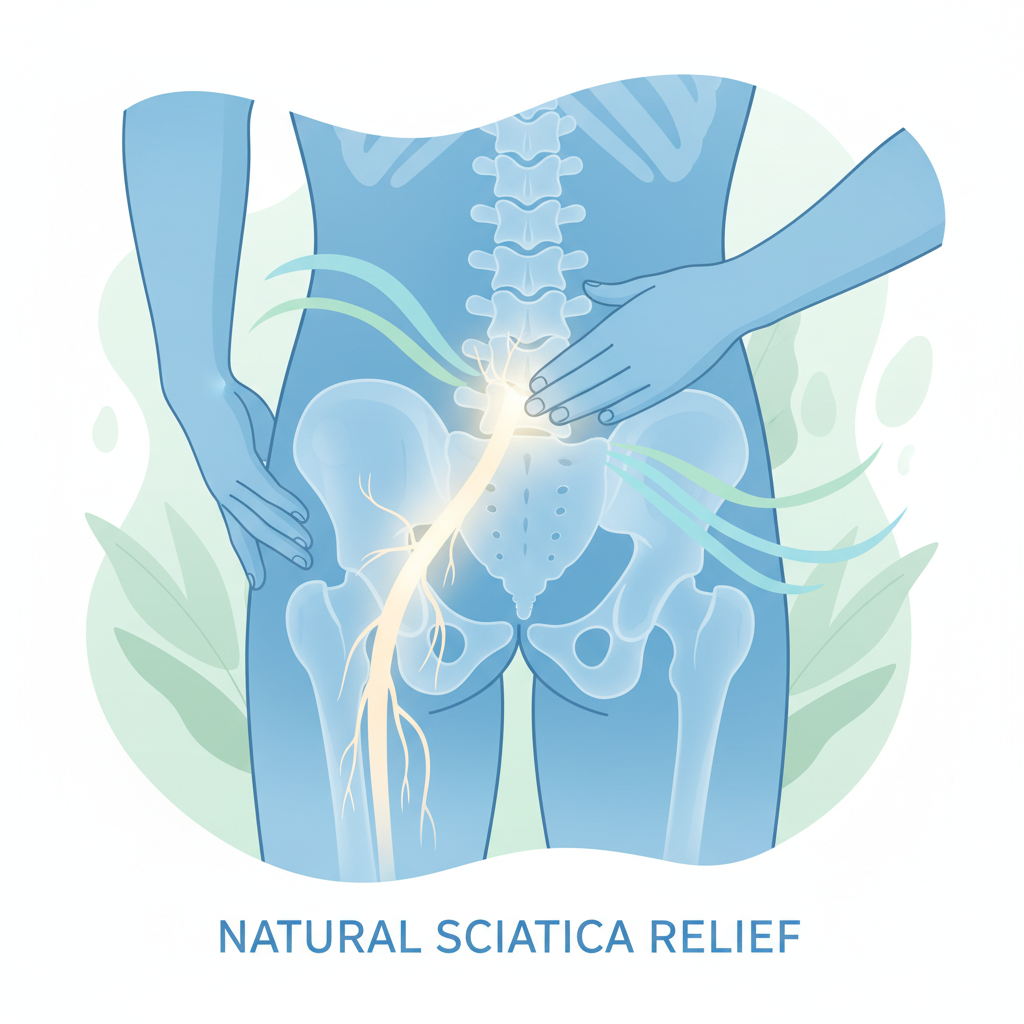
Understanding sciatica and why it hurts
If you are looking for sciatica relief without injections, you are not alone. As many as 4 out of every 10 people will experience sciatica at some point, often as sharp, burning, or aching pain that starts in your lower back and travels through your hip, buttock, and down your leg [1].
Sciatica is not a diagnosis by itself. It is a description of what happens when your sciatic nerve is irritated or compressed. This large nerve exits from your lower spine, passes through your pelvis and buttock, and runs all the way down to your foot. When something puts pressure on it or inflames the tissues around it, you feel symptoms anywhere along that path.
Common symptoms include:
- Radiating leg pain, often worse than the back pain
- Numbness, tingling, or “pins and needles” in your leg or foot
- Weakness when you try to stand on your toes or heels
- Pain that worsens with sitting, bending, or twisting
Mild sciatica can improve on its own, often with simple home care like rest, cold or heat packs, and over the counter anti inflammatory medicine [2]. For many people, the right combination of conservative care, including chiropractic treatment, can provide meaningful relief without injections or surgery.
How sciatica develops from nerve compression
Sciatica usually starts with a mechanical problem in your lower spine or pelvis that puts pressure on the nerve roots forming the sciatic nerve. When those roots are “pinched” or irritated, the nerve sends pain signals down your leg.
Common causes of sciatic nerve compression
Several conditions can narrow the space around the nerve or change how your spine moves:
- Herniated or bulging lumbar disc that presses on a nerve root
- Degenerative disc disease that reduces disc height and joint spacing
- Bone spurs from arthritis that encroach on nerve pathways
- Spinal stenosis, or narrowing of the spinal canal
- Misalignment or restricted motion of vertebrae or the sacroiliac joints
- Tight muscles in the hip or buttock that irritate the nerve, sometimes called piriformis related sciatica
When you have sciatic nerve compression, local inflammation often develops around the irritated nerve. This combination of mechanical pressure and chemical irritation explains why pain can be intense, and why treating both alignment and inflammation is so important for long term relief. You can explore more about these mechanical causes in the context of sciatica caused by disc chiropractor care.
Why non invasive treatment works for most people
You might worry that leg pain this severe will automatically lead to injections or surgery. Fortunately, that is rarely the case. Approximately 90% of people with sciatica improve without surgery, many within a few weeks, often starting with treatment at home, especially when the cause is an injury or pregnancy [3].
Specialists also emphasize that injections and surgery are usually reserved for persistent or severe cases. Surgery is generally considered only if you have severe pain that does not improve after about 6 weeks of conservative treatment, or if you have serious nerve problems like significant weakness or changes in bladder or bowel control [1].
For most people, an active, stepwise approach that includes chiropractic care, targeted exercise, posture changes, and simple home strategies can provide sciatica relief without injections. You can learn more about this staged approach in our guide to sciatica treatment without surgery.
Chiropractic care for sciatic nerve compression
Chiropractic care focuses on how your spine and nervous system work together. When vertebrae, discs, and surrounding joints do not move correctly, they can irritate nearby nerves, including the sciatic nerve. The goal of chiropractic treatment is to reduce that pressure, improve alignment and motion, and support your body’s ability to heal.
How chiropractors evaluate sciatica
At your first visit, a chiropractor will typically:
- Take a detailed history of your pain, including onset, location, and what makes it better or worse
- Ask about any red flag symptoms, such as loss of bowel or bladder control or severe weakness
- Perform a physical and neurological exam, such as checking reflexes, muscle strength, and sensation
- Use specific tests that stretch or tension the sciatic nerve to see where it is irritated
- Review or refer for imaging if needed, such as X rays or an MRI, to clarify the cause of compression
This type of nerve pain chiropractor evaluation helps identify whether your sciatica is likely to respond to conservative, non invasive care and which structures need the most attention.
Chiropractic approaches that may reduce nerve pressure
Your chiropractor will create a personalized sciatica pain relief plan. Depending on your findings, treatments may include:
-
Spinal adjustments
Gentle, controlled forces applied to specific joints in your spine or pelvis help restore motion and alignment. A chiropractic adjustment for sciatica can reduce mechanical pressure on nerve roots and improve joint function. -
Flexion distraction or traction based techniques
Specialized tables can gently stretch and decompress the lumbar spine. This can be particularly helpful when a disc bulge contributes to sciatica. -
Soft tissue therapy
Hands on techniques and instrument assisted work can target tight or overworked muscles in the low back, hip, and glutes. This helps ease muscle tension that may be compressing or irritating the sciatic nerve, supporting chiropractic care for nerve inflammation. -
Posture and movement coaching
You may receive guidance on how to sit, stand, and lift in ways that reduce pressure on the lower back and nerve roots. Good posture, such as sitting with your feet flat, shoulders back, and lower back supported, is known to reduce extra spinal stress and help with sciatica recovery [4]. -
Targeted exercise and home care plan
Your chiropractor will often prescribe specific stretches and strengthening exercises to support long term relief. These fit into a broader sciatica recovery plan chiropractor approach.
Chiropractic care aims to address the root mechanical issues instead of only masking symptoms, which is why it fits well into non invasive sciatica treatment options.
At home sciatica relief without injections
Working with a chiropractor is most effective when you combine treatment with simple, consistent home strategies. Research supported options that do not involve injections include cold and heat therapy, movement, stretching, and gentle strengthening.
Cold and heat therapy
For new or suddenly worse sciatica, cooling the area can be very helpful. Applying ice packs to your lower back for 15 to 20 minutes at a time, wrapped in a thin cloth, during the first few days can reduce inflammation around the sciatic nerve and lessen pain [3].
Clinics also note that applying ice packs directly over the painful sciatic region for several minutes can numb the area and calm a flare up [5].
After those first 24 to 48 hours, switching to heat can increase blood flow, relax tight muscles, and promote healing. Options include a heating pad, warm compress, or warm bath once your pain starts to subside [3]. Experts suggest using ice early on, then heat, as a practical way to manage inflammation and muscle tension [4].
If you plan to stretch, it is recommended to wait about 30 minutes after icing so the area can warm up again, which helps prevent added discomfort [3].
Movement instead of bed rest
When pain strikes, it can feel tempting to stay in bed, but prolonged rest can actually make sciatica worse. Experts advise avoiding extended bed rest because it can weaken muscles, increase blood clot risk, and prolong pain [5].
Instead, once your pain allows, you are encouraged to move as much as you can tolerate. Harvard Health notes that movement is crucial for relieving sciatica pain, and extended sitting or inactivity can prolong the condition [3]. Even brief periods of taking weight off your feet, for a few minutes, can give rapid relief, as long as they are balanced with regular gentle activity [5].
Short walks, gradual return to daily tasks, and changes of position throughout the day fit well with chiropractic care and help maintain the improvements you gain from each visit.
Gentle stretching and mobility
Targeted stretching can ease pressure on the sciatic nerve by improving flexibility in the lower back, hips, and hamstrings. Licensed physical therapists and spine specialists recommend gentle floor exercises and yoga inspired movements to relieve sciatic pain without injections.
For example, the Hospital for Special Surgery suggests six gentle floor exercises as home based options that can ease sciatica pain: Glute Bridge, Lying Knee to Chest Stretch, Clamshell, Bird Dog, Cobra Stretch, and Child’s Pose Stretch [2]. These movements:
- Improve hip and lumbar mobility
- Activate core and glute muscles that support your spine
- Reduce tightness in the front and back of your thighs
Similarly, Healthline highlights nine stretches like the seated glute stretch, figure 4 stretch, knee to opposite shoulder, and standing hamstring stretch, that aim to externally rotate the hip and lengthen tight muscles near the sciatic nerve [6].
Frequent stretching of tight hamstrings, especially with a scissor style hamstring stretch, is recommended daily because hamstring tightness can mimic or aggravate sciatic symptoms [6].
Gentle yoga poses such as cat cow, child’s pose, and similar routines, performed for several minutes, can mobilize your spine and relieve pressure on the nerve, according to spine specialists in London [5]. Your chiropractor can adapt these stretches and integrate them into your sciatica pain relief plan so they match your diagnosis and comfort level.
Strengthening for lasting relief
Strengthening the muscles that support your spine and pelvis is essential for long term sciatica relief without injections. Low impact exercises like the bridge technique and quadruped arm and leg lifts help stabilize the lower back and glutes, which can quickly reduce sciatic symptoms in many people [5].
Physical therapists at major spine centers also emphasize building strength, balance, flexibility, and aerobic fitness as part of an active routine that may help prevent and ease recurring mild sciatica without injections [2].
Your chiropractor can coordinate with or mirror this approach, guiding you on how to safely progress exercises at home so that improvements are sustainable. This collaborative strategy aligns with chiropractic therapy for nerve compression goals.
Active, guided therapy that strengthens and mobilizes your back and hips is one of the most important ways to restore function, reduce pain, and avoid invasive interventions for sciatica.
Chiropractic vs injections and surgery
When you are in severe pain, it is reasonable to wonder what will work fastest and safest. Injections and surgery have a place, but they are not usually first line options.
Where injections fit in
Epidural steroid injections can temporarily reduce inflammation around compressed nerve roots. They are generally considered when:
- You have significant leg pain that is not improving with several weeks of conservative care
- You are not ready for or do not qualify for surgery
- Your imaging confirms a specific site of nerve root irritation
Injections may provide relief for weeks or months, but they do not correct underlying mechanical issues. Many people prefer to pursue non invasive sciatica treatment options, including chiropractic care, physical therapy, and structured home programs first.
When surgery is considered
As WebMD notes, surgery is rarely needed for sciatica and is usually considered only if severe pain persists for about 6 weeks despite conservative treatments, or if a herniated disc or similar issue is clearly pressing on the nerve and causing serious problems [1].
Red flag situations where urgent surgical evaluation is vital include:
- New or worsening leg weakness
- Loss of bowel or bladder control
- Numbness in the saddle or groin area
If you experience these, you should seek emergency care. For typical cases without these signs, most spine experts recommend trying structured care such as chiropractic, physical therapy, and targeted exercise before more invasive steps. This comparison is explored further in chiropractic vs surgery for sciatica.
What to expect from chiropractic sciatica treatment
Understanding how recovery usually progresses can help you set realistic expectations and stay consistent with your plan.
Typical recovery timelines
Every case is different, but some general patterns are common:
-
Acute sciatica
For new symptoms that started within the past few days or weeks, many people notice meaningful improvement over 2 to 6 weeks with regular conservative care. This aligns with data that most cases improve in a few weeks without surgery [3]. -
Subacute or recurrent sciatica
If you have had symptoms for several months or repeated flare ups, improvement can still be significant, but you may need a longer period of consistent care and exercise to stabilize the spine and surrounding tissues.
Your chiropractor can give you a more specific estimate once your exam is complete, similar to discussions you might see in how long does sciatica take to heal chiropractor resources.
Visit frequency and progression
In the early phase, visits are often more frequent to calm the acute pain, restore movement, and get you comfortable with home strategies. As your symptoms improve, your schedule shifts toward:
- Less frequent in office adjustments
- More emphasis on self management: stretching, strengthening, and ergonomic changes
- Periodic check ins to maintain gains and address any new concerns
This gradual transition helps you build confidence in managing your condition while still having expert guidance when you need it.
When chiropractic is appropriate before injections or surgery
Chiropractic care is often a good first step if:
- Your pain radiates down one or both legs and matches a sciatic nerve pattern
- You do not have red flag symptoms like severe weakness or loss of bladder or bowel control
- You want to try conservative care first and avoid injections if possible
- Imaging, if available, shows disc, joint, or alignment issues that can respond to manual therapy
If your chiropractor identifies signs that your sciatica might not be appropriate for conservative care alone, you will be referred for medical or surgical evaluation. This collaborative approach is common when you work with a chiropractor for sciatica nerve pain as part of a broader care team.
Complementary non invasive options to discuss with your provider
Alongside chiropractic care and home strategies, some people explore additional non invasive methods. It is always best to coordinate these with your chiropractor or other licensed provider.
-
Physical therapy
Many experts emphasize that active physical therapy, with individualized exercises and alignment work, should be central in sciatica management, especially for restoring function and independence [6]. Chiropractic care can complement this by improving joint motion and nerve function. -
Massage and bodywork
Self massage or professional deep tissue massage for the glutes, thighs, calves, and lower back may quickly ease pain by reducing muscle tension that contributes to sciatic irritation [5]. -
Complementary therapies
Some people use biofeedback and acupuncture to try to moderate sciatic pain. Biofeedback helps you gain better control of body processes like muscle tension, while acupuncture involves fine needles at specific points to possibly help your nervous system release natural pain relievers. Evidence is still limited, so results can vary [1].
A chiropractor who focuses on chiropractic care for nerve pain can help you decide which options fit best with your condition and goals.
Taking your next step toward relief
You have several effective avenues for sciatica relief without injections. For most people, the combination of:
- Personalized chiropractic care to reduce nerve compression and improve alignment
- Evidence based exercises to strengthen and mobilize the spine and hips
- Simple home strategies like ice, heat, and active movement
- Attention to posture and daily mechanics
provides a strong foundation for recovery.
If you are experiencing radiating leg pain or numbness, consider scheduling an evaluation with a provider who regularly treats leg pain from sciatica chiropractor cases. An early, comprehensive assessment and a structured plan tailored to your situation can help you move, work, and rest with less pain, and in many cases avoid injections or surgery altogether.