Sciatica treatment without surgery is possible for most people, and you may not need injections or an operation to feel better. By understanding how sciatic nerve compression develops and using targeted conservative care, including chiropractic treatment, you can often reduce pain, calm inflammation, and restore function without invasive procedures.
Understanding sciatica and nerve compression
Sciatica is not a diagnosis by itself. It is a pattern of symptoms that occur when your sciatic nerve is irritated or compressed. This large nerve starts in your lower back, travels through your hips and buttocks, and runs down each leg. When something along that path pinches or inflames the nerve, you feel it.
How sciatica develops
Sciatica usually begins with a problem in your lower spine or pelvis that puts pressure on the nerve or its roots. Common causes include:
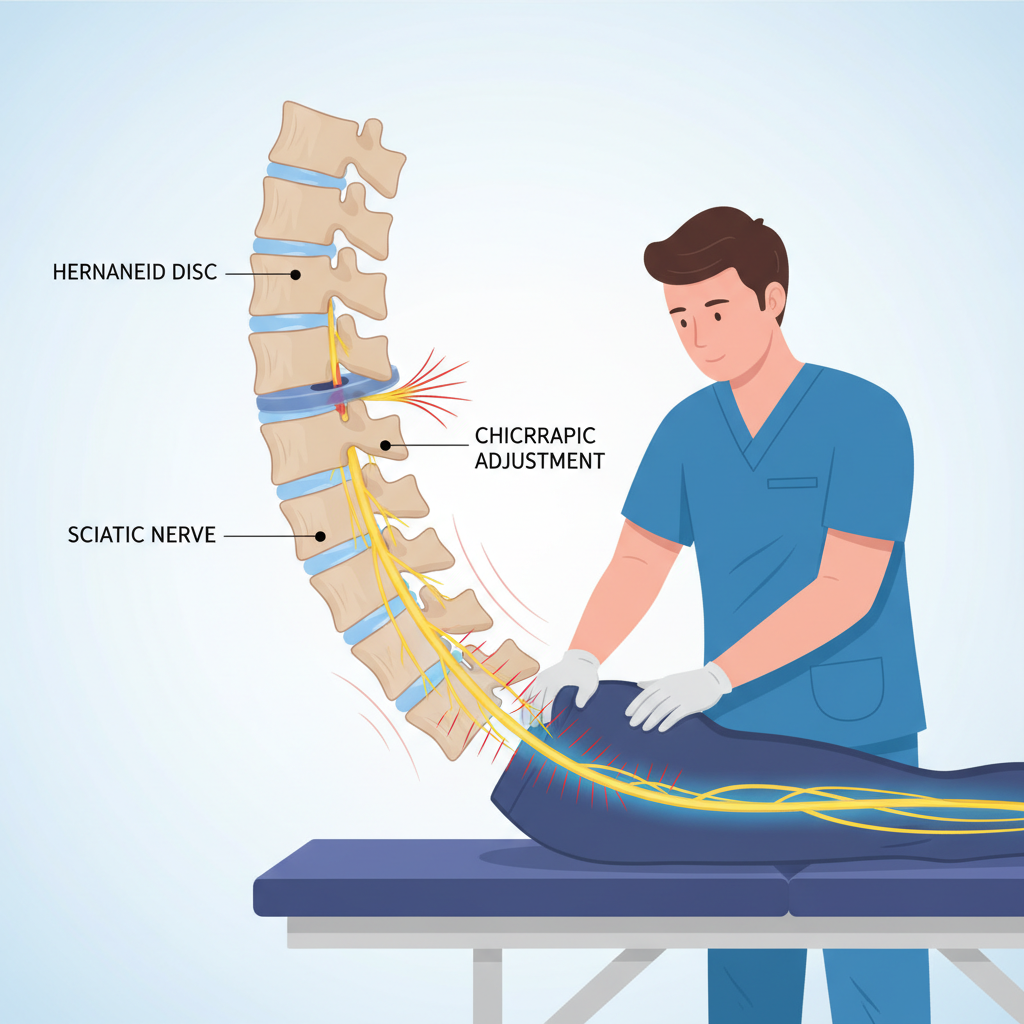
- A herniated lumbar disc that bulges and presses on the nerve root
- Degenerative disc or joint changes that narrow the spaces where nerves exit (spinal or foraminal stenosis)
- Misalignment or restricted motion of vertebrae or the sacroiliac joints
- Muscle tension or spasm in the piriformis or gluteal muscles that irritates the nerve as it passes through the hip region
Over time, this compression can trigger inflammation around the nerve. That is why you may notice sharp, burning, or electric pain that travels from your lower back or buttock down the back of your leg, sometimes all the way into your foot.
Typical sciatica symptoms
Sciatica feels different from general low back pain. You may notice:
- Radiating pain down one leg, often worse than the back pain itself
- Numbness, tingling, or a “pins and needles” sensation in your leg or foot
- Weakness in your leg, ankle, or foot
- Pain that worsens when you sit, cough, or sneeze
- Symptoms that improve somewhat when you stand or walk
Pain can range from mildly annoying to severe and disabling. Even when symptoms are intense, most people recover with conservative care and do not need surgery, according to the Cleveland Clinic. They note that the majority of people improve within four to six weeks using non-surgical treatments such as stretching, medication, and physical therapy to relieve pain and improve mobility [1].
Why sciatica treatment without surgery is often effective
If you are worried that radiating leg pain means you are headed straight for the operating room, it can be reassuring to know that non-surgical treatment usually works.
Multiple major medical centers report that:
- Most people with sciatica recover without surgery through options like stretching, medication, and physical therapy, with good outcomes using conservative management [1]
- About 90 percent of people will improve without surgery, often in a matter of weeks, making home treatment and conservative care an effective first approach [2]
Chiropractic care fits into this conservative strategy. It focuses on correcting mechanical problems in your spine and pelvis that irritate the sciatic nerve. When nerve pressure is reduced and alignment improves, your body often heals on its own.
How chiropractic care targets sciatic nerve compression
Chiropractic treatment for sciatic nerve compression is built around one key goal. Take pressure off the irritated nerve and reduce inflammation, so your body can calm the pain signal and begin to heal.
You might explore resources such as chiropractic therapy for nerve compression or sciatic nerve compression treatment to understand how this approach applies specifically to your situation.
Step 1. Careful diagnosis and evaluation
Before any treatment begins, a chiropractor performs a detailed assessment to understand why you are having symptoms. This usually includes:
- A thorough health history, including when your pain started, what makes it worse or better, and any previous injuries
- A physical and neurological exam to check your posture, range of motion, reflexes, muscle strength, and sensation
- Orthopedic tests that reproduce or relieve symptoms to help locate the source of nerve compression
- Review of imaging, such as X-rays or MRI scans, when indicated
This type of assessment allows your provider to distinguish between sciatica, hip problems, vascular issues, or other causes of leg pain. A focused nerve pain chiropractor evaluation can identify whether chiropractic care is appropriate for your specific pattern of symptoms.
If you have red flag signs such as loss of bowel or bladder control, progressive leg weakness, or saddle anesthesia, you are referred for urgent medical attention. These symptoms can indicate a serious condition called cauda equina syndrome and require immediate treatment [3].
Step 2. Spinal and pelvic adjustments
Once your provider understands the underlying issue, they design a plan to restore better alignment and motion in the areas irritating the nerve. This often includes a chiropractic adjustment for sciatica.
Spinal and pelvic adjustments are precise, controlled forces applied to specific joints that are restricted or misaligned. In the context of sciatica, they may:
- Improve joint movement in the lumbar spine and sacroiliac joints
- Decrease mechanical compression around the nerve roots
- Reduce local inflammation and muscle guarding
- Promote better weight distribution and posture that takes strain off the nerve
Over several sessions, repeated adjustments can help retrain those joints to move more normally. This is a cornerstone of chiropractic treatment for lumbar sciatica and is often combined with soft tissue and rehabilitation techniques for a more complete response.
Step 3. Soft tissue work and nerve-friendly stretching
Because tight muscles and fascia can contribute to nerve irritation, your chiropractor may also use:
- Myofascial release or trigger point therapy in the gluteal, piriformis, and hip muscles
- Gentle stretching to release tension around the nerve pathway
- At-home stretches to maintain mobility between visits
Several organizations emphasize how targeted stretching relieves sciatic nerve pressure. The Hospital for Special Surgery recommends exercises like the Glute Bridge, Lying Knee-to-Chest Stretch, Clamshell, Bird-Dog, Cobra Stretch, and Child’s Pose Stretch to ease mild sciatica pain and maintain movement and strength in the hips and knees [3].
Similarly, experts highlight hip external rotation stretches, such as figure-4 stretches, pigeon pose, and hamstring stretches, to reduce nerve compression and muscle tightness along the nerve pathway [4].
Your chiropractor integrates this research-backed approach into a customized sciatica pain relief plan that fits your mobility, pain level, and overall health.
Step 4. Posture, movement, and lifestyle changes
Chiropractic care for sciatica does not stop at the treatment table. Education and lifestyle modification are critical to prevent the same compression from recurring.
Your provider may help you:
- Adjust your sitting and standing posture to reduce lumbar strain
- Modify your workstation or car seat for better support
- Plan a gradual walking or low impact exercise program
- Learn safe bending and lifting mechanics
Both Harvard Health and the Mayo Clinic emphasize the importance of movement for sciatica recovery. After a brief rest period, staying active, walking, and using gentle exercise are essential to reduce pain and prevent worsening symptoms [5].
This educational component is central to chiropractic care for nerve pain and helps you take an active role in your healing.
Other non-surgical options that complement chiropractic care
Sciatica treatment without surgery often involves a combination of approaches. Your chiropractor may coordinate with your primary care physician, physical therapist, or pain specialist to design the safest plan for you.
At-home self care strategies
Several self care steps can support your chiropractic treatment:
- Gentle movement. Short walks and light stretching help reduce pressure on the nerve and keep muscles from tightening. This can improve flexibility and reduce pain [6].
- Heat and ice. In the first 24 to 48 hours after symptoms start, ice can reduce inflammation. After that, heat, such as warm baths or heating pads, promotes blood flow and relaxes muscles, which can make gentle stretching easier [7].
- Short rest periods only. Brief rest may help during a flare, but extended bed rest beyond one or two days can worsen symptoms because of muscle weakness and stiffness [8].
- Targeted at-home exercises. Simple movements like cat-cow, bridge technique, quadruped arm and leg lift, and piriformis stretches may reduce nerve pressure and strengthen supporting muscles in just a few minutes of daily practice [8].
Your chiropractor can show you which stretches and exercises are appropriate for your specific presentation. This can form the basis of a sciatica recovery plan chiropractor that you follow at home.
Medications and injections
Nonsteroidal anti-inflammatory drugs (NSAIDs) like ibuprofen or naproxen may be used for short term relief of pain and inflammation, but they should be taken only as directed and with medical guidance, especially if you have other health conditions [6]. Muscle relaxants are another option that doctors may consider if pain does not respond to self care [9].
For persistent symptoms that do not improve with conservative care, corticosteroid injections around the affected nerve root can provide stronger anti-inflammatory relief. The Mayo Clinic notes that up to three injections may be given in one year for ongoing pain, although they are not a long term solution for every patient [9].
Many people explore sciatica relief without injections first, and chiropractic care is often a core part of that plan.
Physical therapy and exercise programs
Physical therapy and chiropractic share a focus on movement, strength, and education. Therapists often prescribe specific exercises to strengthen your core and hip muscles, improve posture, and increase your range of motion once pain begins to subside. This helps prevent future injuries and recurrences [9].
Several experts emphasize that there is no single perfect exercise for every case of sciatica. Stretches and movements must be adapted to your comfort and unique anatomy, and pain that lasts more than a month should be evaluated by a professional for a personalized treatment plan [4].
You can use resources like non invasive sciatica treatment options to understand how chiropractic and physical therapy can work together as part of a broader conservative care approach.
When chiropractic is appropriate before injections or surgery
You may wonder how to sequence your options. Where does chiropractic care fit alongside medication, injections, and possible surgery?
Good candidates for chiropractic first
You are often a good candidate to see a chiropractor for sciatica nerve pain early on if:
- Your leg pain, numbness, or tingling started gradually or after a known strain or injury
- You do not have red flag symptoms like loss of bowel or bladder control, progressive severe weakness, or trauma such as a fall or accident
- You are able to walk, stand, and move, even if it is uncomfortable
- You prefer a drug free or low medication approach, or want to limit the use of painkillers
In these situations, chiropractic care can be one of the first conservative options you try, along with self care strategies and general medical guidance. It aligns well with a natural sciatica pain relief chiropractor approach that focuses on restoring function rather than simply masking pain.
When you may need a different first step
Chiropractic is not appropriate as a first line treatment if:
- You have symptoms of cauda equina syndrome, including saddle anesthesia, loss of bowel or bladder control, or severe progressive leg weakness
- Your pain followed a serious fall, accident, or other traumatic event
- You have signs of infection, cancer, or serious systemic illness
In these cases, urgent medical evaluation is critical, often with imaging and specialist input. If you are already under the care of a surgeon or pain specialist, your providers can coordinate to decide whether chiropractic has a role in your plan.
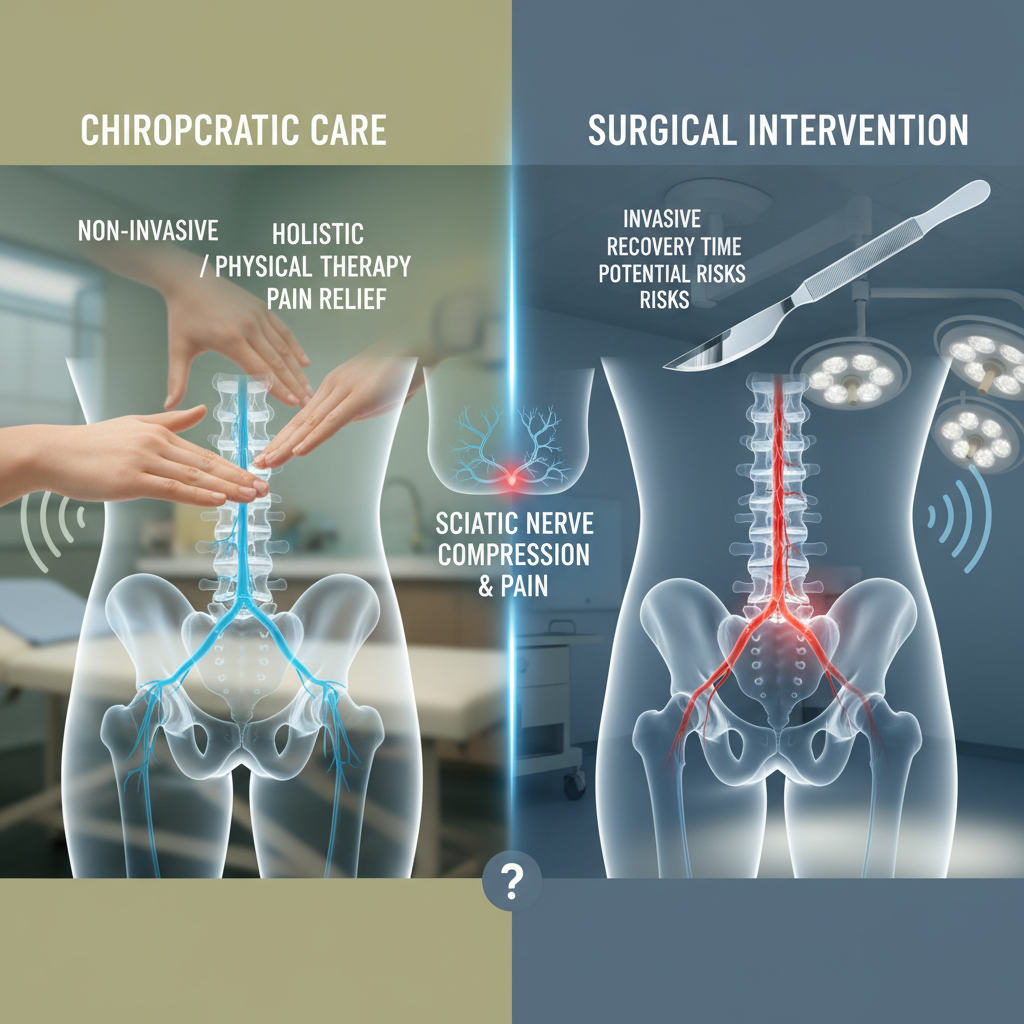
For persistent, severe sciatica that does not respond to comprehensive conservative care, surgery may sometimes be considered, particularly if there is clear nerve compression and worsening neurologic function [1]. The decision is individualized and should weigh both benefits and risks. A discussion such as chiropractic vs surgery for sciatica can help you understand where you are in that process.
Expected recovery timelines with conservative care
Every case of sciatica is different, but many people want a realistic picture of how long healing might take when they choose sciatica treatment without surgery.
Typical time frames
Large medical centers report that:
- Many cases improve significantly in four to six weeks with non-surgical treatment, including stretching, activity modification, and physical therapy [1]
- Around 90 percent of people recover without surgery, often in a few weeks, especially when sciatica is related to injury or pregnancy [2]
With chiropractic care, you may notice:
- Some relief of sharp pain and improved movement after the first few visits
- More consistent improvement in pain levels, function, and sleep over several weeks of regular treatments, combined with home exercises
- Ongoing gains in strength and resilience over several months as you maintain lifestyle changes and preventive exercises
A resource such as how long does sciatica take to heal chiropractor can offer more detail about timelines based on your symptom severity and overall health.
Factors that influence your healing
Your recovery speed depends on factors such as:
- The underlying cause of your sciatica, for example disc herniation, stenosis, or sciatica caused by disc chiropractor issues
- How long you have had symptoms before starting care
- Your age, activity level, and general health
- How consistently you follow your chiropractor’s home care and exercise recommendations
A well designed sciatic nerve pain management plan aims to reduce flare ups, shorten their duration, and improve your ability to participate in work, family life, and hobbies.
Recognizing when to seek further evaluation
While most cases of sciatica respond to conservative treatment, you should seek additional evaluation if:
- Your pain remains severe despite several weeks of appropriate non-surgical care
- You develop new or worsening weakness, especially in your foot or ankle
- You notice changes in bowel or bladder function or numbness in the groin area
- Your pain constantly wakes you at night or is associated with unexplained weight loss, fever, or other systemic symptoms
Harvard Health suggests consulting a doctor if sciatica pain does not improve after about a week of home treatment with cold, heat, and movement, especially if it interferes with daily life [2].
Your chiropractor can help you monitor for these warning signs and refer you promptly if more specialized care or imaging is needed.
Taking your next step toward non-surgical relief
If you are living with radiating leg pain, numbness, tingling, or burning sensations and you want to avoid injections or surgery if possible, you have several effective options. Chiropractic care focuses on the root mechanical causes of sciatic nerve compression. It aims to restore alignment, improve motion, and reduce inflammation so your body can heal.
You can explore more about how chiropractors treat sciatica, schedule a radiating leg pain chiropractor evaluation, or discuss leg pain from sciatica chiropractor treatment strategies that fit your life.
By combining skilled hands-on care, targeted exercises, and smart self care, you can often achieve meaningful sciatica relief without surgery and return to the activities that matter most to you.