
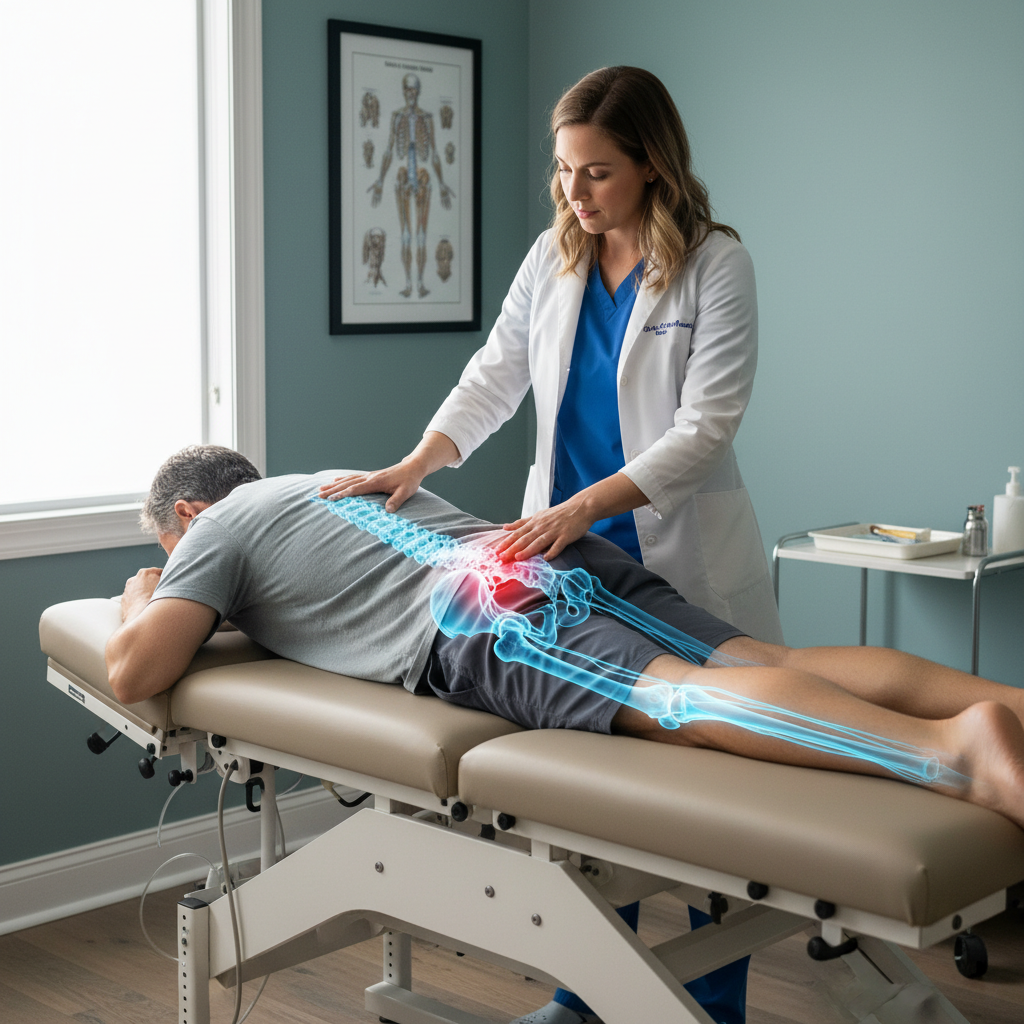
What a nerve pain chiropractor evaluation actually is
If you live with radiating leg pain, numbness, or burning that feels like sciatica, a nerve pain chiropractor evaluation can give you clear answers and a non invasive plan forward. During this visit, a chiropractor looks for the specific places where your nerves are irritated or compressed, then builds a targeted strategy to reduce pressure, calm inflammation, and restore normal movement.
Because sciatica and other neuropathic symptoms can look similar even when causes differ, a structured evaluation is critical for getting the right care and avoiding unnecessary injections or surgery. A detailed assessment helps your provider decide whether chiropractic care for nerve pain is appropriate for you, or whether you need referral for other medical testing.
How nerve compression and sciatica develop
Sciatica happens when the sciatic nerve is irritated, inflamed, or compressed anywhere from your lower back to your hip or leg. You might feel this as sharp, shooting pain that travels from your low back or buttock down the back of your thigh, sometimes into your calf or foot. It may feel like an electric shock, a deep ache, or a burning sensation.
Nerve compression is often caused by problems in the spine or surrounding tissues, such as:
- Herniated or bulging discs that press into the nerve root
- Degenerative changes in the joints of the spine that narrow the nerve passage
- Muscular tightness and imbalance that pull your spine out of alignment
- Poor posture, prolonged sitting, or repetitive strain that stresses the lumbar region
When nerves are damaged, compressed, or irritated you may experience sharp, burning, or stabbing pain that follows the path of the nerve, which is typical of neuropathic pain and sciatica [1]. Over time, ongoing compression can also affect muscle strength, reflexes, and coordination.
A focused nerve pain chiropractor evaluation zeroes in on where this compression is happening, why it developed, and how to relieve it through chiropractic therapy for nerve compression and related approaches.
Signs you may need a nerve pain chiropractor evaluation
You do not need to wait until your pain is severe before seeking help. Certain patterns of symptoms suggest it is time to schedule an evaluation with a chiropractor who understands nerve pain and sciatica.
Common warning signs include:
- Persistent tingling or numbness in your leg, foot, or toes that lasts for days or weeks. Persistent tingling or numbness in extremities is one of the earliest signs of neuropathy and should be evaluated promptly [2].
- Burning sensations in your leg that worsen with sitting, walking, or pressure on the lower back. Burning sensations that change with activity often indicate neuropathy and nerve damage that needs professional attention [2].
- Sharp, shooting, or electric shock like pains that travel down your leg, especially when you cough, sneeze, or change positions. These are classic signs of nerve irritation that are commonly seen in sciatica [2].
- Noticeable muscle weakness in your leg, difficulty lifting your foot, or trouble with balance. Muscle weakness related to neuropathy can impair daily activities and grip or leg strength, and should be assessed early to prevent further decline [2].
- Pain or numbness that began after an injury, fall, or accident.
- Symptoms that keep coming back despite rest and over the counter medication.
Chiropractic sources emphasize that persistent tingling or numbness, burning or shooting pain, symptoms that follow an injury, or pain that worsens with movement are key reasons to book a nerve pain chiropractor evaluation for neuropathy or sciatica type problems [3].
If you are not sure whether your leg pain is true sciatica, a dedicated radiating leg pain chiropractor assessment can help clarify what is happening.
What happens during a nerve pain chiropractor evaluation
A high quality nerve pain chiropractor evaluation is not a quick glance at your spine and a single adjustment. It is a step by step process that helps your provider understand how your history, posture, movement, and nervous system all interact to create your symptoms.
1. Detailed history of your symptoms
Your evaluation typically starts with an in depth conversation. Your chiropractor will ask about:
- When your pain or numbness started
- What makes it better or worse
- Whether you have had accidents, falls, sports injuries, or surgeries
- Your work habits, activity level, and typical posture
- Any existing medical conditions, such as diabetes, arthritis, or osteoporosis
Chiropractors use this history to identify potential root causes and contributing factors, which is a core part of a comprehensive diagnostic process for nerve pain conditions [4].
2. Physical, orthopedic, and neurological testing
Next comes a physical exam that is more focused than a standard checkup. A nerve pain chiropractor evaluation for neuropathy or sciatica will usually include:
- Posture assessment to see how you carry your head, shoulders, and pelvis
- Range of motion testing in your spine and hips
- Orthopedic tests, such as bending, lifting, or leg raises, to reproduce or relieve pain and pinpoint the involved structures
- Neurological tests to check reflexes, sensation, and muscle strength in your legs
This combination helps your chiropractor detect spinal misalignments, joint restrictions, or muscle imbalances that may be compressing nerves and causing sciatica type symptoms [4].
A thorough evaluation often includes specific orthopedic and neurological tests to locate the exact nerves affected and areas of compression or irritation, which is standard for nerve pain assessment [5].
3. Imaging when needed
If your chiropractor suspects a disc injury, advanced degeneration, or another structural problem, imaging tests may be recommended. This might include X rays to assess spinal alignment or MRI scans to see disc and nerve structures in detail.
Chiropractors use diagnostic imaging when necessary to uncover underlying structural issues and disc injuries that impact nerve roots, giving deeper insight beyond the physical exam and supporting an accurate diagnosis [4].
4. Clear explanation of findings
Once your evaluation is complete, your chiropractor should explain:
- Which structures are likely causing your nerve irritation
- Whether your pattern fits typical sciatica or another condition
- Which movements, postures, or habits are aggravating the problem
- Whether chiropractic care is appropriate and safe for you
This conversation is your chance to ask questions about how chiropractors treat sciatica, what to expect from treatment, and how long your recovery might take.
How chiropractic care reduces nerve pressure and inflammation
The most powerful benefit of a nerve pain chiropractor evaluation is that it leads to a targeted, conservative treatment plan for your sciatica or neuropathy like pain. Instead of just masking symptoms with medication, chiropractic care focuses on restoring spinal health so that nerves have the space and environment they need to function normally.
Spinal adjustments to relieve compression
Chiropractic adjustments are gentle, precise movements that realign restricted or misaligned joints. When applied to your lumbar spine and pelvis, they can:
- Reduce pressure on compressed nerve roots
- Improve motion in stiff joints
- Decrease muscle guarding and spasm
- Enhance the way your nervous system communicates with your body
Chiropractic care for nerve pain aims to restore spinal alignment and relieve pressure on nerves, which can promote nerve healing and reduce pain without drugs or surgery [1]. Adjustments have been shown to reduce inflammation caused by spinal misalignments, improve circulation, and enhance range of motion, all of which can lessen nerve irritation [6].
If you want to understand this part of care more fully, you can explore chiropractic adjustment for sciatica and how these techniques are adapted to your specific condition.
Decompression therapy and traction
When a herniated or bulging disc is part of your sciatic nerve compression, your chiropractor may recommend decompression or traction. These treatments gently stretch the spine to:
- Create negative pressure inside the disc
- Help draw disc material away from the nerve root
- Increase space between vertebrae
- Reduce nerve compression and pain
Decompression therapy is a common recommendation during chiropractic evaluation for nerve pain, especially for herniated discs and pinched nerves that contribute to sciatica [7]. You can learn more on our page focused on sciatica caused by disc chiropractor care.
Soft tissue therapy and muscle balancing
Tight muscles in your low back, hips, and glutes can pull your spine out of alignment and compress nerves. As part of your treatment plan, your chiropractor may use:
- Manual stretching
- Myofascial or trigger point work
- Instrument assisted soft tissue techniques
Adjunct therapies such as therapeutic exercises, manual stretching, and postural training support long term relief from nerve pain and improve quality of life by addressing muscular contributors to nerve compression [1].
Corrective exercises and home care
You play a central role in your own recovery. After your nerve pain chiropractor evaluation, you will likely receive exercises to:
- Strengthen core and hip muscles that support your spine
- Improve flexibility in tight areas that stress your lumbar region
- Retrain your posture for sitting, standing, and lifting
- Build stability so your sciatica is less likely to return
Chiropractic treatment for neuropathy related pain typically combines spinal adjustments, corrective exercises, and lifestyle guidance to improve movement, reduce flare ups, and support long term nerve function [3].
Our resources on sciatica pain relief plan and sciatica recovery plan chiropractor can help you see how these elements fit together in real life.
Electrical stimulation and other modalities
In some cases, your chiropractor may include electrical stimulation to help control pain and muscle spasm. This therapy uses mild electrical impulses to:
- Reduce nerve pain signals
- Relax tense muscles
- Support healing circulation
Electrical stimulation is often added after careful assessment and can be particularly helpful in calming overactive nerve pathways associated with sciatica [7].
When chiropractic care is appropriate before injections or surgery
For many adults with sciatica from nerve compression, chiropractic care is a logical first step before more invasive options. It is conservative, drug free, and focused on addressing the structural and functional causes of your pain.
Chiropractic care can be an effective option for peripheral neuropathy and sciatica when nerve irritation is related to joint restriction, posture problems, or spinal stress. In these cases, improving alignment and movement often reduces symptoms significantly, even though chiropractic does not cure underlying diseases like diabetes or advanced nerve degeneration [3].
A careful nerve pain chiropractor evaluation helps determine whether you are a good candidate for:
- Sciatica treatment without surgery
- Sciatica relief without injections
- Other non invasive sciatica treatment options
However, some situations require immediate medical or surgical evaluation, such as:
- Progressive leg weakness or foot drop
- Loss of bowel or bladder control
- Severe, unrelenting pain that does not improve with conservative care
- Signs of systemic illness, infection, or fracture
Your chiropractor should screen for these red flags during your initial visit. If any are present, you will be referred for urgent medical attention. In this way, an evaluation protects your safety while still making room for chiropractic vs surgery for sciatica to be considered thoughtfully.
What to expect from your recovery timeline
Everyone’s healing journey is different, but most people want to know how long sciatica relief might take once treatment begins. Your nerve pain chiropractor evaluation gives the best clue, because your provider can assess factors such as:
- How long you have had symptoms
- Whether you have a disc herniation, stenosis, or primarily functional issues
- Your age and overall health
- How consistently you can follow home care recommendations
Some patients feel significant relief after the first few adjustments. Others with more chronic or complex conditions may need several weeks of care to notice steady improvements. Chiropractic clinics report that responses to nerve pain treatment vary widely, and that progress is monitored closely so plans can be adjusted as needed [5].
You can explore how long does sciatica take to heal chiropractor expectations to get a clearer picture of typical timelines and milestones.
What matters most is consistent follow through with your care plan. Over time, initial treatment focused on symptom reduction can transition into maintenance care that supports sustained nerve function improvement and helps prevent recurrences through periodic adjustments and supportive therapies [8].
Choosing the right chiropractor for nerve pain
Because sciatica and neuropathic pain can be complex, it is important to choose a chiropractor who has specific experience in nerve conditions and radiating leg pain. During your search, look for:
- Proper training and licensing, including a Doctor of Chiropractic degree and current state license
- Clear experience with sciatica, neuropathy, and related conditions
- A thorough evaluation process that includes history, physical, and appropriate testing
- A willingness to coordinate with your primary physician or specialist when needed
- Positive patient reviews related to nerve pain and leg pain care
Sources recommend verifying qualifications, specialization in treating nerve pain, and patient testimonials when selecting a provider for nerve pain evaluation and care [9].
You may also want to ask how they approach:
- Chiropractic care for nerve inflammation
- Sciatic nerve compression treatment
- Chiropractor for pinched nerve sciatica cases
A good fit is a chiropractor who listens carefully, explains clearly, and creates a plan that respects your goals, whether that is avoiding injections and surgery, returning to a favorite activity, or simply sleeping through the night without leg pain.
A nerve pain chiropractor evaluation is not just about identifying what hurts. It is about understanding why it hurts, what can be done conservatively, and how you can take an active role in your recovery from sciatica and related nerve compression problems.
Taking your next step toward relief
If nerve pain, numbness, or radiating leg symptoms are limiting your life, you do not have to wait for them to “go away on their own.” A thorough nerve pain chiropractor evaluation can reveal the source of your discomfort, outline a sciatic nerve pain management plan, and open the door to natural sciatica pain relief chiropractor options that align with your preferences.
By addressing spinal alignment, joint motion, muscle balance, and lifestyle factors, chiropractic care often provides meaningful relief for leg pain from sciatica chiropractor patients who want to avoid or at least delay invasive procedures. If you are ready to move from uncertainty to clarity, scheduling that first evaluation is a powerful place to begin.