What sciatic nerve compression is
If you live with radiating leg pain, tingling, or burning, you may already suspect sciatica. Sciatic nerve compression happens when something irritates or presses on the sciatic nerve or its roots as they exit your lower spine. This large nerve travels from your lumbar spine through your pelvis and buttock and down the back of your leg, so compression can cause symptoms anywhere along that path.
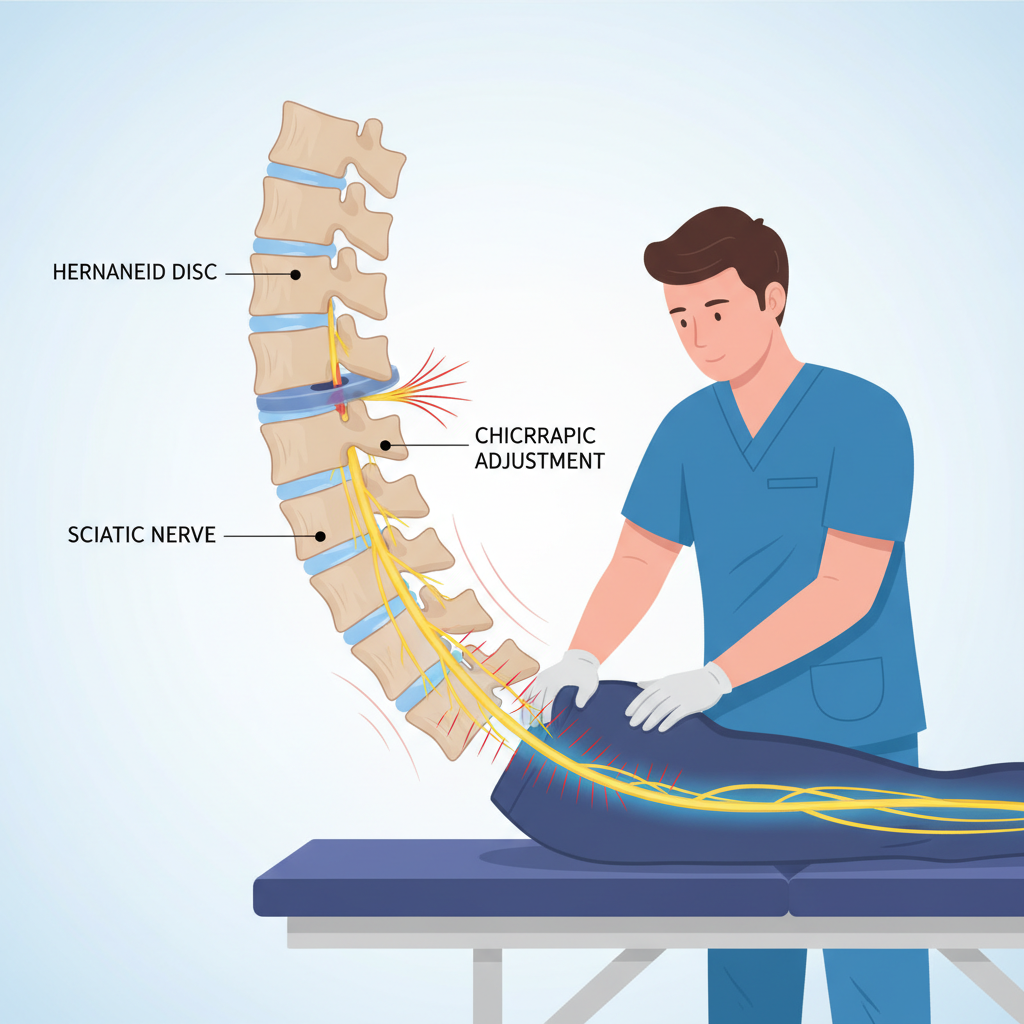
According to major medical centers, sciatica often develops when a herniated disc or bone spur in your lower back narrows the space around the nerve roots and creates inflammation and pressure on the nerve. You may feel anything from a dull ache to a sharp, burning, or electric shock type pain, usually on one side of your body [1]. Up to 40 percent of people experience sciatica at some point in life [2], so you are not alone.
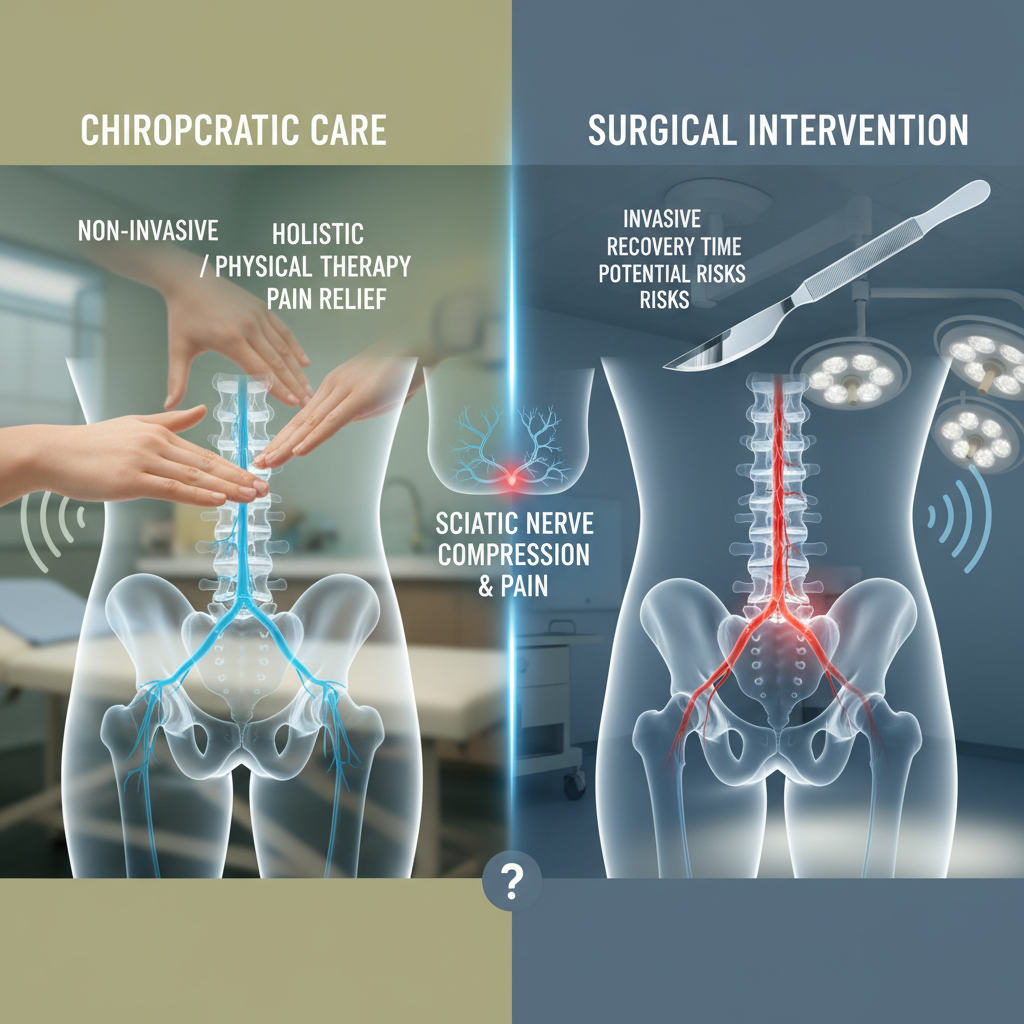
Sciatic nerve compression treatment focuses on two goals. The first is calming the irritated nerve so you can function with less pain. The second is addressing the underlying mechanical problem in your spine and surrounding tissues so that your symptoms do not keep coming back. Chiropractic care is a non invasive way to do both before you consider injections or surgery.
How sciatic nerve compression develops
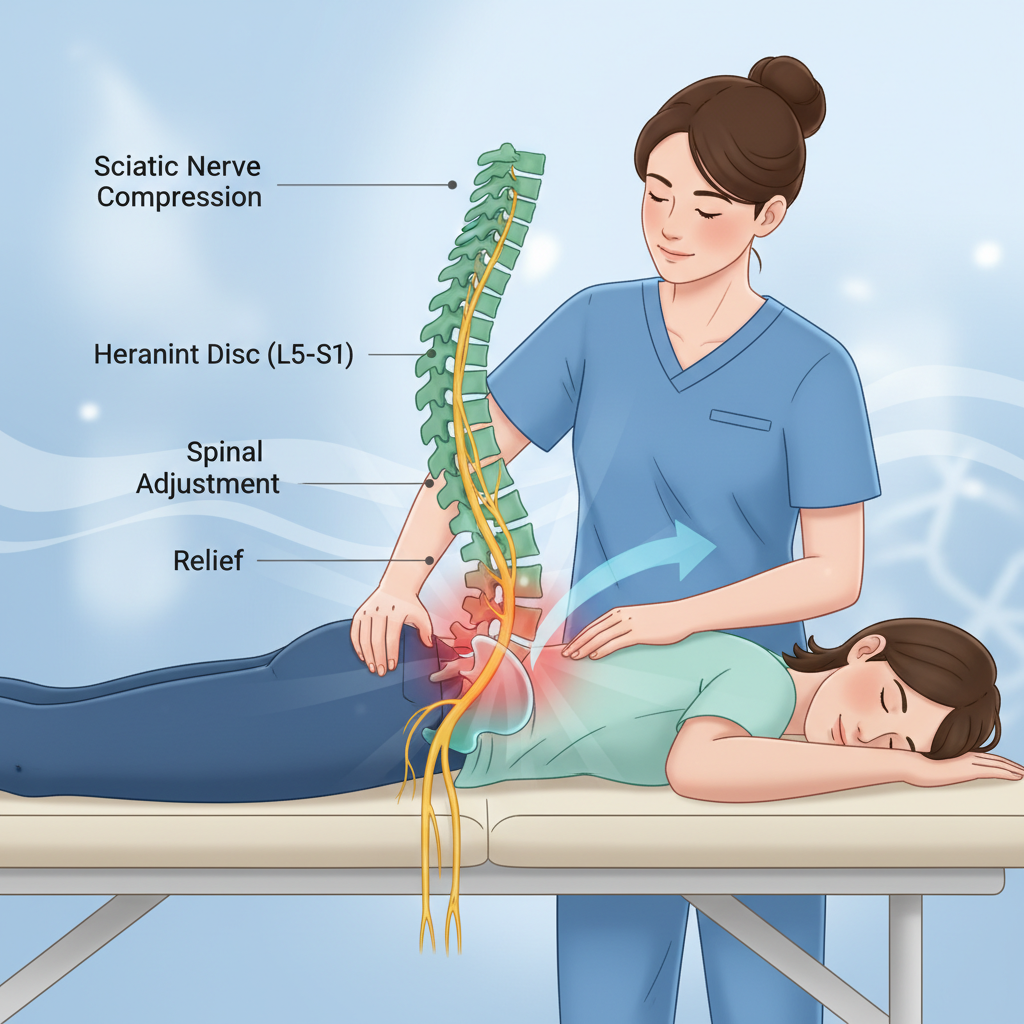
Understanding how sciatica starts helps you make sense of your symptoms and treatment options. The sciatic nerve forms from several nerve roots, usually at the L5 and S1 levels in your lower spine. If these nerve roots get pinched or inflamed, you can feel pain anywhere along the nerve, not just in your back.
Common mechanical causes
Sciatic nerve compression can develop from:
- A lumbar herniated disc that bulges or ruptures and presses on a nerve root
- Bone spurs or spinal stenosis that narrow the space around the nerve
- Joint inflammation or misalignment that irritates nearby nerve tissue
- Tight or irritated muscles in the buttock, such as the piriformis
- Injury that triggers swelling around the nerve
Medical sources note that a herniated disc and bone overgrowth are the most common reasons that nerve roots in your lumbar spine get compressed and inflamed, which then produces sciatic pain, numbness, or weakness in your leg [1].
Mechanical vs inflammatory sciatica
Experts also separate sciatica into mechanical and inflammatory types. Mechanical sciatica occurs when something physically presses on the nerve, such as a disc or bone spur. Inflammatory sciatica involves swelling around the nerve from injury, pregnancy, infection, or other conditions, even when there is no large structural blockage [3].
In practice, you often have a mix of both. A disc bulge, for example, may start the compression, and then inflammation around the irritated nerve makes the symptoms worse. Chiropractic care focuses on improving the mechanics of your spine and pelvis, which can reduce both direct pressure and associated inflammation.
Signs your leg pain is sciatica
Sciatica can feel different from person to person, but there are patterns that suggest sciatic nerve compression rather than a simple muscle strain.
You might notice:
- Pain that starts in your lower back or buttock and travels down the back of your thigh, calf, or into the foot
- Pain on only one side, although both sides can be involved in some cases
- Burning, shooting, or electric shock like sensations, especially when you cough, sneeze, or sit for long periods
- Numbness, tingling, or pins and needles in your leg or foot
- Weakness in the leg, difficulty lifting your foot, or a feeling of heaviness
The Hospital for Special Surgery describes sciatica pain as dull, aching, shooting, or burning, often accompanied by numbness, tingling, or muscle weakness, with symptoms that can extend from the thigh all the way to the foot [3].
Because these symptoms overlap with other conditions, a careful evaluation is important before you decide on any sciatic nerve compression treatment.
How sciatica is diagnosed
A proper diagnosis helps you know whether chiropractic care is appropriate and what kind of plan you need. Your chiropractor or other provider will start with a detailed history and physical exam.
History and symptom review
You can expect questions about:
- Where your pain starts and where it travels
- What makes your pain better or worse
- Any numbness, tingling, or weakness
- Recent injuries, falls, or changes in activity
- Prior episodes of back or leg pain
- Your work demands and daily posture
This information helps your provider decide whether your symptoms are likely coming from sciatic nerve compression or from another source.
Physical and neurologic exam
Next, you will go through an exam that may include:
- Checking posture and spinal alignment
- Testing range of motion in your lower back and hips
- Gentle orthopedic tests, such as raising your straight leg to see if symptoms increase
- Neurologic checks of reflexes, strength, and sensation in your legs and feet
These tests help pinpoint which nerve roots may be involved and how irritated they are. If needed, your chiropractor may refer you for imaging or co manage your case with another provider to ensure that you receive the safest care.
When imaging is needed
Many people improve with conservative care without immediate imaging. However, X rays or an MRI may be recommended if:
- Your symptoms are severe or worsening
- You have significant weakness or changes in reflexes
- There is suspicion of a large disc herniation, spinal stenosis, or another structural problem
- You are not improving with initial conservative treatment
Imaging can confirm the presence of a herniated disc, bone spurs, or other causes of nerve compression, which supports a more precise sciatic nerve compression treatment plan.
Conservative medical options for sciatica
Before you look at chiropractic care specifically, it helps to understand what conventional guidelines recommend for sciatica and how chiropractic fits into that picture.
Self care and early home treatment
Most medical organizations start with simple self care for mild cases. This often includes:
- Short periods of rest, followed by a gradual return to activity
- Gentle stretching and movement
- Alternating ice and heat to reduce pain
- Over the counter medications as directed to control discomfort
The Cleveland Clinic notes that many people begin to feel better over time with these basic measures alone, without needing more aggressive treatment [4].
Physical therapy and guided exercise
If symptoms are more persistent, physical therapy is commonly recommended. A therapist can teach you stretches and exercises that improve movement and help reduce sciatic nerve pain, both in the office and at home [4].
Research cited by Lifeline Physical Therapy shows that early physical therapy for recent onset sciatica can significantly improve pain and disability, especially when combined with hands on manual therapy [5]. This combination of movement and manual care is very similar to the conservative approach chiropractors use.
Medications, injections, and surgery
If your symptoms are moderate to severe, medical providers may suggest:
- Prescription medications to manage pain
- Epidural or nerve root steroid injections to reduce inflammation
- In rare cases, surgery if symptoms do not improve after several weeks of conservative care or if serious nerve damage is suspected [6]
Surgery, such as removing part of a herniated disc or bone spur, is generally a last resort. It is usually considered only when you have severe weakness, loss of bowel or bladder control, or pain that does not respond to other interventions [7].
If you want to avoid or delay injections and surgery as long as it is safely possible, then non invasive options like chiropractic care and other non invasive sciatica treatment options are especially important.
How chiropractic care treats sciatic nerve compression
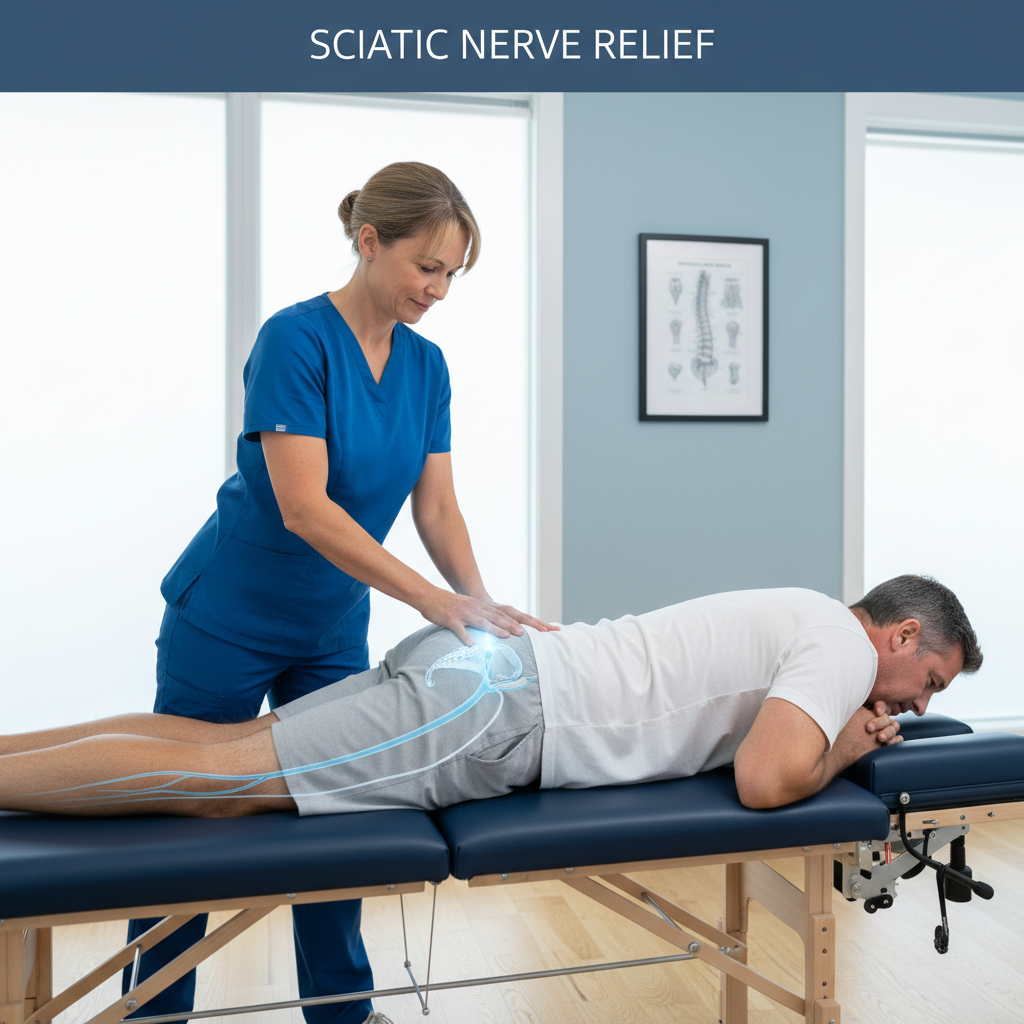
Chiropractic sciatic nerve compression treatment aims to reduce pressure on the nerve, calm inflammation, and restore healthier movement in your spine and pelvis. The goal is not just short term pain relief but better nerve function and long term resilience.
You can explore more about this approach in detail in our guide on how chiropractors treat sciatica, but the main components are outlined here.
Spinal alignment and decompression
If a spinal joint is misaligned or not moving well, it can narrow the space available for your nerve roots. A chiropractic adjustment for sciatica uses precise, controlled forces to restore motion to these restricted joints. When done in the right area and for the right reason, this can:
- Create more space around an irritated nerve root
- Reduce mechanical stress on the disc and surrounding tissues
- Improve how your spine absorbs and distributes everyday loads
Some chiropractors also use flexion distraction or other gentle decompression techniques that lightly stretch your lower spine. This can temporarily reduce pressure inside the disc and help pull bulging disc material away from the nerve in selected cases.
Releasing muscle and soft tissue tension
Muscles and connective tissues around your spine and pelvis often tighten in response to pain. Over time, this can create additional pressure on the nerve. Chiropractic care may include:
- Targeted soft tissue work on tight muscles in your lower back, hips, and glutes
- Specific attention to the piriformis and other deep hip muscles that can irritate the sciatic nerve
- Gentle stretching and mobility techniques to restore normal movement patterns
These techniques can relieve part of the compression around the nerve and support the effect of spinal adjustments, similar to the manual therapy that has been shown to enhance exercise based care for sciatica [5].
Correcting movement patterns and posture
If your everyday posture and movement habits keep loading your spine in the same stressful way, then your symptoms are more likely to return. This is why many chiropractors build a sciatica pain relief plan that includes:
- Core and hip strengthening exercises to support your lumbar spine
- Flexibility work for your hamstrings, hip flexors, and glutes
- Coaching on ergonomics, lifting, and sitting positions
- Specific exercises that glide or mobilize the sciatic nerve within its pathway
The Hospital for Special Surgery highlights that maintaining strength, balance, flexibility, and aerobic capacity is a key part of treating and preventing mild sciatica [3]. Chiropractic care integrates these principles into a comprehensive, hands on program.
If nerve inflammation is a major part of your problem, your chiropractor may also use modalities, positioning, and education that fit well with chiropractic care for nerve inflammation and overall chiropractic care for nerve pain.
What to expect at a chiropractic visit for sciatica
Your first appointment with a chiropractor for suspected sciatic nerve compression usually follows a clear, step by step process.
Initial evaluation
Your visit typically begins with:
- A detailed medical and pain history
- Review of any prior imaging or reports
- A physical, orthopedic, and neurologic exam
If needed, you may be referred for further diagnostic testing or to another provider. This step is critical for a careful nerve pain chiropractor evaluation to ensure that chiropractic care is appropriate for your case.
Building a treatment plan
Once your chiropractor confirms that your sciatica is suitable for conservative care, you will work together to develop a plan. This usually includes:
- A recommended schedule for spinal adjustments and manual therapy
- Home exercises that fit your ability and schedule
- Self care strategies for flare days, such as positions of relief, activity pacing, and cold or heat
- Clear goals for pain reduction, function, and return to specific activities
You might also discuss complementary approaches like gentle yoga, walking programs, or relaxation techniques. If your sciatica is related to a disc herniation in particular, your plan may be similar to what we describe in our guide to sciatica caused by disc chiropractor.
Monitoring progress and adjusting care
As your symptoms change, your chiropractor can adjust your schedule, progress your exercises, and coordinate with other providers as needed. A structured sciatica recovery plan chiropractor approach focuses on both short term relief and long term prevention of flare ups.
If your progress slows or concerning symptoms appear, your chiropractor can help you decide when it is time to consider additional options, including medical management or a discussion about chiropractic vs surgery for sciatica.
How long recovery usually takes
Sciatica can feel discouraging when you are in the middle of a flare, but most people do improve. Understanding typical recovery timelines can help you set realistic expectations for your sciatic nerve compression treatment.
Large medical centers report that many individuals begin to see meaningful improvement within four to six weeks, whether they use self care and conservative treatments alone or in combination [4]. Sciatica caused by a herniated disc often improves within a few weeks to months without surgery, especially when you follow an active treatment plan that includes movement and manual care [1].
From a chiropractic standpoint, your timeline depends on:
- How long you have had symptoms
- The severity of your nerve compression and any weakness
- Your overall health, smoking status, and activity level
- How consistently you follow your home program
You can learn more about typical time frames in our resource on how long does sciatica take to heal chiropractor. In general, shorter duration pain responds faster, which is one reason early evaluation is so important.
When chiropractic care is appropriate and safe
Chiropractic care is often a good choice when you want sciatica treatment without surgery or sciatica relief without injections. However, it is not the right first option in every situation.
Good candidates for chiropractic treatment
You are more likely to benefit from conservative chiropractic care if:
- Your pain is moderate and has been present for days to a few months
- You have radiating leg symptoms but only mild or no weakness
- You do not have serious underlying conditions such as active infection or cancer in the spine
- Your imaging, if available, shows a disc bulge, early stenosis, or mild degenerative changes
- You want to actively participate in exercise and lifestyle changes
In these scenarios, non invasive care such as chiropractic therapy for nerve compression and chiropractic treatment for lumbar sciatica may reduce your need for stronger medications and invasive procedures.
Red flag symptoms that need urgent care
Some symptoms suggest that your sciatic nerve compression may be part of a more serious condition. If you notice any of the following, you should seek urgent medical attention before or alongside chiropractic care:
- Sudden, severe or rapidly worsening leg weakness
- Loss of bowel or bladder control, or new difficulty starting or stopping urination
- Numbness in the groin or inner thighs
- Fever or chills with back or leg pain
- Recent major trauma, such as a car accident or fall from height
The Hospital for Special Surgery specifically notes that severe pain, numbness, weakness, or changes in bladder or bowel function can signal a rare but serious condition called cauda equina syndrome, which requires immediate care to prevent permanent damage [3].
Your chiropractor will screen for these signs and refer you promptly if there is any concern. Once serious conditions are ruled out or treated, chiropractic may still play a role in your rehabilitation under appropriate guidance.
Integrating chiropractic with other sciatica treatments
You do not have to choose between chiropractic and medical care. For many people, the best sciatic nerve compression treatment blends several conservative strategies and escalates only if needed.
You might, for example:
- Use chiropractic adjustments and manual therapy to improve spinal mechanics
- Work with a physical therapist or follow a home program to build strength and flexibility
- Use medications or topical agents short term for symptom control as directed
- Consider a steroid injection only if other conservative care does not provide enough relief
For some patients, a carefully timed combination of chiropractic care, exercise, and occasional medical management provides a sustainable approach to sciatic nerve pain management.
If your sciatica is especially stubborn or is clearly linked to a pinched nerve root, choosing a chiropractor for pinched nerve sciatica or a dedicated chiropractor for sciatica nerve pain can help you navigate your options and decide when, if ever, stronger interventions are appropriate.
Taking your next step toward relief
Sciatic nerve compression can disrupt nearly every part of your day, from sitting at work to sleeping at night. The good news is that most cases improve with a thoughtful, conservative approach that reduces pressure on the nerve and restores healthier movement patterns.
If your symptoms match the patterns described here and you are looking for sciatica treatment without surgery, consider scheduling a thorough evaluation with a chiropractor who routinely manages leg pain from sciatica chiropractor cases. An experienced provider can help you build a personalized plan that emphasizes natural sciatica pain relief chiropractor strategies, monitors your progress closely, and coordinates with other specialists when needed.
With the right guidance and a clear sciatica recovery plan chiropractor, you can move toward less pain, better function, and more confidence in your spine and nerve health.