What sciatica nerve pain is
If you are looking for a chiropractor for sciatica nerve pain, you are likely feeling a deep, radiating ache or sharp, electric pain that travels from your lower back into your hip, buttock, and down your leg. This pattern is a hallmark of sciatica. It occurs when the sciatic nerve, the largest nerve in your body, is irritated or compressed as it exits your spine and travels through the pelvis and down each leg [1].
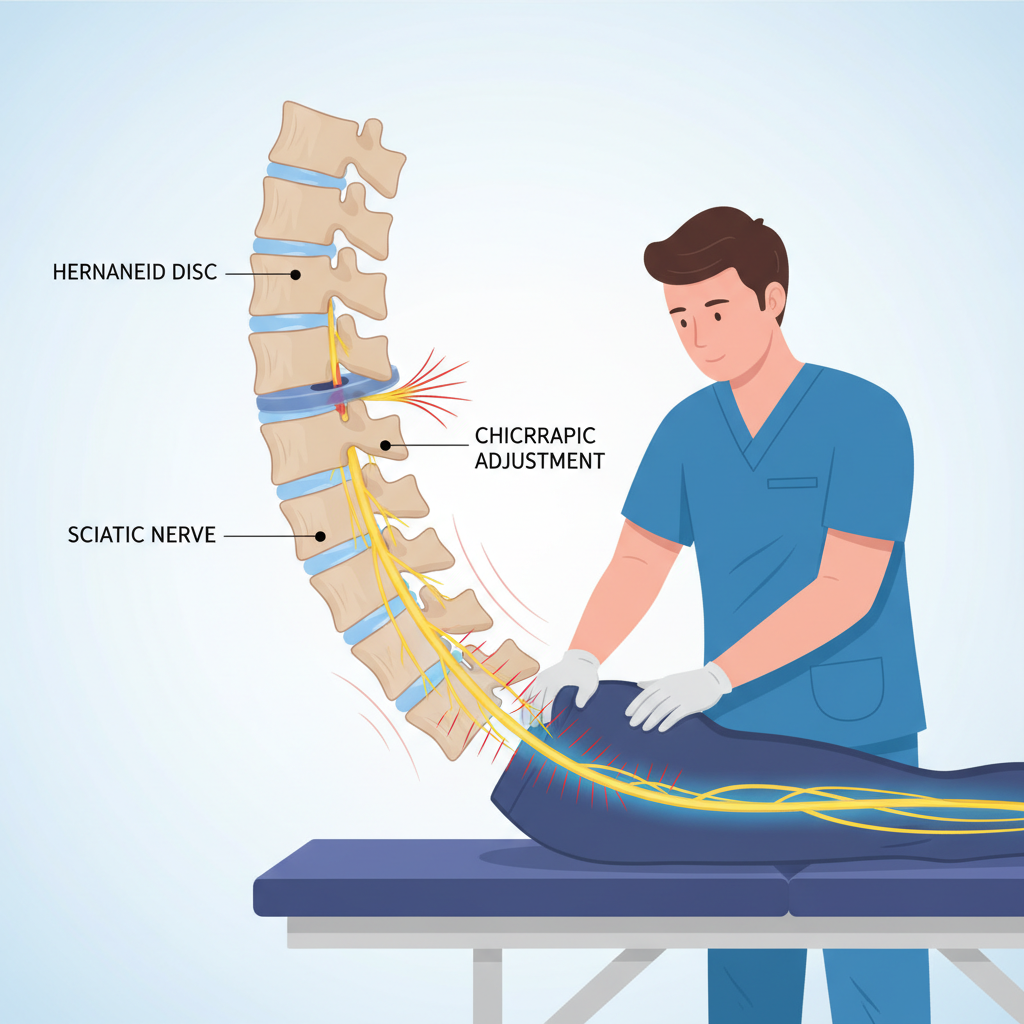
Sciatica is not a single disease. It is a symptom of nerve compression that can come from several underlying problems, such as a herniated disc, misaligned vertebrae, spinal stenosis, or tight muscles in the pelvis and hips [2]. Understanding what is behind your pain is the first step toward effective, non invasive care.
How sciatica develops from nerve compression
Sciatica usually begins when something narrows the space around the sciatic nerve or directly presses on it. This compression can develop gradually or appear suddenly after an injury or awkward movement.
Common causes include:
- A bulging or herniated lumbar disc that pushes on the nerve root
- Misaligned vertebrae in your lower back that reduce space around the nerve
- Degenerative changes like bone spurs or spinal stenosis that crowd the spinal canal
- Tight muscles, especially the piriformis muscle in the buttock, that pinch or irritate the nerve
- Pelvic imbalance that twists or tilts the spine and alters the nerve’s path
When the nerve is compressed, the tissue becomes irritated and inflamed. This inflammation disrupts normal nerve signals and can cause pain, tingling, numbness, or weakness anywhere along the nerve pathway from your lower back to your toes [1].
Chiropractic care targets this underlying compression. By improving spinal alignment, joint motion, and soft tissue balance, your chiropractor works to create more space around the nerve and reduce the inflammation that keeps your symptoms going. You can learn more in our guide on sciatic nerve compression treatment.
Common symptoms you might notice
Sciatica affects between 10 and 40 percent of people at some point in life, and the symptoms can range from mildly annoying to severely disabling [3]. You may notice one or several of the following:
- Radiating pain from your lower back into your buttock, thigh, calf, or foot
- Pain that feels burning, shooting, or like an electric shock
- Numbness, pins and needles, or tingling in your leg or foot
- Muscle weakness, such as difficulty lifting your foot or standing on your toes
- Pain that worsens when you sit, twist, cough, or sneeze
- Relief when you lie down or walk for short periods
Sometimes the pain is mainly in your back. Other times the worst pain is in your leg or foot while your back feels only mildly sore. If your main complaint is leg discomfort, a radiating leg pain chiropractor can help you sort out whether the sciatic nerve is involved.
When to consider a chiropractor for sciatica nerve pain
If your symptoms have persisted for more than a few days, or if they are interfering with sleep, work, or daily activities, it is reasonable to consult a chiropractor as part of conservative treatment before you consider injections or surgery.
Chiropractic care is especially appropriate when:
- You want sciatica treatment without surgery or medications if possible
- You prefer hands on care and guided exercises over passive treatments
- You have already tried basic self care, such as gentle stretching and over the counter pain relievers, without lasting relief
- Your pain fluctuates or worsens with certain positions, which suggests a mechanical cause
For moderate to severe sciatica with numbness, tingling, or weakness that does not improve after a few weeks of self care, seeking professional treatment is recommended [4]. Chiropractors are trained to diagnose musculoskeletal conditions like sciatica and can provide a non invasive approach that may help you avoid injections or surgery in many cases [5].
However, if you suddenly lose bladder or bowel control, or you lose significant feeling or strength in your leg, you should seek immediate emergency care, since untreated sciatica can rarely lead to permanent nerve damage [3].
How chiropractors evaluate sciatic nerve pain
A thorough evaluation is the foundation of safe and effective chiropractic care for sciatica. During your first visit, your chiropractor will typically:
- Review your medical history, including previous injuries, surgeries, and current medications
- Ask detailed questions about your symptoms, such as what worsens or relieves your pain
- Perform a physical and neurological exam to check your posture, alignment, flexibility, reflexes, and muscle strength
- Use specific orthopedic tests that gently stress different parts of your spine and legs to pinpoint the source of nerve compression
Some offices also use advanced imaging such as X rays, MRI referrals, or specialized posture and nerve scans to clarify the diagnosis [2]. A careful nerve pain chiropractor evaluation makes it easier to tailor your treatment and avoid techniques that might aggravate your condition.
If your chiropractor suspects a serious underlying problem, such as a fracture, infection, or severe disc injury, they will coordinate with your medical provider or refer you for urgent imaging and specialist care.
Chiropractic techniques that target sciatic nerve compression
A chiropractor for sciatica nerve pain uses a combination of techniques designed to reduce pressure on the nerve, ease inflammation, and restore healthy motion in your spine and pelvis. The exact plan depends on your diagnosis, health status, and comfort level.
Spinal adjustments for alignment and nerve pressure
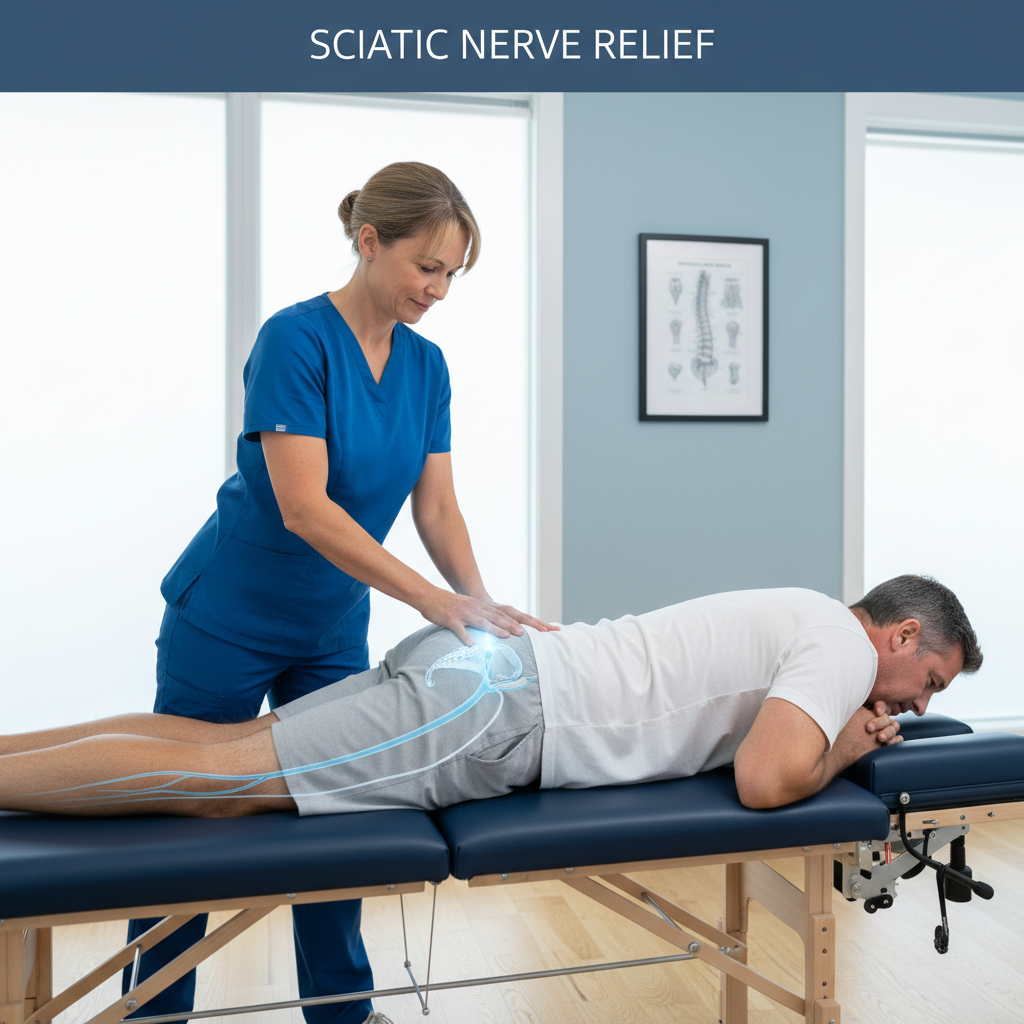
Spinal manipulation, often called a chiropractic adjustment, is a controlled, gentle force applied to a specific joint to improve alignment and motion. For sciatica, adjustments usually focus on the lumbar spine, pelvis, and sometimes the upper spine to restore better overall balance.
By correcting misaligned vertebrae that press on the sciatic nerve, adjustments can reduce irritation, improve physical function, and restore more normal movement patterns [6]. One study found that about 60 percent of patients with sciatica, who did not get relief from other treatments, experienced benefits from spinal adjustments that were comparable to surgical intervention [6].
You might hear an audible “crack” during an adjustment. This sound is similar to cracking your knuckles and usually corresponds to gas bubbles releasing within the joint. It is not your bones rubbing together, and many people feel a sense of relief and reduced stiffness afterward [7]. To learn more about this option, explore our page on chiropractic adjustment for sciatica.
Spinal decompression therapy
If your sciatica is related to a bulging or herniated disc, you may benefit from nonsurgical spinal decompression. This technique uses a specialized table to gently stretch your spine and shift pressure away from compressed discs.
The goal is to create negative pressure within the disc, which can help retract bulging material and increase space for the irritated nerve root. By reducing pressure on herniated or bulging discs, decompression can ease inflammation, tingling, and numbness along the sciatic nerve pathway [6]. This approach is one of several non invasive sciatica treatment options your chiropractor may discuss with you.
Soft tissue and trigger point therapy
Sciatic nerve pain is often worsened by tight or overworked muscles in your lower back, hips, and legs. Trigger point therapy focuses on these tight, painful “knots,” especially in the piriformis muscle, which lies close to the sciatic nerve.
Your chiropractor may use manual pressure, myofascial release, and deep tissue massage to relax the muscles, improve blood flow, and reduce the stress on the nerve [6]. Soft tissue techniques can be especially helpful if your sciatica is linked to piriformis syndrome or long hours of sitting.
Soft tissue therapy, including massage and myofascial work, also promotes healing in the connective tissues of your lower back, buttocks, and legs, which can support lasting relief [6]. You can read more about this natural approach in our overview of chiropractic care for nerve inflammation.
Pelvic adjustments and postural correction
Because the sciatic nerve passes through the pelvis, even small imbalances in pelvic alignment can change the way the nerve travels, which may contribute to pinching or irritation. Pelvic adjustments help correct these misalignments, restore long term spinal alignment, and improve your overall mobility [6].
Your chiropractor may also evaluate your posture, workstation setup, and daily movement habits. Simple changes to the way you sit, stand, lift, and sleep can reduce the strain on your lower back and help prevent repeated flare ups. This is an important part of any sciatica pain relief plan.
Complementary therapies and home care
Many chiropractors combine spinal and soft tissue work with other supportive therapies to reduce inflammation and stabilize the affected area. These can include:
- Laser therapy or other light based treatments to decrease inflammation and speed healing
- Gentle stretching and mobility exercises that you perform in the office and at home
- Stabilization exercises for your core, hips, and legs
- Education about ergonomics and safe movement patterns
When used alongside adjustments, these complementary therapies can enhance your recovery and support long term sciatic nerve pain management [2].
Benefits of chiropractic care before injections or surgery
For most people with sciatica, conservative treatments such as chiropractic care, supervised exercises, and lifestyle changes are recommended before injections or surgery, unless there are red flag symptoms. Several potential benefits support this approach:
- Chiropractic care is non invasive and drug free, which can help you avoid or reduce the need for pain medications, including opioids [5]. A 2025 study found that patients who received spinal manipulation instead of opioids experienced fewer side effects after one year, and early chiropractic care reduced the later need for opioids [3].
- Many people report significant pain relief and improved function with chiropractic care, and it is generally considered safe when performed by a licensed professional [3].
- Sciatica symptoms often improve within four to six weeks with conservative treatment, which can include chiropractic interventions, especially when symptoms are not severe [4].
- By addressing the mechanical root causes of nerve compression, chiropractic care aims to promote healing and restore normal movement, rather than only masking your pain with injections or medication.
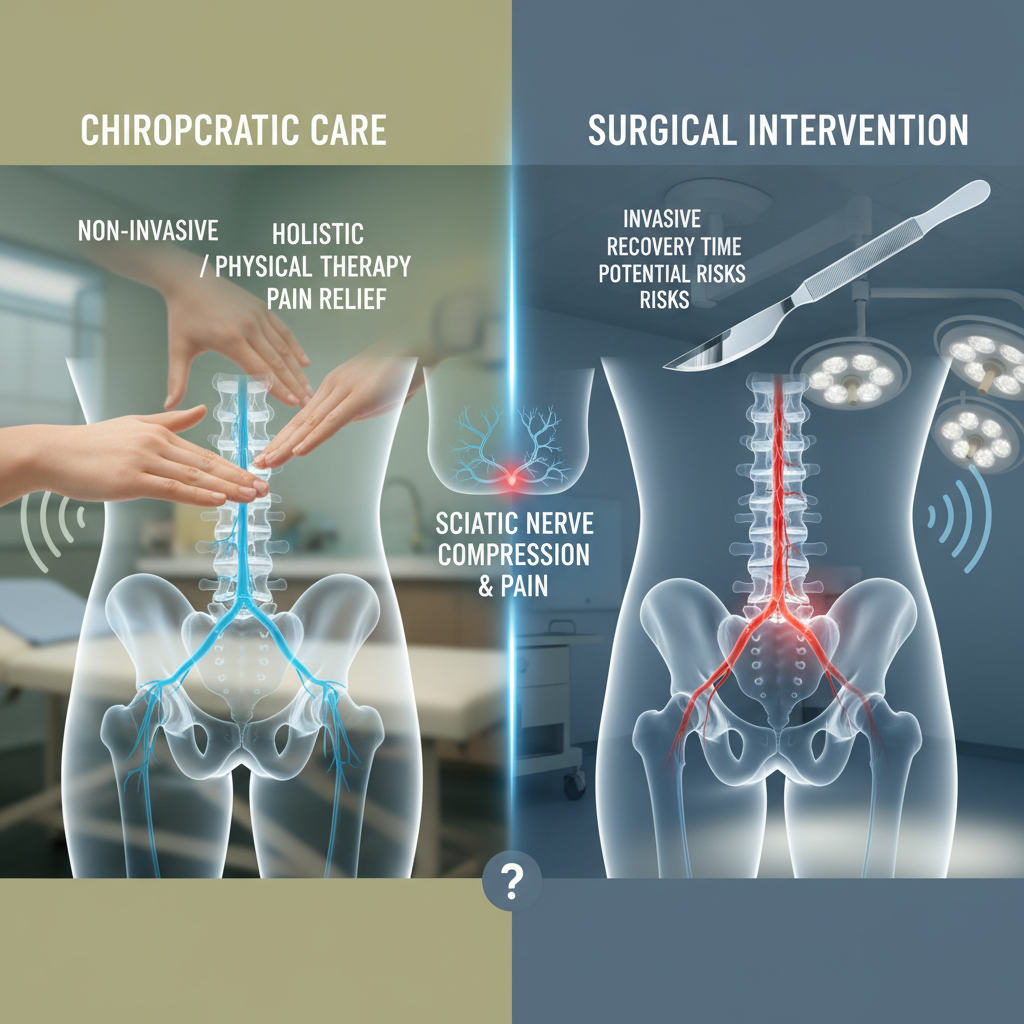
If your symptoms persist despite a focused trial of chiropractic care, or if your condition worsens, your chiropractor can help you evaluate whether additional options, such as injections or surgery, are appropriate. You can explore this decision in more detail in our comparison of chiropractic vs surgery for sciatica.
What a typical sciatica treatment plan looks like
Your chiropractor will create a customized sciatica recovery plan chiropractor based on your diagnosis, lifestyle, and goals. A typical plan may include:
- A series of chiropractic adjustments focused on the lower back and pelvis
- Soft tissue therapy to address muscle tension and trigger points
- At home stretches and exercises to maintain flexibility and build strength
- Posture and ergonomics coaching for work, driving, and sleep
- Regular re evaluations to track progress and adjust the plan as needed
Most people start with more frequent visits in the early phase. As your symptoms improve and your spine stabilizes, your visit frequency usually decreases. Mild soreness or tenderness after an adjustment can be normal and reflects your body adapting to improved alignment, although sharp increases in pain, new numbness, or worsening weakness should prompt a call to your chiropractor for reassessment [2].
For many patients, this combination of in office care and self management strategies provides an effective sciatica relief without injections path.
How long sciatica takes to heal with chiropractic
Healing timelines vary widely. Your age, general health, activity level, and the severity and cause of your nerve compression all affect how quickly you respond. Some people experience noticeable relief after a few chiropractic sessions, while others with more complex or chronic conditions may require ongoing care over several weeks or months [5].
In general:
- Mild sciatica may improve within a few weeks of consistent chiropractic care and home exercises
- More moderate cases, such as those from a herniated disc, often require several weeks to a few months
- Chronic sciatica, especially when linked to degenerative changes, may respond best to a longer term management plan rather than a quick fix
Your chiropractor can give you a more specific estimate after your initial evaluation. For more detail, see our resource on how long does sciatica take to heal chiropractor.
When chiropractic care may not be enough
Although many people benefit from a chiropractor for sciatica nerve pain, there are situations where chiropractic care alone may not be appropriate or sufficient. These include:
- Sudden, severe loss of leg strength or feeling
- Loss of bowel or bladder control
- Progressive neurological deficits despite treatment
- Confirmed spinal infection, tumor, or significant structural instability
In these cases, urgent medical or surgical evaluation is necessary. Your chiropractor should screen for these warning signs and refer you promptly when needed, which is an important part of safe chiropractic care for nerve pain.
Even when injections or surgery are required, many patients return to chiropractic care afterward to help restore mobility, strengthen supporting muscles, and reduce the risk of future episodes.
Choosing a chiropractor for pinched nerve sciatica
Selecting the right clinician is central to your outcome. When you research a chiropractor for pinched nerve sciatica, consider:
- Licensure in your state and a clean professional record
- Experience specifically with sciatica and other nerve related conditions
- Positive patient reviews and testimonials about care for leg pain and radiating symptoms
- A careful diagnostic approach that includes a full history, physical exam, and imaging referrals when necessary
According to specialists in Winter Garden, Florida, choosing a licensed, reputable professional with specific experience in sciatica helps ensure safe, tailored care and minimizes the risk of worsening symptoms [5].
If you are primarily dealing with leg symptoms, a leg pain from sciatica chiropractor can help clarify whether your pain is nerve related or comes from muscles and joints directly.
Taking your next step toward relief
Sciatica can be disruptive, but you do not have to tolerate radiating leg pain, numbness, or burning sensations as your new normal. A chiropractor for sciatica nerve pain offers a non invasive, drug free way to address spinal misalignments, disc problems, and soft tissue issues that compress the sciatic nerve.
By focusing on alignment, nerve function, and healthy movement patterns, chiropractic care can play a key role in your natural sciatica pain relief chiropractor plan. If you are ready to explore your options, consider scheduling a thorough evaluation to begin a personalized chiropractic therapy for nerve compression that fits your needs, preferences, and long term goals.