Understanding sciatica and why it hurts so much
If you are comparing chiropractic vs surgery for sciatica, you are probably dealing with sharp, radiating leg pain that is starting to affect every part of your life. To make a good decision, it helps to understand what is actually happening inside your lower back and leg.
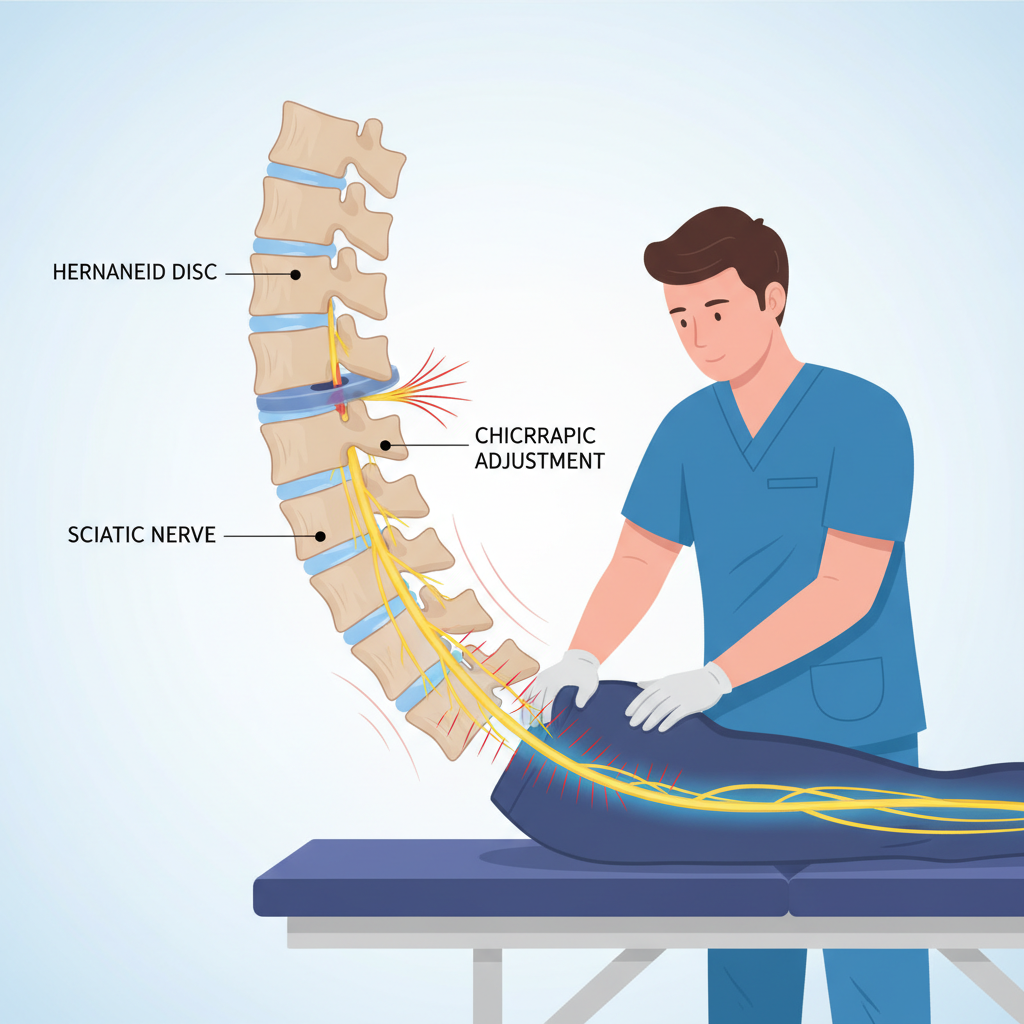
Sciatica is not a diagnosis by itself. It is a description of pain caused by irritation or compression of the sciatic nerve. This large nerve runs from your lower spine through your hips and buttocks and down each leg. When something presses on or inflames this nerve, you can feel:
- Radiating pain from the low back or buttock down the leg
- Numbness or tingling in the leg or foot
- Burning, electric, or shooting pain
- Weakness in the leg, ankle, or foot
Most often, sciatica develops because a herniated disc, bone spur, or narrowing of the spinal canal (spinal stenosis) compresses the nerve root where it leaves the spine [1]. This compression triggers inflammation around the nerve, which is what makes the pain feel so intense and persistent.
Left unaddressed, chronic nerve irritation can lead to more lasting nerve changes. In severe cases, untreated sciatica may even cause permanent numbness or loss of bowel and bladder control, which is why it is important to seek timely care if your pain does not improve over several weeks [2].
If you would like to explore your options for sciatica treatment without surgery, conservative care, including chiropractic, is often the first step.
How sciatica is diagnosed before treatment decisions
Before you decide between chiropractic care and surgery, you need a clear understanding of what is causing your symptoms. Diagnosis usually involves several steps.
Your provider will typically:
- Review your health history and how your symptoms started
- Ask about the pattern of your leg pain, numbness, or tingling
- Check for red flag symptoms such as loss of bowel or bladder control or rapidly worsening weakness
A focused exam usually evaluates your posture, spinal movement, reflexes, muscle strength, and nerve tension tests such as the straight leg raise. These help pinpoint which nerve roots are irritated and whether you are dealing with a disc herniation, joint problem, or another cause of sciatic nerve compression.
Imaging such as MRI or CT may be recommended if:
- Your pain is severe or not improving with conservative care
- You have significant or progressive leg weakness
- There is concern for serious underlying conditions
A thorough nerve pain chiropractor evaluation helps you understand if your case is appropriate for non invasive care, if you should combine approaches, or if you need a surgical consultation.
How chiropractic care helps nerve compression
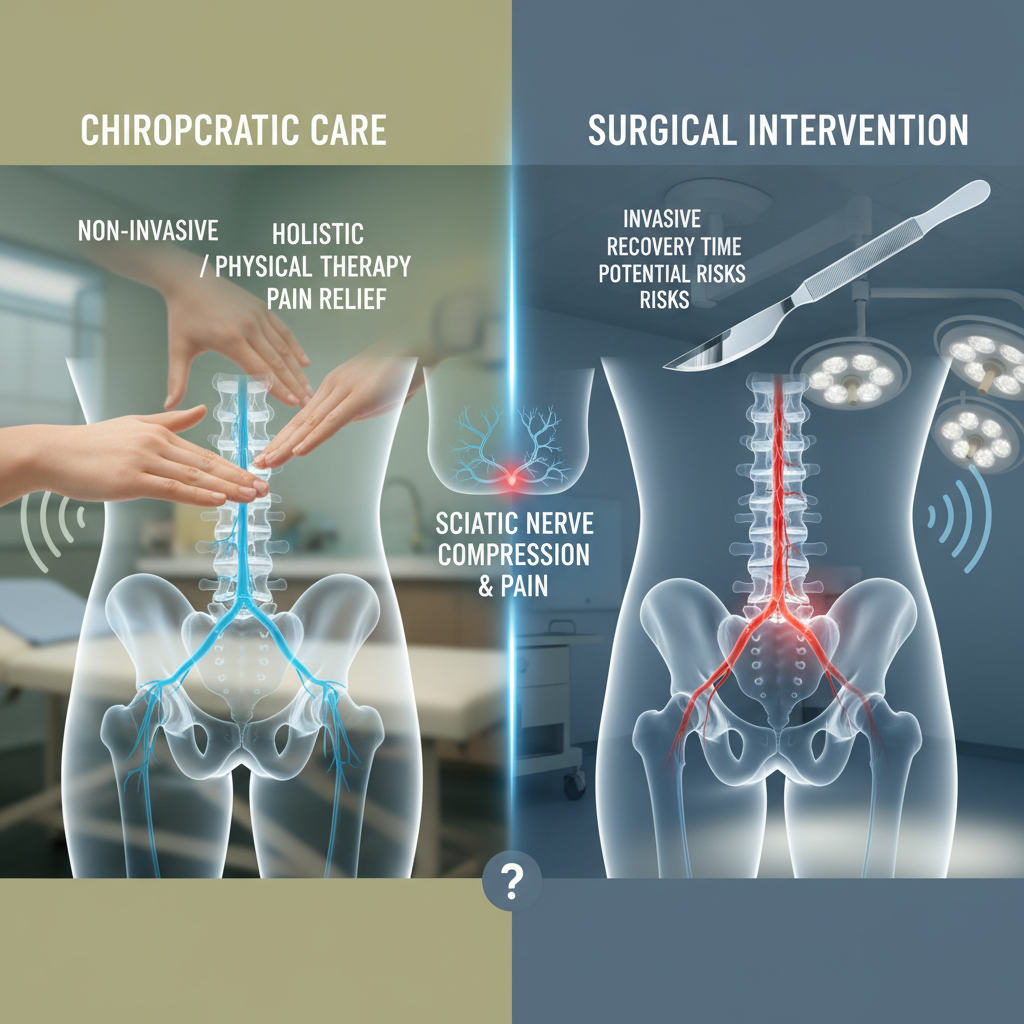
When you look at chiropractic vs surgery for sciatica, it helps to remember that both aim at the same goal: reduce pressure on the sciatic nerve and calm inflammation. They simply approach that goal in very different ways.
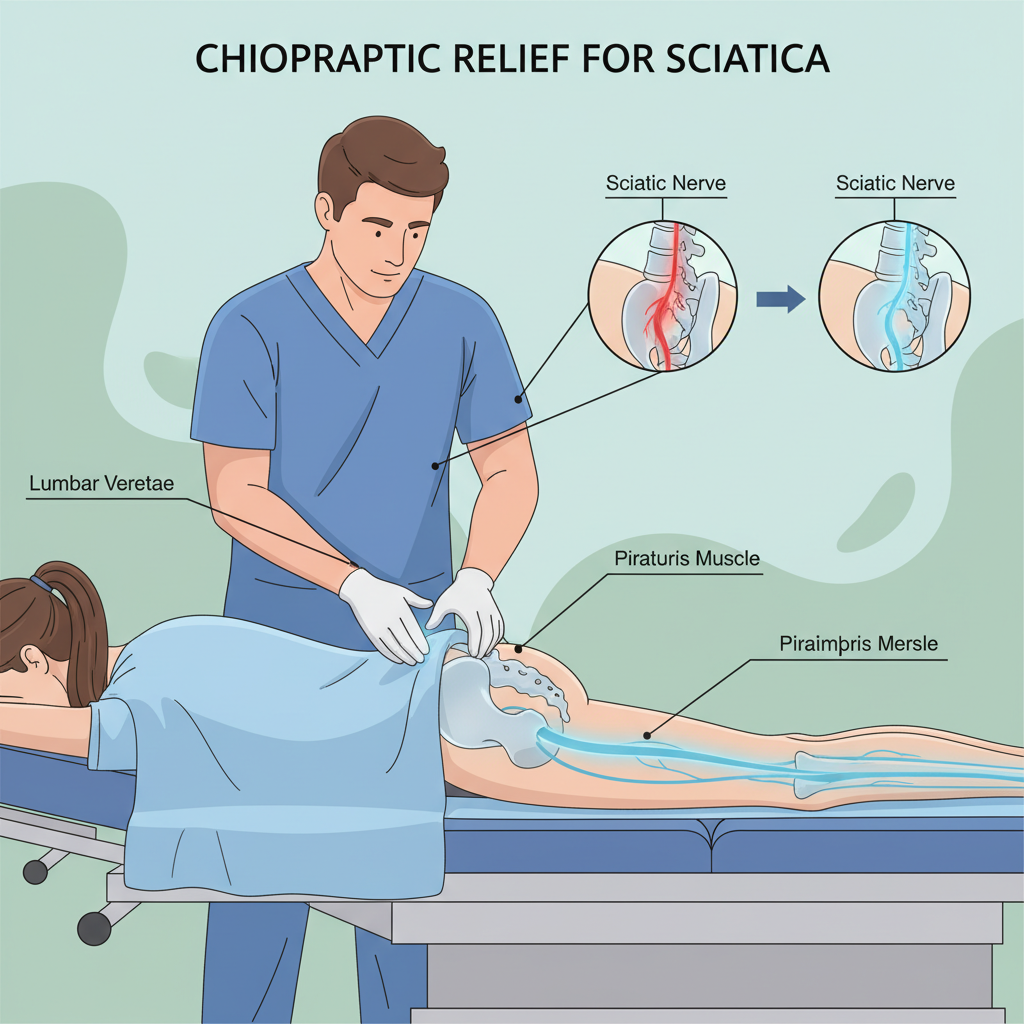
Chiropractic care uses hands on, non invasive techniques to:
- Improve alignment and motion of the spinal joints
- Reduce mechanical pressure on irritated nerve roots
- Decrease local inflammation and muscle spasm
- Restore healthier movement patterns so the irritation does not keep coming back
According to multiple chiropractic sources, spinal adjustments and manual techniques can alleviate nerve pressure, improve spinal mobility, and support the body’s natural healing without surgery [3].
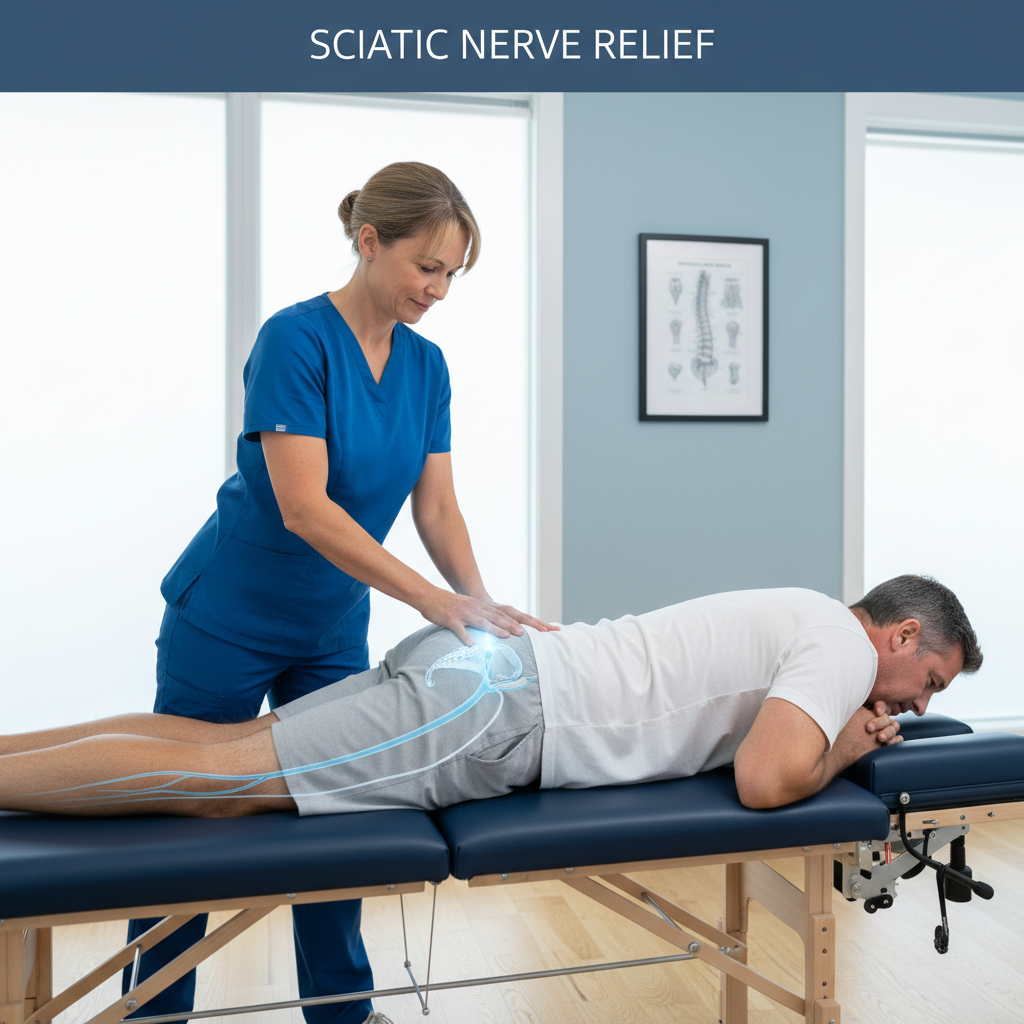
At a typical visit for chiropractic treatment for lumbar sciatica, you can expect your chiropractor to:
- Identify restricted or misaligned segments in your lower back and pelvis
- Apply controlled, gentle forces to realign and mobilize joints
- Use soft tissue work, stretching, and exercises to balance muscle pull and support the spine
- Address contributing issues such as posture, repetitive strain, or core weakness
This approach is often described as non painful. Many people notice audible “pops” similar to cracking knuckles and often feel immediate relief or lightness in the affected area afterward [4].
If your goal is natural sciatica pain relief chiropractor care focuses on treating the whole person, including activity, lifestyle, and other neuromusculoskeletal conditions, rather than just masking pain with medication [4].
Chiropractic treatment methods for sciatica
Your specific care plan will depend on whether your sciatic pain is acute, recurring, or chronic, and what the underlying cause is. A tailored sciatica pain relief plan may include several of the following methods.
Spinal adjustments and manual therapy
A chiropractic adjustment for sciatica targets restricted joints in your lumbar spine, pelvis, and sometimes mid back. The aim is to restore alignment and motion so the nerve is no longer pinched or irritated.
Techniques may include:
- High velocity, low amplitude thrusts that produce a quick, gentle release
- Mobilization, slower movements that gradually improve joint motion
- Flexion distraction, a table based technique often used for disc herniations to gently “open” the space around the nerve
Manual therapy also addresses tight muscles, fascia, and trigger points that can contribute to sciatic pain patterns.
Nerve focused chiropractic techniques
For many people, sciatica is largely a problem of nerve compression and inflammation. Chiropractic therapy for nerve compression can include:
- Gentle traction or decompression to reduce pressure on the nerve root
- Targeted adjustment of vertebrae associated with the affected nerve
- Nerve mobilization techniques to restore gliding of the sciatic nerve through surrounding tissues
These methods support chiropractic care for nerve pain without relying on injections or medications.
Exercise, posture correction, and lifestyle
Effective sciatic nerve pain management goes beyond the treatment table. Your chiropractor may prescribe:
- Specific stretches to open up the hips and hamstrings
- Core and glute strengthening to support your lower back
- Ergonomic changes at work and home to reduce strain on your lumbar spine
- Activity modification and pacing so you keep moving without aggravating the nerve
This combination helps you maintain the gains you make in the clinic and reduces the risk of repeated flare ups.
What the research says about chiropractic vs surgery
When you weigh chiropractic vs surgery for sciatica, it is important to look at actual outcome data, not just opinions.
A 2010 study compared 80 people with sciatica who had either surgical microdiscectomy or chiropractic care. After one year, there was no noticeable difference in outcomes between the two groups [5]. About 60 percent of those who had not responded to other treatments improved with chiropractic spinal manipulation to the same degree as those who had surgery. The chiropractic group avoided surgery related pain and long recovery times, and did not face risks such as nerve root damage, bleeding, or infection that can come with microdiscectomy [5].
Larger randomized trials also show an important pattern. Early surgery for severe sciatica can lead to quicker pain relief in the first few months, but long term pain and function outcomes at one to two years are often similar to those of patients who follow conservative care and only have surgery if needed [6]. Another five year trial found no significant differences in pain, disability, or overall recovery between people assigned to early surgery and those assigned to prolonged conservative treatment, although nearly half of the conservative group eventually chose surgery due to persistent severe leg pain and disability [7].
These studies suggest that:
- Surgery tends to relieve symptoms faster in the short term, especially for more severe cases.
- Over the long term, many people do just as well with non surgical care.
- A significant group will still need surgery eventually if pain and disability remain severe.
Because of this, many experts recommend trying non invasive sciatica treatment options, including chiropractic care, before moving on to surgery, unless you have emergency signs or rapidly worsening weakness.
When chiropractic is appropriate before surgery
You are a good candidate to try chiropractor for sciatica nerve pain care first if:
- Your pain has lasted weeks to a few months but is not accompanied by emergency red flag symptoms
- You have mild to moderate leg weakness or mostly sensory symptoms, such as pain, numbness, or tingling
- Imaging, if done, confirms a disc herniation or other mechanical source of nerve compression that often responds to conservative care
- You prefer to avoid surgery and wish to explore sciatica relief without injections and medications
Multiple sources recommend chiropractic as a first line option for mild to moderate sciatica, with surgery reserved for severe or persistent symptoms [3].
Chiropractic care is generally safe when performed by a licensed professional, although you may experience temporary soreness, fatigue, or a mild headache after treatment [8]. For many people, these short lived effects are a reasonable trade off compared with the risks of anesthesia, infection, and potential nerve injury that come with surgery [1].
If you are mainly dealing with leg pain from sciatica chiropractor focused care can often relieve radiating leg symptoms by improving how the joints and soft tissues around the nerve function.
When you should consider surgery sooner
Although conservative care is appropriate for many, there are times when a surgical consultation is important right away. You should seek urgent medical evaluation if you notice:
- Sudden or rapidly worsening weakness in your leg or foot
- Loss of control over bladder or bowel function
- Numbness in the area between your legs (saddle anesthesia)
- Severe, unrelenting pain that does not improve with rest or medication
These can be signs of significant or increasing nerve compression that can cause permanent damage if not relieved quickly.
Even if you do not have emergency symptoms, surgery may be appropriate if:
- You have completed a reasonable trial of conservative care and your pain remains severe
- Your ability to work, sleep, or care for yourself is severely limited
- Imaging shows a large disc fragment or spinal stenosis that is unlikely to improve enough without surgery
Procedures such as microdiscectomy and lumbar laminectomy have high success rates for leg pain relief, but they also carry risks like infection, bleeding, scar tissue formation, and possible incomplete symptom improvement [3]. The key is to balance potential benefits against those risks in the context of your specific case.
Recovery timelines with chiropractic vs surgery
Every case of sciatica is different, and your recovery will depend on factors such as age, overall health, how long you have had symptoms, and how severe your nerve compression is. That said, there are some general patterns in timelines.
With a tailored sciatica recovery plan chiropractor, you can often expect:
- Gradual reduction in leg pain and tingling over several weeks
- Noticeable improvement in walking tolerance and daily activity within 4 to 8 weeks for many mild to moderate cases
- Ongoing gains in strength, flexibility, and function over 3 to 6 months
Some people notice relief within a few visits, while others with more chronic or complex issues may take longer. A common question is how long does sciatica take to heal chiropractor, and the honest answer is that healing time varies. Early, consistent, conservative care tends to shorten recovery for most people.
After surgery, many people experience faster pain relief in the first few weeks compared to conservative care [6]. However:
- You will typically have an initial postoperative recovery period with activity restrictions
- You may still need rehabilitation and exercise to restore strength and prevent recurrence
- Long term pain and function outcomes are often similar to those who improved non surgically [7]
The choice is not simply about which option works, but which path best fits your symptoms, risks, and preferences.
Combining chiropractic with other conservative care
You do not always have to choose between chiropractic and every other option. In many cases, a combination of conservative treatments provides the best overall result.
Chiropractic care for sciatica is often used alongside:
- Targeted physical therapy exercises
- Short term use of anti inflammatory medications under medical guidance
- Activity modification and ergonomic changes
- Education about pacing, posture, and back care
A 2021 review noted that spinal manipulation therapy can be effective for some forms of nerve related pain and is often used together with exercise, physical therapy, or medications, even though the evidence is not consistent specifically for sciatica [2].
If you are looking for sciatica treatment without surgery or want sciatica relief without injections, a coordinated conservative plan that includes chiropractic may give you a strong chance of recovery while minimizing risks.
Making an informed decision for your recovery
Choosing between chiropractic vs surgery for sciatica is a personal decision, and there is no one right answer for everyone. It often helps to ask yourself:
- How severe is my pain, and how much does it limit my daily life?
- Have I completed a structured course of non invasive sciatica treatment options?
- Do I have any red flag symptoms that suggest urgent nerve damage?
- What are my preferences regarding conservative care versus surgical intervention?
For many adults with radiating leg pain, numbness, or burning sensations, starting with a thorough evaluation by a chiropractor for pinched nerve sciatica or a provider experienced in sciatica caused by disc chiropractor care is a practical first step. You can often reduce nerve compression, calm inflammation, and restore function without immediately moving to injections or surgery.
If you reach a point where conservative care has been tried and your symptoms remain severe, a surgical consultation can then be the next informed choice, rather than the first.