Sciatica can stop you in your tracks. A proven sciatica pain relief plan helps you move from constant flare ups to steady, lasting improvement, often without injections or surgery. By understanding how sciatic nerve compression develops and how chiropractic care relieves that pressure, you can choose a conservative, step by step approach that fits your goals.
About 90 percent of people with sciatica improve without surgery, many within a few weeks, especially when they follow a structured home and clinical care plan [1]. With the right guidance, you can often get effective sciatica treatment without surgery and reduce the chances of the pain coming back.
Understanding sciatica and nerve compression
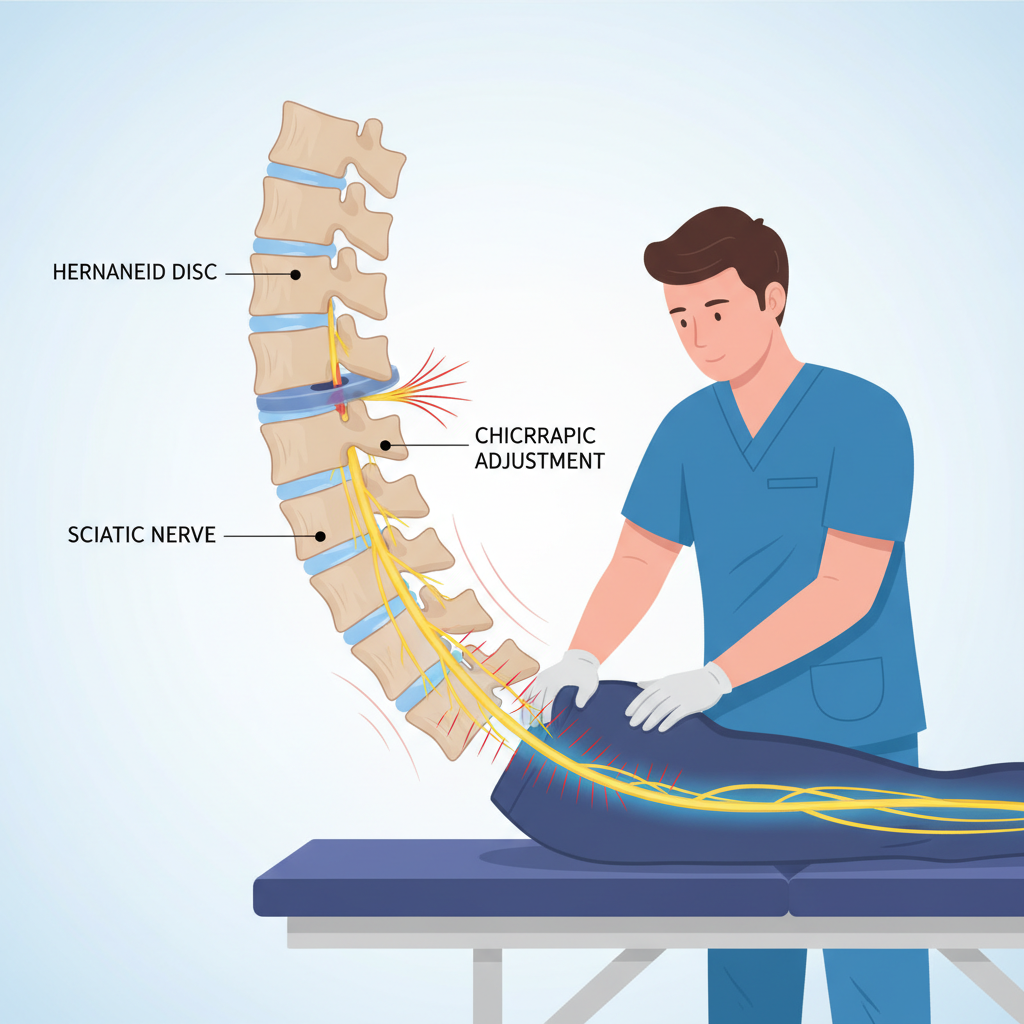
Sciatica is not a single diagnosis. It is a set of symptoms that comes from irritation or compression of the sciatic nerve, the largest nerve in your body. This nerve runs from your lower spine, through your hips and buttocks, then down the back of each leg. When part of that pathway gets pinched or inflamed, you feel it as radiating leg pain, numbness, tingling, or burning sensations [2].
How sciatic nerve compression develops
Several issues can create pressure or irritation along the sciatic nerve:
- A lumbar disc bulge or herniation that presses on a nerve root
- Bone spurs from spinal arthritis that narrow the space for the nerve
- Inflammation from an injury, pregnancy, infection, or overuse that irritates the nerve
- Tight muscles in the hip and buttock region, especially the piriformis muscle, that compress the nerve as it passes through
Clinicians often describe two main types of sciatica. Mechanical sciatica is caused by physical pressure on the nerve, such as a bone spur or herniated disc. Inflammatory sciatica is caused more by swelling and inflammation around the nerve, for example after an injury or during pregnancy [3].
No matter the exact cause, the result is similar. The nerve becomes irritated, signals from the lower back and hip into the leg become over sensitive, and you feel pain, tingling, or numbness anywhere along that path.
Common sciatica symptoms you may notice
Because sciatica follows the path of the sciatic nerve, it behaves differently from simple muscle soreness or a strained ligament. You might notice:
- Pain that runs from your lower back or buttock down the back of your thigh and sometimes into your calf or foot
- Sensations described as dull aching, sharp shooting, electric, or burning pain in the back of the leg
- Numbness, pins and needles, or tingling in part of the leg or foot
- Muscle weakness, heaviness, or difficulty lifting the foot
- Pain that worsens with certain positions, such as prolonged sitting, bending, or twisting
A physical therapist at Hospital for Special Surgery describes sciatica pain as ranging from a dull ache to sharp, burning pain, often with changes in reflexes or strength depending on how much the nerve is affected [3].
If you are dealing mostly with radiating leg pain, a dedicated radiating leg pain chiropractor can help you sort out whether the sciatic nerve is actually involved or whether your pain is coming from a different structure.
When sciatica is an emergency
Most cases of sciatica, although painful, are not emergencies. However, there are warning signs that mean you should seek urgent medical care right away.
Get immediate medical attention if you notice:
- Sudden or rapidly worsening leg weakness
- Loss of bladder or bowel control
- Numbness in the groin or saddle area
- Fevers, chills, or night sweats along with back and leg pain
- Severe pain that does not change with rest or position
These signs can indicate serious conditions such as cauda equina syndrome or infection and require immediate treatment [4].
If your symptoms are milder and mainly involve radiating pain, tingling, or intermittent weakness, then a conservative, non invasive sciatica pain relief plan that includes chiropractic care is often appropriate.
How chiropractors evaluate sciatic nerve pain
Before starting treatment, a chiropractor will perform a detailed nerve pain chiropractor evaluation. This is a key step because the right plan depends on the right diagnosis.
What to expect at your first visit
Your initial visit typically includes:
- A full history of your pain, including when it started, what makes it better or worse, and any prior injuries
- Questions about work, activity level, and previous treatments
- A physical exam that looks at posture, movement, flexibility, and muscle strength
- Orthopedic and neurologic tests, such as raising the straight leg or checking reflexes and sensation
- In some cases, referral for imaging such as X rays or MRI if serious conditions are suspected
The goal is to determine whether your symptoms are likely caused by sciatic nerve compression, and if so, where along the spine and pelvis that compression occurs. If your chiropractor suspects a disc issue, a sciatica caused by disc chiropractor approach can be used, which focuses more carefully on lumbar disc mechanics.
If your condition is appropriate for conservative care, your chiropractor will then create a sciatica recovery plan chiropractor that fits the severity of your symptoms, your general health, and your daily demands.
How chiropractic care relieves sciatic nerve compression
Chiropractic care for sciatica focuses on two main problems. The first is reducing mechanical pressure on the nerve. The second is calming inflammation and irritation around the nerve. Together these changes can ease pain and allow the nerve to heal.
Restoring alignment and motion with adjustments
A core part of chiropractic adjustment for sciatica is improving how the spinal joints and pelvis move. When joints are stiff or misaligned, the openings where the nerve roots exit can narrow and irritate the nerve.
Gentle, precise spinal adjustments can help:
- Improve motion of the lumbar vertebrae
- Increase the space around the affected nerve root
- Reduce mechanical stress on discs and joints
- Restore better overall biomechanics so other tissues do not have to compensate
Research on sciatica consistently shows that improving movement in the spine through targeted exercise and manual therapy is a key piece of lasting relief [5]. Chiropractic adjustments are one way to achieve better motion and alignment without medication or surgery.
Addressing nerve inflammation and soft tissues
Nerve irritation is rarely only a bone or disc problem. Inflammation, muscle tension, and joint irritation all contribute to ongoing pain. That is why chiropractic care for nerve inflammation often combines multiple techniques, such as:
- Soft tissue therapy to reduce tightness in the piriformis, gluteal muscles, and lower back
- Gentle mobilization of the hips and sacroiliac joints
- Physiologic therapies such as heat, cold, or electrical stimulation
- Guided stretches to open up the back of the hip and thigh
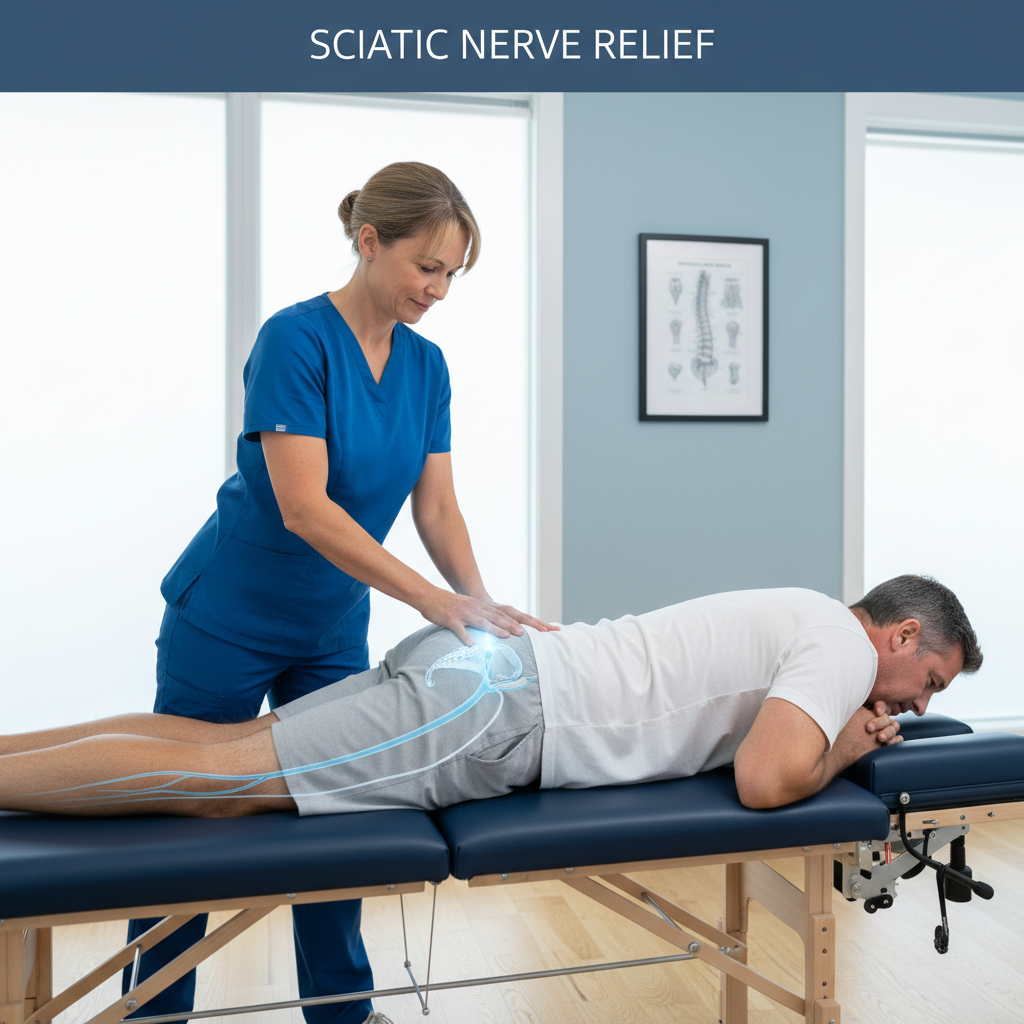
Manual therapy techniques like nerve glides, joint mobilization, myofascial release, and active assisted range of motion are commonly used to reduce pain and improve function in people with sciatica [5]. This type of hands on care is central to chiropractic therapy for nerve compression.
A step by step sciatica pain relief plan
Your sciatica pain relief plan should combine home strategies with in office care. This allows you to manage flare ups between visits and speed up healing.
Phase 1: Calm the flare up and protect the nerve
In the first few days of a strong flare up, your goals are pain control and protection of the irritated nerve.
Short rest periods can give rapid but temporary relief, especially if standing or walking worsens your symptoms. However, extended bed rest is not recommended because it can weaken muscles and worsen symptoms [6].
During this phase you can:
- Use cold packs on your lower back for 15 to 20 minutes, several times per day, especially in the first few days. This helps reduce inflammation around the nerve. Always wrap ice packs to protect your skin [1].
- After the sharpest pain eases, switch to heat such as a warm pack or bath. Heat increases blood flow and helps tight muscles relax so you can start gentle stretching [1].
- Avoid positions that clearly worsen your leg pain. For example, if prolonged sitting is a trigger, use a standing desk or take frequent walking breaks.
Mild sciatica often improves on its own with rest, cold or heat therapy, and anti inflammatory medicines. An early evaluation by a musculoskeletal professional such as a chiropractor or physical therapist can improve outcomes and reduce the risk of chronic, recurring pain [3].
Phase 2: Restore movement with gentle exercises
Once your pain begins to stabilize, the focus shifts to careful movement. Staying active as early as you reasonably can is crucial. Prolonged bed rest or sitting can actually worsen sciatica and increase the risk of recurrence [1].
Physical therapists and spine specialists often recommend:
- Directional exercises that gently move your spine into positions that centralize or reduce leg pain, such as extension or flexion based movements depending on your pattern
- Simple core and hip strengthening movements like glute bridges, bird dog, and clamshells
- Stretches that target tight hip and leg muscles that can compress the nerve
For example, expert guidance from HSS highlights a home based plan using moves like Glute Bridge, Lying Knee to Chest, Clamshell, Bird Dog, Cobra Stretch, and Child’s Pose to build strength, flexibility, and balance while protecting the nerve [3].
Hip external rotation stretches, such as the seated glute stretch, figure 4 stretch, and standing hamstring stretch, are particularly effective, because they reduce compression and improve mobility along the sciatic nerve path [2].
Your chiropractor can select movements that are safe for your specific pattern and limit those that make pain worse. Some people respond better to flexion based exercises, others respond better to extension based work. Personalized planning is a key part of sciatic nerve pain management.
Phase 3: Build long term strength and resilience
After you are able to sit, stand, and walk with less pain, your focus should shift to preventing future flare ups. This is where many people stop too early, which leaves the underlying weakness and stiffness in place.
A long term sciatica pain relief plan will usually include:
- Progressive core strengthening that includes the deep abdominal muscles, back extensors, and hip stabilizers
- Regular low impact aerobic exercise such as walking or swimming to improve circulation and reduce inflammation [7]
- Ongoing flexibility work to keep your hamstrings, hip flexors, and gluteal muscles from tightening around the nerve
- Posture and body mechanics training for work tasks, lifting, and daily activities
Physical therapy and exercise are considered first line treatments for relieving, treating, and preventing sciatica symptoms. The main goals are to strengthen and mobilize tissues in the lower back, pelvis, abdomen, buttocks, and thighs, so the spine is supported and the nerve is less likely to be irritated [5].
If leg pain remains a frequent issue, a leg pain from sciatica chiropractor can help adjust your program and identify any remaining mechanical triggers.
A good sciatica pain relief plan does not just stop the current flare up. It also builds the strength and habits that make the next one less likely and less severe.
When chiropractic care is appropriate before injections or surgery
Sciatica is common. As many as 4 out of every 10 people will experience it during their lifetime, and most will recover without surgery [8]. Because of this, conservative options like chiropractic and physical therapy are usually recommended before injections or surgery, unless you have emergency red flag symptoms.
Why try chiropractic before injections
Injections such as lumbar epidural steroid injections can offer immediate and sometimes significant relief, especially for severe nerve root inflammation. They are often used when symptoms are not improving with conservative care and are impacting your ability to function. However, their effect can be modest and temporary when sciatica is caused by a herniated disc [8].
A chiropractor for pinched nerve sciatica focuses on altering the underlying mechanics that created the compression in the first place. When alignment, movement patterns, and soft tissue tension improve, the nerve has more room and less irritation. This approach aims for durable change, not only temporary numbing of pain.
If you prefer sciatica relief without injections, chiropractic care combined with targeted exercise and home strategies gives you a clear path to try first.
When surgery becomes a consideration
Only a small percentage of people with sciatica need surgery. It is usually considered when:
- Severe or worsening pain, weakness, or numbness persists for at least 6 weeks despite conservative treatment
- You have recurrent episodes that severely limit your life despite diligent non operative care
- Imaging confirms a clear structural problem, such as a large disc herniation that matches your symptoms
- You develop serious neurologic signs such as progressive weakness or bladder or bowel changes
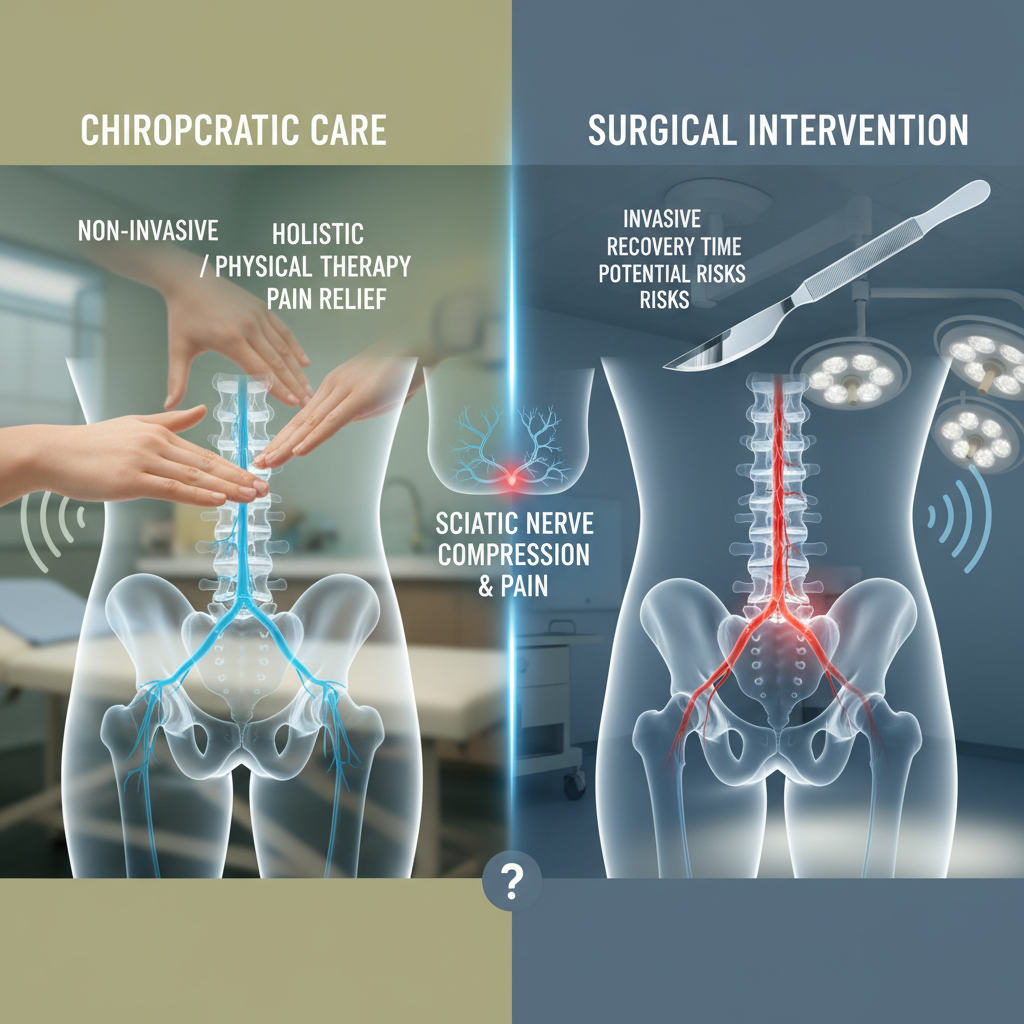
Surgery aims to correct the underlying mechanical problem, such as removing part of a herniated disc that compresses the nerve [8]. The choice between chiropractic vs surgery for sciatica depends on your response to conservative care, your overall health, and your personal preferences.
In many cases, a chiropractor for sciatica nerve pain is an appropriate first step, and surgery remains a later option if needed.
How long sciatica takes to heal
Healing timelines vary, but understanding the general pattern can help you set realistic expectations.
Many people notice improvement within a few weeks when they follow a consistent plan that includes movement, posture changes, and targeted manual therapy. About 90 percent of cases improve without surgery, and many are effectively managed at home when the cause is injury or pregnancy [1].
Your chiropractor can help you answer how long does sciatica take to heal chiropractor questions based on:
- Whether your sciatica is more mechanical or inflammatory
- The size and location of any disc involvement
- How long symptoms were present before you started care
- Your overall health, activity level, and commitment to your home program
Patience and consistency matter. Nerve tissues heal more slowly than muscles and skin. It is common for residual tingling or stiffness to take longer to resolve, even as sharp pain improves.
Integrating lifestyle changes into your plan
Lasting results depend not only on what happens in the clinic, but also on the choices you make daily. Lifestyle changes recommended by spine and pain specialists can help prevent flare ups and keep your sciatic nerve calmer over time [9].
Useful changes include:
- Staying moving throughout the day, even simple walking or slow jogging, to promote circulation and reduce lower back inflammation
- Avoiding long periods of sitting, using a timer to remind you to stand, walk, or stretch
- Practicing basic stretches or yoga to ease muscle spasms and support natural healing
- Alternating heat and cold at home, for example 10 to 15 minutes of ice followed by 20 to 30 minutes of heat, repeated a few times per day during active flares
- Using good posture and proper lifting techniques at work and home
A natural sciatica pain relief chiropractor can help you integrate these habits into your everyday routine so that they are realistic and sustainable for you.
Putting your sciatica pain relief plan into action
A proven sciatica pain relief plan is not a single technique or quick fix. It is a structured, stepwise approach that uses conservative care to reduce nerve compression, calm inflammation, and then build lasting strength.
By combining:
- Accurate diagnosis through a thorough chiropractic evaluation
- Targeted chiropractic treatment for lumbar sciatica and other chiropractic care for nerve pain
- A home program of movement, stretching, and posture correction
- Thoughtful lifestyle changes that reduce daily strain on your lower back
you give your sciatic nerve the best chance to heal without injections or surgery. If you are ready to explore non invasive sciatica treatment options and personalized sciatic nerve compression treatment, working with an experienced chiropractor can be a practical first step toward lasting relief.