Peripheral nerve pain can change the way you walk, sit, sleep, and move through your day. When that pain is caused by sciatic nerve compression in your lower back, you may feel burning, tingling, numbness, or sharp shocks traveling down your leg. If you are looking for conservative options before injections or surgery, chiropractic care for nerve pain can be an important part of your plan.
In this guide, you will see how sciatica develops, how chiropractors evaluate and treat sciatic nerve compression, what recovery can look like, and when chiropractic care is or is not appropriate.
Understanding sciatic nerve compression
Sciatica is not just “back pain.” It involves irritation or compression of the sciatic nerve, the largest nerve in your body. This nerve starts in your lower spine, travels through your hips and buttocks, and runs down each leg.
How sciatica develops
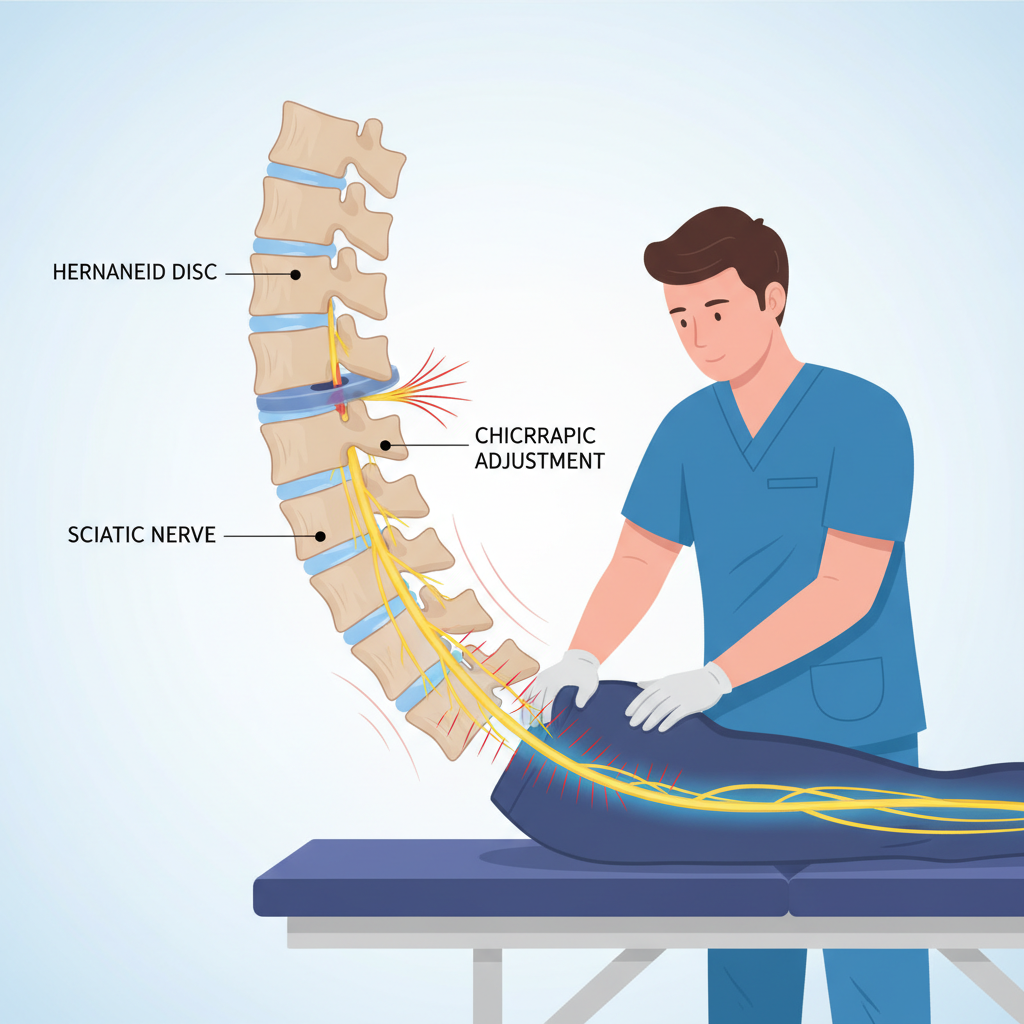
Sciatic nerve compression usually begins with a structural problem in your lower back or pelvis. Common causes include:
- A lumbar disc bulge or herniation that pushes into the nerve space
- Degenerative changes in the spine that narrow the openings where nerves exit
- Spinal misalignments or joint restrictions that alter normal motion and create nerve irritation
- Muscle tightness or imbalance in the hips and pelvis that adds extra pressure on the nerve
When this pressure develops, the nerve does not transmit signals normally. Irritated nerve tissue can become inflamed and hypersensitive, which you feel as radiating discomfort. Sciatica affects an estimated 10 to 40 percent of people at some point, and although it may resolve on its own, untreated compression can lead to chronic pain and weakness [1].
Common signs you may have sciatica
The way you describe your symptoms gives your chiropractor important clues about sciatic nerve compression.
Typical features include:
- Pain that starts in your low back or buttock and travels down the back or side of your thigh
- Burning, electric, or shooting sensations, sometimes like sudden “zaps”
- Numbness, tingling, or a “pins and needles” feeling in your leg or foot
- Weakness that makes it harder to lift your foot, stand on your toes, or walk long distances
- Symptoms worse with sitting, bending, or twisting and sometimes better when walking or lying flat
You might notice that one movement, such as coughing or sneezing, sharply increases pain. This can indicate added pressure on an already irritated nerve.
If you are unsure whether your leg symptoms are coming from your back, a targeted nerve pain chiropractor evaluation can help clarify what is really going on.
How chiropractors evaluate nerve pain and sciatica
Chiropractors are trained to identify musculoskeletal and spinal causes of nerve irritation. Your first visit typically focuses on finding the exact source of your symptoms.
History and physical examination
You can expect questions about:
- Where your pain starts and where it travels
- What makes it worse or better
- Any recent injuries, falls, or car accidents
- Past episodes of back pain or leg pain
- Other medical conditions, such as diabetes or previous spine surgery
During your exam, your chiropractor may:
- Check your posture, spinal alignment, and range of motion
- Test your reflexes, muscle strength, and sensation in your legs
- Perform orthopedic and nerve tension tests that gently stretch the sciatic nerve to see if symptoms reproduce
Chiropractors are experts at diagnosing pinched nerves through this combination of history and hands-on evaluation, which helps identify where the nerve is compressed and how severe the problem is [2].
Imaging and referrals when needed
If your exam suggests a more complex condition, your chiropractor may refer you for imaging such as X rays or an MRI. Medical referral is also important if you have:
- Progressive leg weakness
- Loss of bowel or bladder control
- History of cancer, recent significant trauma, or unexplained weight loss
- Signs of infection or systemic illness
These red flags can indicate a condition that needs urgent medical or surgical assessment. Chiropractic care is typically considered after serious causes are ruled out and when conservative treatment is appropriate.
How chiropractic care for nerve pain works
Chiropractic care focuses on restoring normal motion and alignment to your spine and related joints so that irritated nerves have room to function again. Instead of masking symptoms with medication, treatment aims to address the mechanical cause of compression.
Peripheral nerve pain affects more than 20 million people in the United States, which highlights how often nerve irritation disrupts daily life [2]. When that pain is tied to your spine or lower body mechanics, chiropractic care can be a noninvasive way to relieve pressure.
Spinal adjustments and joint manipulation
A chiropractic adjustment is a controlled, specific force applied to a joint that is not moving properly. The goal is to improve joint motion and alignment so your body can move more freely and with less stress on nearby nerves.
According to Mayo Clinic, chiropractic adjustment is often used for low back pain and neck pain, and research shows spinal manipulation is effective for some types of lower back pain that may relate to nerve irritation [3]. Many people also report relief from headaches and other spine related conditions after adjustments.
When your sciatic nerve is compressed in the lower spine, targeted chiropractic adjustment for sciatica can:
- Create more space around the nerve roots
- Reduce local inflammation
- Normalize joint motion so the nerve is no longer constantly irritated
You may hear a “popping” sound during an adjustment. This is similar to knuckle cracking and is usually a release of gas from the joint, not bone moving out of place. Patients often describe a feeling of relief and increased mobility afterwards [4].
Muscle, soft tissue, and lower body work
Sciatic nerve compression is not only about bones and discs. Tight or imbalanced muscles in your hips, buttocks, and legs can add extra pressure on the nerve or pull your spine out of alignment.
Your chiropractor may include:
- Gentle muscle work and stretching to reduce tension around the nerve
- Myofascial techniques to release knots in the gluteal and piriformis muscles
- Joint mobilization of the hips, knees, ankles, and feet
For foot related nerve pain, such as neuropathy, chiropractors can focus on spine and lower body function to improve blood flow and reduce stress on the nerves, which helps ease pain, tingling, numbness, and balance problems [5]. The same principles apply when your sciatic nerve irritation travels into the calf or foot.
Chiropractic treatment specifically for sciatic nerve compression
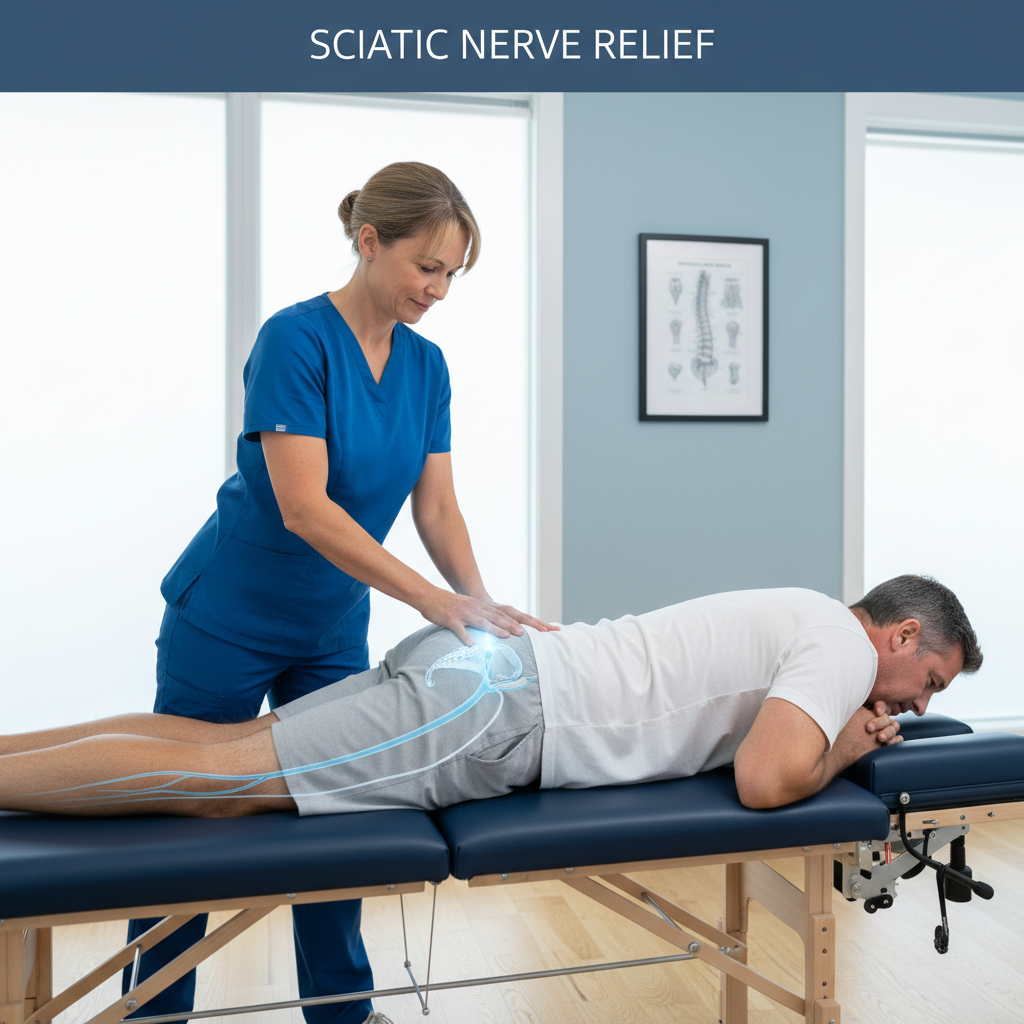
If you are dealing with radiating leg pain, a chiropractor can provide a step by step plan focused on your sciatic nerve.
Targeting the lumbar spine and discs
When your sciatica is related to a disc problem or narrowing in the lower spine, chiropractic treatment for lumbar sciatica typically includes:
- Adjustments to the lumbar vertebrae and sacrum to improve alignment
- Flexion distraction or gentle traction techniques that slightly separate the vertebrae to reduce disc pressure
- Postural correction to unload the lower back during everyday activities
Realigning the spine and relieving joint restrictions can release the “pinch” on the nerve and reduce inflammation, which is a core part of sciatic nerve compression treatment.
For people whose sciatica is clearly tied to a disc issue, sciatica caused by disc chiropractor approaches emphasize techniques that support disc healing, such as controlled decompression and core stability work.
Addressing muscular imbalance and nerve inflammation
Your chiropractor also considers how nerve irritation interacts with surrounding muscles and soft tissues. Targeted chiropractic therapy for nerve compression can be combined with:
- Exercises that strengthen your core, glutes, and hips so they support the spine
- Stretches that lengthen tight hamstrings and hip flexors
- Guidance on sitting, standing, and lifting positions that reduce strain
This approach supports chiropractic care for nerve inflammation by calming irritated nerve tissue and improving the environment around the nerve.
Patients with sciatica who receive this type of care often notice gradual reductions in leg pain, numbness, and tingling, along with better flexibility and walking tolerance. For example, sciatica patients in one clinic reported that customized chiropractic care reduced stabbing leg pain, restored leg strength, and improved posture over time [6].
When your spine moves the way it is designed to, nerve pressure eases, muscles work more efficiently, and everyday activities become less painful and more natural.
How chiropractic care compares to other sciatica treatments
If you are weighing your options, it helps to see where chiropractic fits among other approaches for sciatic nerve compression.
| Approach | What it focuses on | Typical use for sciatica |
|---|---|---|
| Chiropractic care | Spinal alignment, joint motion, nerve decompression, movement patterns | First line conservative care and part of non invasive sciatica treatment options |
| Medications | Reducing pain perception and inflammation | Short term symptom control, does not correct compression |
| Injections | Direct anti inflammatory medication near the nerve | Moderate to severe cases when conservative care is not enough |
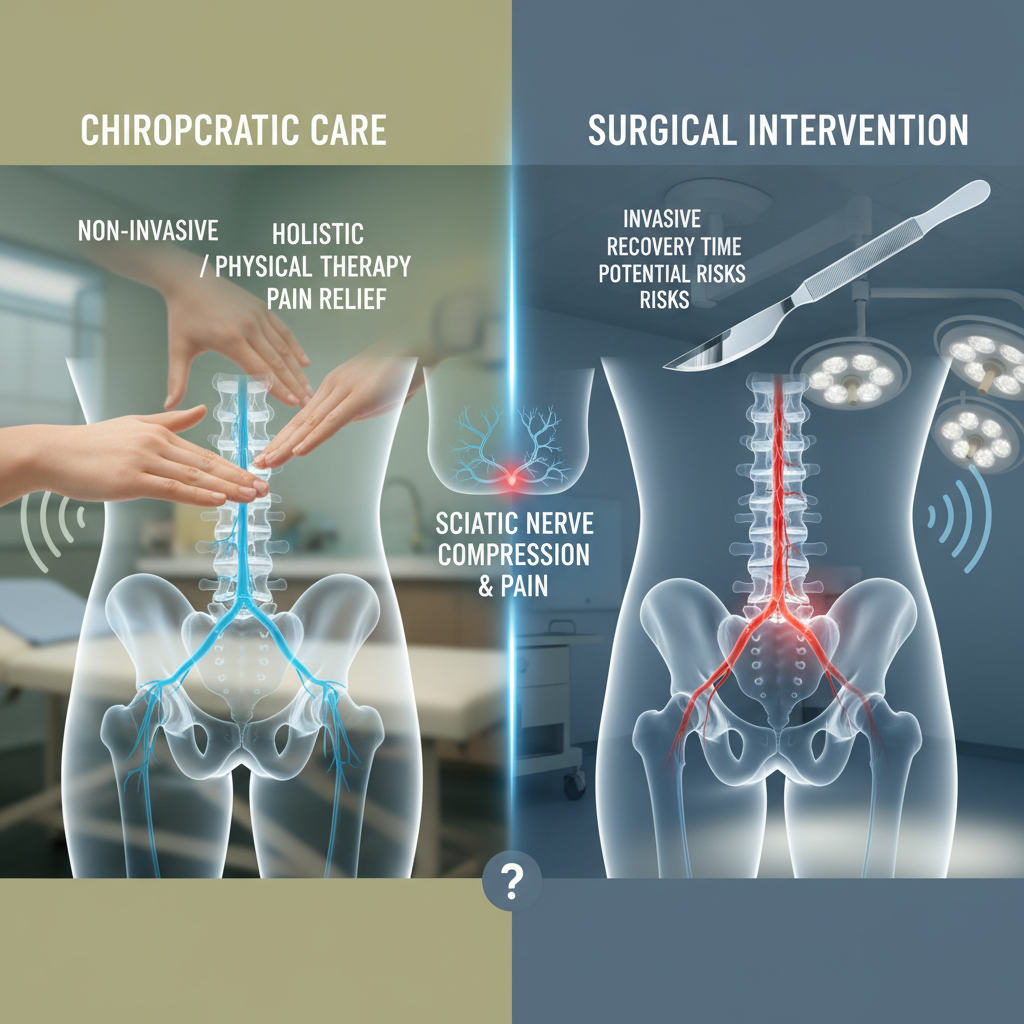
| Surgery | Removing part of disc or bone to decompress nerve | Last resort for significant nerve damage or unrelenting pain |
Chiropractic care is generally considered safe for sciatica management, with many people reporting symptom relief and improved function. Evidence on its effectiveness for nerve pain is mixed, with some studies showing benefit and others recommending caution due to small sample sizes. Overall, chiropractic is often used as a conservative option before injections or surgery, with medical evaluation recommended when symptoms worsen or do not improve [1].
A large observational study of 1,835 people with chronic low back or neck pain found that 86 percent of chiropractic patients reported at least some improvement in pain over three months, and 71 percent felt much better with care. Patients also described better access and shorter wait times compared with general medical care [7].
If you are comparing chiropractic vs surgery for sciatica, your chiropractor can work in coordination with your primary physician or spine specialist to decide what makes the most sense for your condition.
What a typical chiropractic sciatica treatment plan looks like
Your care plan should be individualized, but there are common phases many people move through when using chiropractic care for nerve pain related to sciatica.
Phase 1: Relief care
In the first few weeks, the focus is on easing pain and reducing nerve irritation.
You may have:
- More frequent visits, for example 1 to 3 times per week
- Gentle spinal adjustments and soft tissue work
- Positioning and home strategies to calm symptoms, like short walks, supported rest positions, and ice or heat when appropriate
This is where a structured sciatica pain relief plan and sciatica treatment without surgery approach come together. Early chiropractic intervention can shorten recovery time and reduce long term discomfort from poor posture or old injuries [4].
Phase 2: Corrective care
Once your pain is less intense, your chiropractor will work on correcting underlying problems.
This may include:
- Continued adjustments, often less frequently
- More active rehabilitation exercises
- Gait and posture coaching to support healthy movement
At this stage, how chiropractors treat sciatica centers on restoring normal spinal curves, improving pelvic balance, and building strength so your sciatic nerve is less likely to be compressed again.
Phase 3: Stability and prevention
When your symptoms are under control, your focus shifts to preventing flare ups.
This phase might involve:
- Periodic check ins and adjustments to maintain alignment
- A home program of stretches and strength work
- Ongoing attention to ergonomics at work and home
A thoughtful sciatica recovery plan chiropractor design helps you protect your gains and maintain a healthy spine.
How long sciatica can take to heal with chiropractic care
Recovery time varies widely because sciatic nerve compression can range from mild irritation to more severe damage.
Factors that influence healing include:
- How long you have had symptoms before starting care
- Whether your compression is from a minor joint misalignment or a large disc herniation
- Your age, general health, and activity level
- How consistently you follow home recommendations
Many people start to notice some improvement in pain or mobility within the first few weeks of chiropractic care. For chronic or more complex cases, substantial progress may take several months. A realistic discussion about how long does sciatica take to heal chiropractor can help you set expectations and measure improvement.
Mild temporary side effects such as soreness, fatigue, or a brief increase in discomfort can occur after adjustments and usually resolve within a few days [3]. If your symptoms do not improve after several weeks, or if they worsen, your chiropractor should reassess your plan and consider additional medical evaluation, as Mayo Clinic notes that chiropractic may not be effective for every type of nerve related pain.
When chiropractic care is appropriate before injections or surgery
For many adults with radiating leg pain, chiropractic care is an appropriate first line strategy before trying injections or surgery.
You are often a good candidate when:
- Your pain, tingling, or numbness suggests sciatica, but you do not have severe or rapidly progressing weakness
- Imaging, if done, does not show a condition that clearly requires surgery right away
- You prefer sciatica relief without injections and want to avoid long term opioid or anti inflammatory medication use
A 2025 study found that people with sciatica who received chiropractic spinal manipulation instead of opioids had fewer side effects one year later, and those who started chiropractic care earlier were less likely to need opioid medication afterward [1]. This supports using chiropractic care as part of a conservative plan before relying on stronger drugs.
At the same time, rare but serious risks have been reported with certain types of neck manipulation. A case report described a patient who experienced a fatal vertebral artery dissection and stroke after high velocity cervical manipulation, and reviews have identified hundreds of arterial dissection cases associated with neck manipulation, although the overall incidence remains very low, estimated at about one arterial dissection in eight million cervical manipulation office visits [8]. Sciatica treatment focuses on the lower spine, not the neck, but this information underscores why clear communication with your providers and appropriate screening are important.
If you and your medical team later decide that injections or surgery are needed, chiropractic care can sometimes still play a role in prehabilitation and post recovery support, depending on your surgeon’s guidance.
When to seek immediate medical care instead
While most cases of sciatica respond to conservative approaches like chiropractic care, some situations require urgent medical attention rather than spinal manipulation.
Seek immediate medical care if you experience:
- Sudden loss of bladder or bowel control
- Significant new weakness in one or both legs
- Numbness in the area around your groin or inner thighs
- Severe, unrelenting pain that does not respond to rest or medication
These can be signs of cauda equina syndrome or another serious condition that may need emergency surgery. Your chiropractor should refer you promptly if any of these symptoms are present or if your exam suggests a problem outside the scope of conservative care.
Using chiropractic care as part of your overall nerve pain plan
Chiropractic care for nerve pain and sciatic nerve compression is most effective when it is integrated into a broader strategy that supports your long term health.
You can improve your results by:
- Staying active within your comfort level instead of prolonged bed rest
- Following your home exercises and stretches consistently
- Maintaining a healthy weight and nutrition plan that supports tissue healing
- Addressing workplace or lifestyle factors that strain your lower back
As you evaluate your options, you can explore focused resources such as natural sciatica pain relief chiropractor, radiating leg pain chiropractor, or leg pain from sciatica chiropractor to see how this type of care might fit your specific situation.
If you are ready to take the next step, consider meeting with a chiropractor for pinched nerve sciatica or a chiropractor for sciatica nerve pain to discuss a personalized sciatic nerve pain management plan. With careful evaluation, clear communication, and a structured approach, you can pursue sciatica treatment without surgery that aims to reduce nerve pressure, calm inflammation, and help you get back to the activities that matter most to you.