
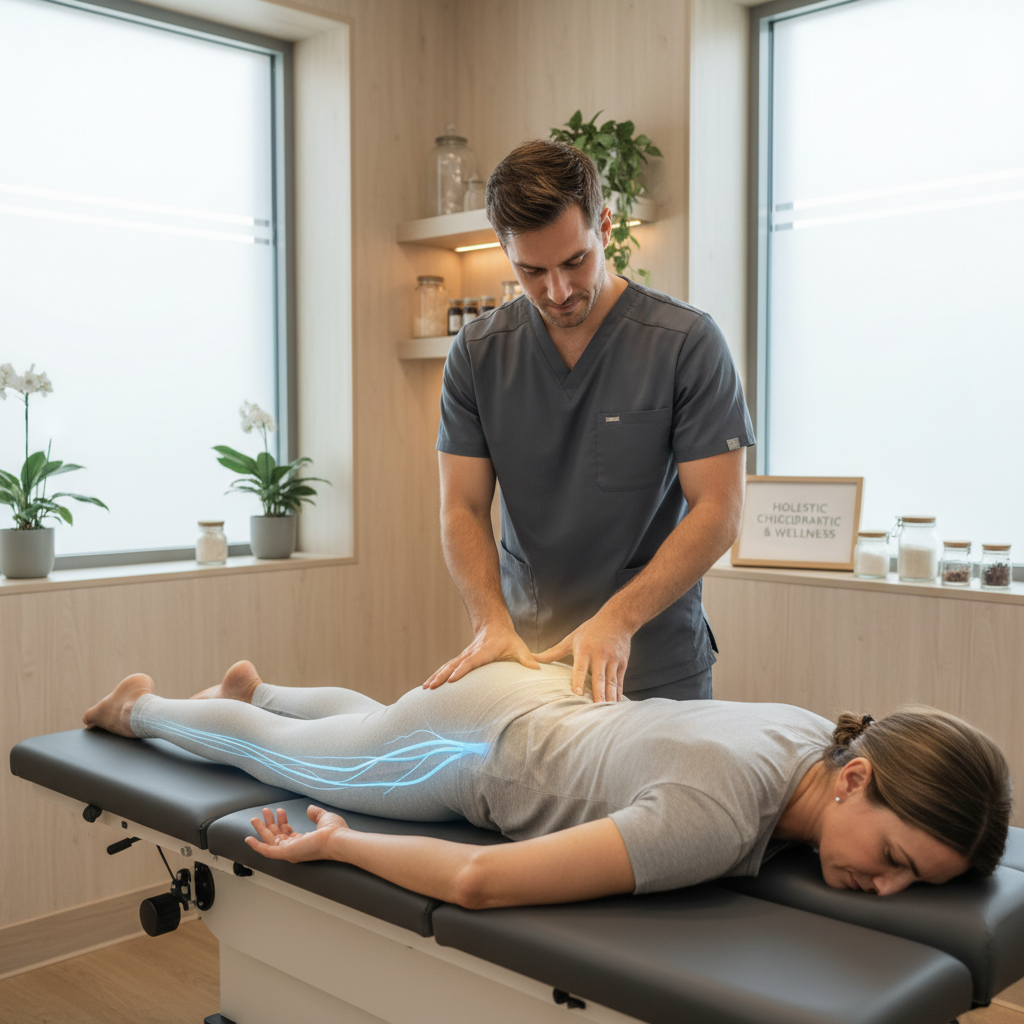
Understanding non invasive sciatica treatment options
When you live with radiating leg pain or tingling that will not let up, it is natural to worry that surgery is your only option. In reality, most people improve with conservative care, and there are many non invasive sciatica treatment options you can try before injections or surgery are considered.
Sciatica is a pain syndrome that starts when the sciatic nerve is compressed or irritated. This large nerve runs from your lower back, through your hips and buttocks, and down the back of each leg. Compression can cause pain, numbness, tingling, or weakness, usually on one side of your body [1]. Understanding how this nerve compression develops helps you see why chiropractic care, physical therapy, lifestyle changes, and other conservative treatments are often so effective.
If you want sciatica treatment without surgery, it is helpful to know how your condition develops, how it is diagnosed, and which non invasive tools can fit into a step by step recovery plan.
How sciatica develops from nerve compression
Sciatica is a symptom pattern, not a single disease. You feel pain in your leg, but the source of the problem is usually higher up in your spine.
Common causes of sciatic nerve compression
Several structural changes in your spine or surrounding tissues can irritate the sciatic nerve or its roots:
- Herniated or bulging lumbar disc that presses on a nerve root
- Degenerative disc disease that reduces disc height and narrows nerve openings
- Spinal stenosis that tightens the canal where nerves run
- Bone spurs from arthritis around the joints of your spine
- Piriformis muscle spasm in the buttock that squeezes the sciatic nerve
- Poor posture and weak core muscles that overload parts of your spine
When a disc bulges backward or a joint becomes inflamed, the space where the nerve exits the spine can narrow. Even a few millimeters of pressure can irritate the nerve, which then sends pain, tingling, and weakness signals down your leg.
Why movement and mechanics matter
You might notice that your sciatica feels worse when you sit, bend, or twist. That is because your spinal joints and discs move with you. Certain positions increase pressure on the nerve, while others open space and let the nerve breathe.
This is where chiropractic and targeted exercise can help. By improving spinal alignment and restoring healthy motion, you reduce the ongoing mechanical irritation that keeps your sciatic nerve inflamed. Non invasive care aims to give the nerve more room, calm inflammation, and help the surrounding muscles support your spine again.
Recognizing sciatica symptoms and red flags
You might suspect sciatica if you notice a pattern of pain that starts in your lower back or buttock and travels down your leg. Symptoms can vary in intensity from a dull ache to sharp, electric pains.
Common sciatica symptoms include:
- Radiating pain from your low back or buttock down the back of your thigh or calf
- Numbness, tingling, or “pins and needles” in one leg or foot
- Burning or electric shock sensations with certain movements
- Muscle weakness in the leg, such as trouble lifting your foot or standing on your toes
- Pain that worsens when sitting for long periods, bending forward, or coughing
Most cases improve with conservative, nonsurgical treatments [2]. However, some symptoms require urgent medical attention.
You should seek emergency care right away if you notice:
- Sudden severe leg weakness
- Loss of bowel or bladder control
- Numbness in the groin or inner thighs
These can be signs of cauda equina syndrome, a rare but serious condition that needs immediate treatment to prevent permanent damage [3].
How sciatica is diagnosed before treatment
Before starting any non invasive sciatica treatment options, you need a clear diagnosis. A careful evaluation helps distinguish true sciatic nerve compression from other causes of leg pain.
A chiropractor or other spine specialist may:
- Review your health history, work demands, and prior back issues
- Ask about the exact pattern of your pain, numbness, or weakness
- Perform a physical and neurological exam to check strength, reflexes, and sensation
- Use specific orthopedic tests that tension the sciatic nerve to confirm involvement
If your symptoms are severe or not improving, imaging such as MRI may be ordered to confirm disc herniation, stenosis, or other structural causes. A detailed nerve pain chiropractor evaluation helps your provider plan the safest and most effective conservative care plan for you.
First line self care and lifestyle changes
Many people start with basic self care, especially in the first days of an episode. These strategies often ease pain enough for you to begin more active treatments such as chiropractic and physical therapy.
Heat, cold, and activity
Alternating hot and cold can help control pain and inflammation. Cold helps reduce swelling in the first couple of days, and heat improves local blood flow and relaxes tight muscles afterward [4].
Using these tools:
- Apply a cold pack wrapped in a cloth for 15 to 20 minutes several times a day during the first 48 hours
- After 2 days, switch to a heating pad or warm pack for 15 to 20 minutes to relax muscles and improve circulation
It can be tempting to rest entirely, but prolonged inactivity often worsens sciatica. Most guidelines encourage you to stay gently active and avoid long periods of bed rest [5]. Short walks, light household activities, and changing positions frequently help keep your joints moving and prevent stiffness.
Self care measures that are often effective for mild symptoms include:
- Brief rest from heavy lifting or twisting
- Short periods of heat and cold therapy
- Over the counter anti inflammatory medications for a limited time, if approved by your doctor [1]
Staying active within your comfort zone is a consistent recommendation from major medical centers [6].
Chiropractic care as a core non invasive option
Chiropractic care focuses on improving spinal alignment and motion to reduce pressure on irritated nerves. For many people, a chiropractor is the first provider they see for sciatic nerve compression treatment because the approach is conservative, drug free, and non surgical.
How chiropractic adjustments help sciatica
With chiropractic adjustment for sciatica, your provider uses precise, controlled forces to realign spinal joints that are restricted or misaligned. Correcting these restrictions can:
- Open up the space where nerve roots exit the spine
- Reduce mechanical pressure and irritation on the sciatic nerve
- Decrease local inflammation and muscle spasm
- Improve overall spinal mechanics so the injured area is not overloaded
Manual spinal manipulation has been shown to improve spinal alignment, reduce nerve irritation, and ease muscle spasms, which can provide natural relief without drugs or surgery [7]. Many patients notice audible “crack” sounds as gas is released from the joints, and they often associate this with a feeling of release and improved mobility [8].
Chiropractic care for sciatica may also include:
- Gentle spinal mobilization when high velocity adjustments are not appropriate
- Soft tissue therapy to reduce tightness in muscles like the piriformis
- Spinal decompression techniques such as Flexion Distraction to relieve pressure on discs and nerve roots [9]
When you work with a chiropractor for sciatica nerve pain, the goal is to address the root mechanical cause of your symptoms, not just mask the pain.
Individualized chiropractic treatment plans
A skilled chiropractor will consider your overall health, work demands, posture habits, and medical history. Chiropractic care often includes lifestyle guidance, ergonomic advice, and exercises to support your spine, not just adjustments alone [10].
Non invasive chiropractic treatment for sciatica may involve:
- An initial evaluation to identify the source of nerve compression
- A schedule of adjustments to restore proper motion in your lumbar spine
- Targeted exercises to strengthen your core and hips
- Advice on posture, lifting, and sleeping positions to protect your back
- Periodic re evaluations to track nerve function and pain levels
If an MRI confirms that your sciatica is caused by a disc, your chiropractor can tailor your care to reduce disc pressure and support healing. For some people, chiropractic treatment for lumbar sciatica is enough to avoid injections or surgery entirely. In others, it becomes a key part of a broader sciatica pain relief plan.
Physical therapy and corrective exercise
Physical therapy is another foundational non invasive treatment. It focuses on restoring strength, flexibility, and healthy movement patterns so that your sciatic nerve is not repeatedly irritated.
What physical therapy does for sciatica
A physical therapist can:
- Use manual therapy such as joint mobilization and deep tissue massage
- Teach targeted exercises for your spine, core, hips, and legs
- Correct posture and movement patterns that overload your lower back
- Provide a customized home exercise program you can follow long term
Physical therapy programs often include techniques like the McKenzie Method, which uses specific repeated movements to reduce leg pain and centralize it toward the spine, a sign that nerve irritation is lessening [9].
Evidence from large reviews suggests that physiotherapy is slightly more effective than minimal interventions for reducing long term pain, although results compared to more intensive treatments such as surgery or injections are mixed and often limited by study quality [11]. In practice, physical therapy is still widely recommended because it is low risk, supports long term function, and gives you tools to manage flare ups.
Example exercises and movement strategies
Gentle, guided exercises help you regain mobility without aggravating symptoms. Physical therapists and major centers like Hospital for Special Surgery recommend movements such as:
- Glute bridges
- Lying knee to chest stretches
- Clamshells for hip stability
- Bird dog for core and back control
- Cobra and child’s pose stretches for flexibility
These can be performed at home as part of a structured program to ease pain and improve movement [3]. Programs also emphasize maintaining strength, balance, and flexibility in your hips and knees so you are more resilient if sciatica returns [12].
If you are unsure where to start, it can be helpful to work with a chiropractor who collaborates with physical therapists or who can incorporate therapeutic exercises into your sciatica recovery plan.
Other conservative non invasive options
Your non invasive sciatica treatment options are not limited to chiropractic and physical therapy. Depending on your needs, your care plan may also include:
Medications and injections as supportive tools
For short term relief of moderate to severe pain, your doctor may recommend:
- Nonsteroidal anti inflammatory drugs to reduce inflammation and pain
- Short courses of muscle relaxants if spasm is significant
These medications are usually used for a brief period and are not recommended as the only long term strategy for chronic pain [1].
If you still have significant pain after trying self care, medication, physical therapy, and chiropractic, interventional nonsurgical treatments are sometimes considered before surgery. These can include:
- Epidural corticosteroid injections around the affected nerve root
- Selective nerve block injections to target specific roots
A single corticosteroid injection can sometimes reduce pain for several months, and many people receive up to three injections in a year if needed [13].
These procedures are not a cure, but they can calm inflammation enough to let you fully participate in chiropractic care and rehabilitation.
Complementary therapies
Some people also benefit from carefully selected complementary therapies alongside core treatments:
- Acupuncture, which can promote natural pain relief and reduce inflammation when performed by a trained professional [4]
- Massage therapy, which helps relieve muscle tension, improve circulation, and promote relaxation, especially when combined with stretching and physical therapy [4]
These approaches are generally considered adjuncts, not replacements, for spine focused care and rehabilitative exercise.
Recovery timelines with non invasive care
Every case of sciatica is different, so your recovery timeline depends on the cause, severity, and how quickly you seek care. In many people, symptoms improve significantly within a few weeks using non invasive care such as chiropractic, physical therapy, and self management strategies.
Typical progress might look like:
- First few days: Control pain with activity modification, heat or cold, and short term medications if needed.
- 2 to 6 weeks: Begin focused chiropractic care and therapeutic exercises. Many people notice less radiating leg pain and better function during this time.
- 6 to 12 weeks: Continue progress with more advanced strengthening and stability work. The goal is to prevent recurrence by improving spinal support.
Regular chiropractic visits and physical therapy sessions can also serve as preventive measures. By maintaining spinal alignment, flexibility, and muscle strength, you reduce the risk of future flare ups and long term nerve compression [9].
If you are wondering how long sciatica takes to heal, your chiropractor can give you a personalized estimate based on your exam findings and your response to early treatment.
When to consider surgery and how chiropractic fits in
Surgery is usually reserved for specific situations. According to major clinical guidelines, surgical options are typically considered when:
- You have severe or worsening weakness that affects walking or daily function
- You develop bowel or bladder changes or other signs of cauda equina syndrome
- You have persistent, disabling pain after a course of non invasive treatments, including medications, physical therapy, and steroid injections [5]
If you are interested in chiropractic vs surgery for sciatica, it helps to remember that chiropractic focuses on restoring motion and alignment to heal the underlying mechanical problem. Surgery, in contrast, physically removes or alters tissues such as disc material or bone spurs to decompress the nerve.
In many cases, a thorough trial of chiropractic care and rehabilitative exercise is appropriate before injections or surgery are considered. If your chiropractor notices red flag symptoms or a lack of improvement despite appropriate care, you can be referred promptly to a spine specialist for further evaluation.
Building your non invasive sciatica relief plan
When you bring all of this together, your options for managing sciatic nerve pain without surgery are broader than they might appear at first. A well rounded sciatica pain management strategy often includes:
- Precise diagnosis and a full nerve pain chiropractor evaluation
- Targeted chiropractic therapy for nerve compression
- Individualized physical therapy and home exercises
- Short term medications or injections when appropriate
- Complementary therapies such as acupuncture or massage
- Lifestyle changes such as better posture, ergonomic adjustments, and consistent movement routines
Working closely with a chiropractor for pinched nerve sciatica gives you a guide who understands both the mechanical and neurological aspects of sciatic pain. With a structured, conservative plan and close monitoring, many people find that they can achieve meaningful relief and return to the activities they enjoy, without needing injections or surgery.
If you are unsure where to begin, exploring resources on how chiropractors treat sciatica, natural sciatica pain relief chiropractor, and sciatica relief without injections can help you take the next step toward lasting, non invasive relief.
References
- (Metro Pain Management)
- (Metro Pain Management, Mayo Clinic)
- (Hospital for Special Surgery)
- (Royal Spine Surgery)
- (Mayo Clinic)
- (Mayo Clinic, Hospital for Special Surgery)
- (Royal Spine Surgery, Reno Spine Care)
- (Reno Spine Care)
- (Alliance Orthopedics)
- (Reno Spine Care, Alliance Orthopedics)
- (European Spine Journal)
- (Hospital for Special Surgery, Penn Rehab)
- (Mayo Clinic, Metro Pain Management)