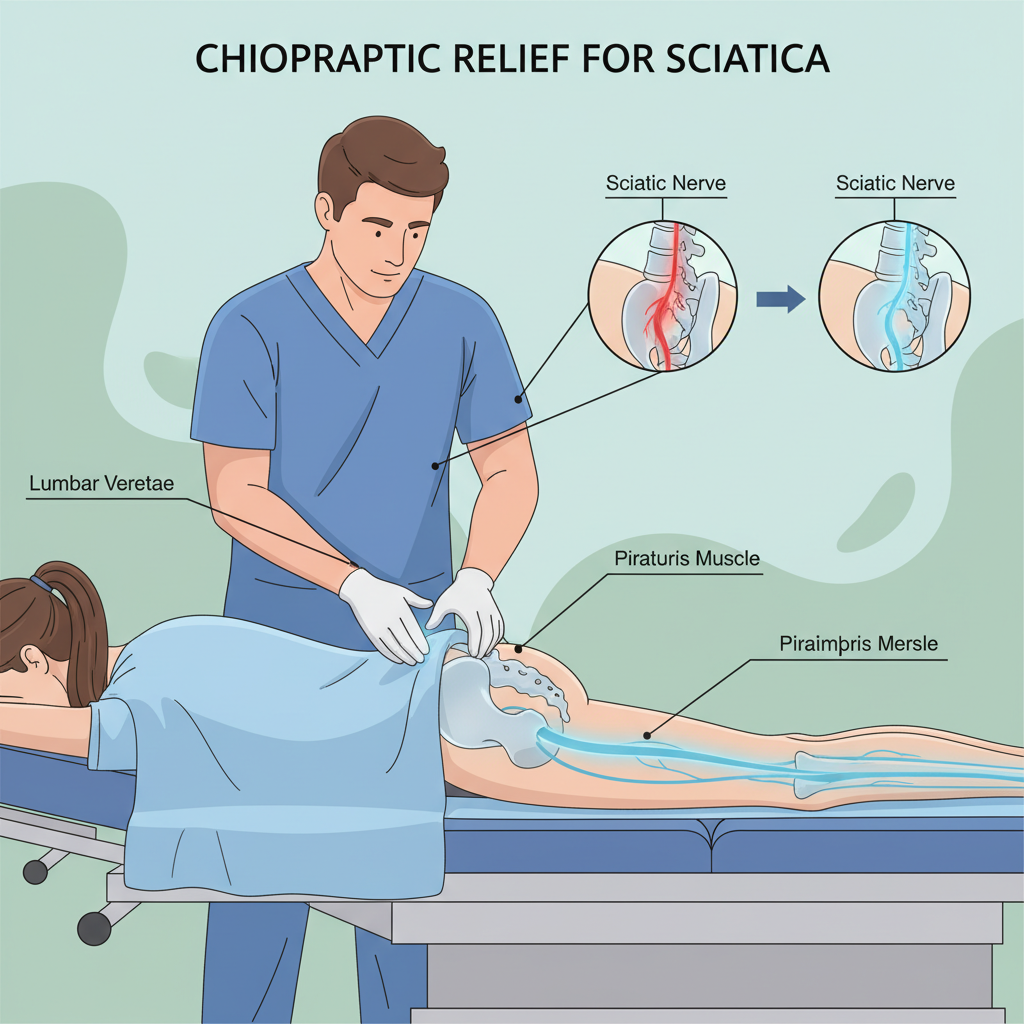
What sciatica is and why a recovery plan matters
If you feel sharp, shooting pain down your leg, burning or tingling, or numb patches that make walking difficult, you may be dealing with sciatica. Sciatica happens when the sciatic nerve, which runs from your lower back through your hips and down each leg, becomes compressed or irritated. This nerve irritation can come from herniated discs, spinal stenosis, joint misalignment, or tight muscles.
A structured sciatica recovery plan chiropractor guided care can do more than chase symptoms. Chiropractic treatment focuses on the root cause of sciatic nerve compression through spinal adjustments, decompression therapy, and targeted soft tissue work, all within a personalized plan that supports long term healing and function [1].
If you are looking for sciatica treatment without surgery or injections, understanding how sciatica develops and how chiropractic care fits into a comprehensive recovery plan is the first step.
How sciatic nerve compression develops
Sciatica is not a diagnosis by itself. It is a pattern of symptoms caused by something irritating or compressing the sciatic nerve or its roots in your lower spine.
Common causes of nerve compression
You can develop sciatic nerve compression in several ways:
- Herniated or bulging discs that press on the nerve root
- Degenerative disc disease that reduces disc height and narrows openings where nerves exit
- Spinal stenosis, or narrowing of the spinal canal
- Misaligned vertebrae or pelvic joints that alter normal nerve pathways
- Tight muscles, especially the piriformis, that irritate the nerve as it passes the hip
- Inflammation after an injury or accident
Chiropractic care focuses on identifying which of these mechanisms is affecting you, then using targeted techniques to relieve that pressure. For example, spinal adjustments can correct vertebral misalignments that put pressure on the sciatic nerve and improve physical function for many patients [2].
Why symptoms radiate down your leg
The sciatic nerve is the largest nerve in your body. It branches from your lower spine, passes through your pelvis, and runs all the way to your feet. When the nerve is irritated at the spine, you may feel:
- Lower back pain
- Hip or buttock pain
- Shooting pain down the back or side of your leg
- Numbness, tingling, or weakness in your leg or foot
Sciatica can affect one side or, less commonly, both sides. In severe cases, it can interfere with walking, balance, and normal daily activities [3]. This is why a focused sciatic nerve compression treatment plan is so important.
When chiropractic care is appropriate for sciatica
You may be wondering if chiropractic is right for your situation or if you are already past the point of conservative care. In many cases, chiropractic is an appropriate first step before injections or surgery.
Ideal candidates for a chiropractic sciatica recovery plan
You are often a good fit for a chiropractic based sciatica recovery plan if you:
- Have radiating leg pain, tingling, or numbness that follows a sciatic nerve pattern
- Want sciatica relief without injections or surgery whenever possible
- Can still control your bowels and bladder
- Do not have rapidly worsening leg weakness or severe neurological deficits
Chiropractic treatment is a non drug, non surgical approach that can manage chronic neck and back pain, including sciatica from neuromusculoskeletal disorders and older injuries [4].
When urgent medical care is needed instead
You should seek immediate medical or emergency evaluation if you notice:
- Loss of bowel or bladder control
- Rapidly worsening leg weakness
- Numbness in the groin area
- Severe trauma or suspected fracture
These can indicate a medical emergency that may require surgical intervention. Once serious red flags are ruled out, a chiropractor can then help you build a safe, non invasive sciatica pain relief plan.
How chiropractors evaluate sciatica and nerve compression
A strong sciatica recovery plan chiropractor guided care begins with a detailed assessment. Your chiropractor is not guessing. They are gathering precise information about where and how your sciatic nerve is being affected.
History and physical examination
Your visit typically starts with a thorough history and nerve pain chiropractor evaluation. You will discuss:
- Where your pain starts and where it travels
- What makes symptoms worse or better
- Any injuries, accidents, or repetitive strain
- Work demands, posture habits, and activity level
- Prior imaging, injections, or surgeries
The physical exam may include:
- Range of motion testing in your spine and hips
- Neurological checks for reflexes, sensation, and strength
- Orthopedic tests that reproduce or relieve sciatic symptoms
- Posture and gait analysis
Clinics such as Lakewood Ranch Chiropractic emphasize a detailed clinical assessment to identify the exact cause of sciatic nerve compression before building a plan [5].
Imaging and diagnosis
If needed, your chiropractor may refer you for X rays or MRI to confirm findings and better understand disc or joint changes. The goal is to determine:
- Whether your sciatica is disc related
- If spinal stenosis, arthritis, or instability is present
- How severe nerve compression appears to be
This information helps guide your personalized chiropractor for pinched nerve sciatica plan and determine whether chiropractic care is likely to be effective on its own or alongside other providers.
Core components of your chiropractic sciatica recovery plan
Once you have a clear diagnosis, your chiropractor will create a tailored program that addresses both pain relief and long term stability. Chiropractic care for sciatica is highly individualized based on the underlying cause, your symptoms, and medical history [6].
Spinal adjustments to relieve nerve pressure
Spinal adjustments are a central part of chiropractic adjustment for sciatica. Your chiropractor uses controlled, precise movements to restore proper alignment of the vertebrae and joints.
Spinal manipulation can:
- Reduce mechanical pressure on nerve roots
- Improve joint motion and spinal mechanics
- Decrease local inflammation
- Support better posture and weight distribution
Research shows that chiropractic spinal adjustments can correct vertebral misalignments that put pressure on the sciatic nerve. In one study, 60 percent of sciatica patients who had not improved with other treatments experienced benefits from spinal manipulation similar to surgical outcomes [2].
In a randomized double blind trial with patients who had acute back pain and sciatica from disc protrusion, those receiving active chiropractic manipulations had significantly greater pain relief and more pain free days compared to simulated treatment [7].
Spinal decompression therapy for disc problems
If your sciatica is primarily disc related, your chiropractor may recommend spinal decompression as part of your sciatica caused by disc chiropractor plan.
Spinal decompression therapy:
- Gently stretches the spine
- Creates negative pressure inside the discs
- Helps reduce pressure on herniated or bulging discs
- Reduces compression on the sciatic nerve
Decompression has been shown to decrease pain, inflammation, tingling, and numbness associated with disc based sciatica [2]. Clinics like Druzbik Family Chiropractic use decompression to create space for realigning discs and reducing nerve pressure, especially in disc related cases [8].
Soft tissue therapy and trigger point work
Muscles and connective tissues around your lower back, hips, and legs often tighten to guard against pain. This can increase pressure on your sciatic nerve and prolong irritation.
Your chiropractor may use:
- Trigger point therapy to release muscle knots and tight bands
- Myofascial release to ease tension in connective tissues
- Massage or other soft tissue methods to improve blood flow
Trigger point therapy is especially helpful for piriformis related sciatica, since tight piriformis muscles can directly irritate the sciatic nerve. Targeted pressure and soft tissue release can reduce pain and improve circulation around the nerve [9].
Druzbik Family Chiropractic, for example, uses myofascial release and trigger point therapy to relax tight muscles around the lower back and hips and relieve tension that worsens sciatica pain [8].
Pelvic and postural corrections
Your pelvis is the foundation for your spine. Misalignments here can increase stress along the sciatic nerve pathways. Pelvic adjustments:
- Restore balance between the left and right sides of your pelvis
- Reduce uneven loading on spinal joints and discs
- Help correct compensatory patterns in your hips and legs
Pelvic adjustments have been shown to reduce nerve compression and improve mobility as part of a comprehensive nonsurgical relief plan [2]. Over time, this supports more efficient posture, which is vital for lasting sciatic nerve pain management.
Exercise, lifestyle, and home care in your plan
Your chiropractor will not only adjust your spine and soft tissues. A complete sciatica recovery plan chiropractor approach includes what you do between visits.
Corrective and stabilizing exercises
Gentle, targeted exercises are used to:
- Strengthen core and hip muscles that support your spine
- Improve flexibility in tight areas like hamstrings and hip flexors
- Restore balance between left and right sides of your body
- Reduce the risk of flare ups
Druzbik Family Chiropractic, for instance, designs custom corrective exercise programs that support the spine, improve flexibility, and reduce future sciatica episodes [8]. Supplementing adjustments with strengthening and stretching can enhance recovery by improving circulation, reducing muscle tension, and relieving tightness [3].
Lifestyle and ergonomics guidance
Everyday habits can either support or undermine your healing. As part of your chiropractic therapy for nerve compression plan, your chiropractor may coach you on:
- Sitting posture and workstation setup
- Safer lifting techniques
- Sleep positions that decrease sciatic tension
- Activity pacing during recovery
Even small posture and movement changes can significantly impact your progress. Lifestyle and posture guidance from clinics like Druzbik Family Chiropractic shows how simple daily adjustments can help prevent episodes [8].
Complementary conservative therapies
Within a conservative, non invasive sciatica treatment options framework, your chiropractor may also recommend:
- Heat or cold therapy
- Gentle stretching routines
- Massage therapy
- Physical therapy collaboration
Doc Tony Clinics highlights that supplemental massage therapy and physical therapy exercises can increase core strength and promote faster recovery when combined with chiropractic adjustments [3].
A strong sciatica recovery plan combines precise in office chiropractic care with consistent home exercises and everyday habit changes so you are treating the cause, not just numbing the symptoms.
Typical recovery timeline with chiropractic care
No two cases of sciatica are exactly alike. Your healing speed depends on how long the nerve has been compressed, the underlying cause, your age, your general health, and how closely you follow your plan.
Phases of chiropractic sciatica recovery
Lakewood Ranch Chiropractic describes three general phases of chiropractic care for sciatica [5]:
- Acute pain relief phase
- Focus on reducing inflammation and pain
- Gentle spinal mobilizations and adjustments
- Possible use of decompression and soft tissue therapy
- Corrective or stabilization phase
- Emphasis on restoring and maintaining spinal alignment
- Targeted rehabilitative exercises for core and hips
- Gradual increase in activity and function
- Strengthening and prevention phase
- Ongoing exercises to strengthen support muscles
- Periodic checkups to monitor disc and joint health
- Education around long term posture and movement habits
Inflammation must decrease before full nerve healing can occur, so patience and consistency are key.
How long sciatica may take to improve
Many people start to notice meaningful pain reduction within several weeks of consistent chiropractic care. Some sources indicate that many patients experience significant improvement within four to six weekly adjustments [3].
In one study of people with herniated discs and sciatic pain, 28 percent of those receiving up to 30 chiropractic adjustments over 30 days became pain free, and 55 percent reported no further symptoms. They also reduced their use of anti inflammatory medications [6].
Most sciatica patients treated by chiropractors can expect to return to normal activities, including strenuous exercise, within about two months after beginning care if they follow the plan closely [3]. For more on expected timelines, you can explore how long does sciatica take to heal chiropractor.
Chiropractic vs injections or surgery for sciatica
If you are comparing chiropractic vs surgery for sciatica, it helps to look at outcomes and risks.
Evidence supporting chiropractic before surgery
A Canadian prospective randomized clinical study found that 60 percent of sciatica patients benefited from chiropractic adjustments to the same degree as patients who had surgery. Chiropractic was highlighted as a more affordable and effective alternative in many cases [6].
The double blind trial from Rome also demonstrated that active spinal manipulation produced significantly better pain reduction than simulated adjustments, with no adverse events during chiropractic treatment of acute back pain and sciatica patients [7].
Chiropractic treatment is therefore a reasonable, evidence based step before more invasive procedures, especially if you are seeking sciatica relief without injections.
When injections or surgery may still be needed
In some situations, injections or surgery may be recommended, including when:
- Severe neurological deficits persist or worsen despite conservative care
- Significant disc fragments compress the nerve and do not respond to decompression
- You have progressive weakness or nerve damage signs
Even then, pre and post surgical chiropractic and rehabilitative care can still play a role in your overall sciatic nerve pain management, as long as your surgeon and chiropractor coordinate your plan.
What to expect at your chiropractic visits
Knowing what will happen can lower anxiety and help you commit fully to your sciatica recovery plan.
During adjustments and therapies
During a typical sciatica focused visit, you may experience:
- Manual or instrument assisted spinal and pelvic adjustments
- Decompression therapy sessions on a specialized table
- Soft tissue work on tight muscles and fascia
- Guided stretches and corrective exercises
You may hear audible “crack” sounds during joint adjustments, similar to knuckle popping. These sounds usually come from gas releasing in the joint fluid and are often followed by a sense of relief in the area [4]. Early chiropractic intervention is encouraged for sciatica management, because delaying treatment may stretch out your recovery time [4].
Between visits and long term maintenance
Between visits, you can expect to:
- Perform home exercises and stretches as prescribed
- Follow posture and movement guidelines
- Gradually resume activities as symptoms improve
Long term, some people benefit from periodic maintenance visits to monitor spinal disc health and joint mobility as they return to regular work and recreation [5]. This supports ongoing chiropractic care for nerve inflammation and helps catch small issues before they become major flare ups.
Putting your personalized sciatica recovery plan into action
Sciatica affects nearly 40 percent of people at some point in their life, and chiropractic care is increasingly chosen as a drug free, cost effective treatment option for managing symptoms [6]. Working with a chiropractor for sciatica nerve pain means you are not just chasing pain, you are addressing the reasons your sciatic nerve is compressed or inflamed in the first place.
A strong sciatica recovery plan chiropractor partnership typically includes:
- Thorough diagnosis of the source of your nerve compression
- Targeted spinal and pelvic adjustments to relieve mechanical pressure
- Spinal decompression when discs are involved
- Soft tissue and trigger point therapy to calm tight, overworked muscles
- Corrective exercises and lifestyle changes to support long term stability
If you are experiencing leg pain from sciatica chiropractor style symptoms or need a radiating leg pain chiropractor evaluation, taking the step to schedule a comprehensive exam can help you move from guesswork to a clear, evidence based path forward.
To explore your options further, you can also review how chiropractic care for nerve pain works, what to expect from chiropractic treatment for lumbar sciatica, and how natural sciatica pain relief chiropractor approaches fit into a complete plan. With the right guidance and a consistent approach, you can give your sciatic nerve the space and support it needs to heal.