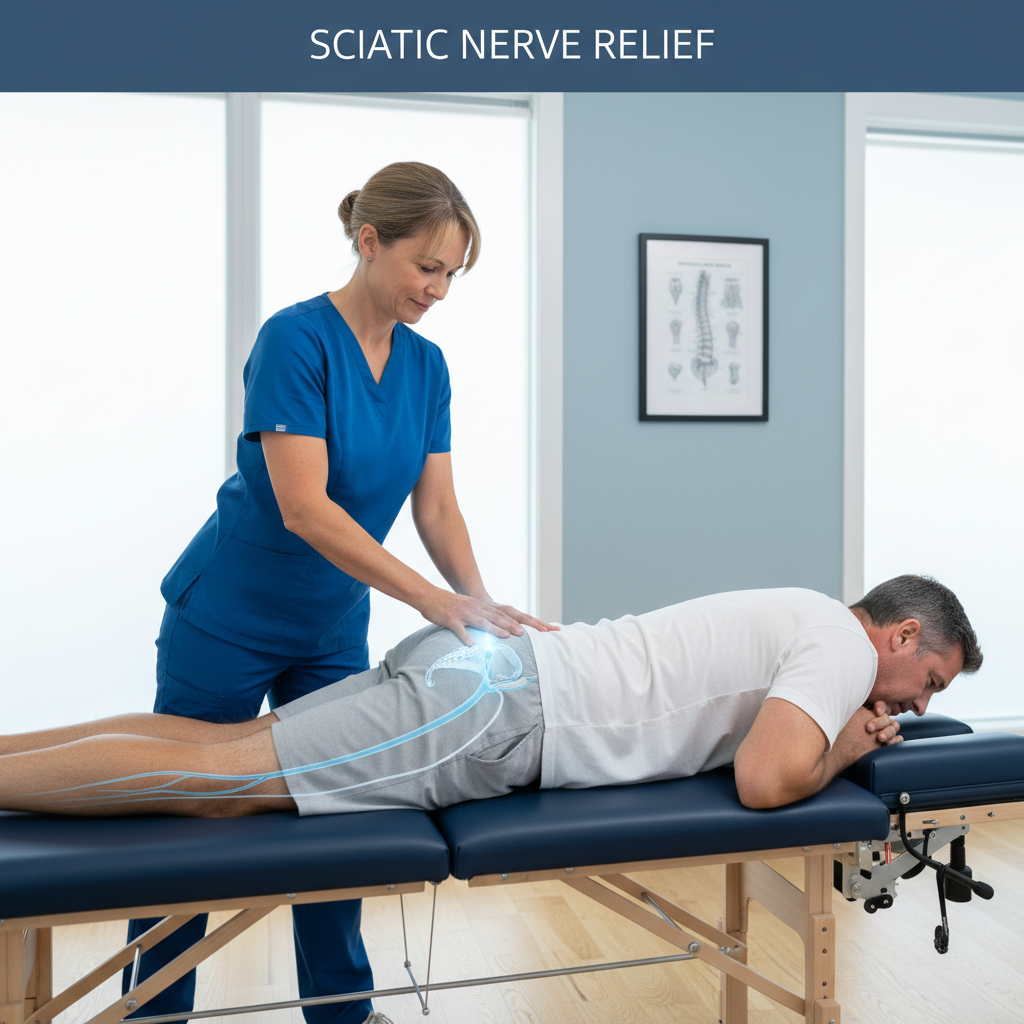
What chiropractic therapy for nerve compression means
When you live with radiating leg pain, numbness, tingling, or burning, it is natural to wonder if you have sciatica or another form of nerve compression. Chiropractic therapy for nerve compression focuses on relieving the pressure on irritated nerves in your spine so they can heal and function normally again.
A pinched or compressed nerve occurs when surrounding tissues such as bone, cartilage, muscles, tendons, or spinal discs press too firmly on a nerve. This pressure disrupts normal nerve signaling and can cause sharp pain, tingling, burning sensations, or weakness, often in your low back, hip, and leg when the sciatic nerve is involved [1].
Chiropractic care provides a non invasive, drug free way to address that pressure. By using targeted spinal adjustments and supportive therapies, your chiropractor aims to restore normal alignment, reduce inflammation, and give the irritated sciatic nerve the space it needs to calm down. This approach is often an important part of sciatica treatment without surgery for many adults who prefer to avoid injections or early surgical intervention.
How sciatic nerve compression develops
Sciatica is not a diagnosis by itself. It is a pattern of symptoms that happens when the sciatic nerve, which runs from your lower spine down through your hips and legs, becomes irritated or compressed.
Common causes of sciatic nerve compression
You may develop sciatica from several structural problems in your lower back and pelvis that press on the nerve roots forming the sciatic nerve:
- Herniated or bulging lumbar discs
- Degenerative disc disease
- Bone spurs from spinal arthritis
- Spinal stenosis, or narrowing of the spinal canal
- Misalignment of vertebrae in your low back or pelvis
- Tight muscles in the hip and buttock region that irritate the nerve
In each case, excess pressure from bones, discs, muscles, or ligaments disrupts nerve function and leads to pain or abnormal sensations along the nerve pathway [2].
Why sciatica feels so different from regular back pain
Sciatic nerve compression feels different from a simple muscle strain in your back because nerve tissue carries signals throughout your body. When the sciatic nerve is compressed, you can experience:
- Pain that shoots, burns, or zaps from your low back into your hip and down your leg
- Numbness or tingling along the back or side of your thigh, calf, or foot
- Weakness when you try to stand on your toes or heels
- Symptoms that worsen when you sit, cough, or bend, and sometimes ease when you walk or lie down
These are classic patterns your chiropractor looks for when planning sciatic nerve compression treatment.
Key signs you may need chiropractic care
You may benefit from chiropractic therapy for nerve compression if you notice any of the following:
Sciatica related symptoms
If you have sciatica, you might describe your pain and related symptoms in ways like these:
- A sharp, electric pain that travels from your low back into one leg
- Burning or tingling down the back or side of your thigh or calf
- Numbness in your foot or toes
- Leg weakness or a feeling that your leg might “give out”
- Difficulty finding a comfortable sitting position
When these signs are present, a radiating leg pain chiropractor can evaluate whether sciatic nerve compression is the source.
Red flags that need prompt evaluation
While chiropractic care is appropriate for many cases of sciatic nerve compression, some symptoms mean you should seek immediate medical attention and coordinate care with your chiropractor:
- Loss of bowel or bladder control
- Severe and rapidly worsening weakness in your legs
- Numbness in the groin or saddle area
- Recent significant trauma, such as a fall or accident
If these are not present, conservative options such as chiropractic care for nerve pain are often considered before injections or surgery.
How chiropractors diagnose nerve compression and sciatica
A careful evaluation is essential before starting chiropractic therapy for nerve compression. Chiropractors typically use several steps to understand exactly what is happening in your spine and leg.
History and symptom discussion
Your visit usually begins with a detailed conversation about:
- Where your pain starts and where it travels
- What movements make it better or worse
- When your symptoms began and how they have changed
- Your work, daily activities, and previous injuries
This information helps your chiropractor distinguish sciatica from other causes of leg pain and guides the nerve pain chiropractor evaluation.
Physical and neurological examination
Next, your chiropractor examines how your body moves and how your nerves function. This often includes:
- Checking your posture and spinal alignment
- Testing your muscle strength and reflexes
- Evaluating sensation in your legs and feet
- Asking you to perform specific movements to reproduce or relieve your symptoms
Research notes that chiropractors rely on this type of functional examination to identify the levels of nerve compression and to plan individualized treatment [3].
Imaging when needed
In some cases, your chiropractor may recommend imaging to confirm the source of compression or rule out other conditions. This may include:
- X rays to examine bone alignment and disc space
- MRI to view soft tissues like discs and nerves more clearly
Imaging is not always necessary, especially if your symptoms and exam clearly suggest a routine case of lumbar sciatica that is appropriate for chiropractic treatment for lumbar sciatica. When imaging is used, it is part of building an accurate diagnosis and a safe treatment plan.
How chiropractic therapy relieves nerve compression
Once your chiropractor understands what is causing your sciatic nerve compression, treatment focuses on reducing pressure on the nerve, easing inflammation, and restoring healthy movement.
Spinal manipulation and adjustments
Spinal manipulation, often called an adjustment, is a core part of chiropractic therapy for nerve compression. With their hands or a small instrument, your chiropractor applies a controlled force to specific joints in the spine. The goal is to improve spinal motion, correct misalignments, and relieve pressure on irritated nerve roots [4].
Research reviewed by Mayo Clinic indicates that spinal manipulation is effective for certain types of lower back pain, which often involve nerve compression, and that most side effects, when they occur, are mild and short lived, such as localized soreness or temporary fatigue [5]. Other studies in the Journal of Manipulative and Physiological Therapeutics have found that patients receiving chiropractic adjustments for pinched nerves reported significant improvements in pain and function compared to those who did not receive treatment [6].
If you are specifically dealing with sciatica, a chiropractic adjustment for sciatica is tailored to the lumbar and pelvic regions most likely to affect the sciatic nerve.
Decompression and gentle stretching of the spine
Some chiropractors incorporate spinal decompression therapy, which gently stretches your spine to create more space between vertebrae. This can reduce pressure on discs and nerve roots, promoting the movement of oxygen and nutrients into the disc and supporting healing.
Techniques like manual decompression and specialized traction tables are used to relieve chronic nerve compression. At some clinics, advanced manual decompression methods have been reported by patients to provide notable relief for pinched nerve symptoms [7].
Soft tissue therapy and muscle work
Soft tissue is often part of the problem when you have sciatic nerve compression. Tight hip and back muscles can pull your spine out of alignment and increase pressure on the nerve. Chiropractors frequently use:
- Targeted massage therapy
- Trigger point therapy
- Myofascial release
These methods help relax tight muscles, reduce inflammation, and improve circulation around the nerve [1].
Corrective exercises and rehabilitation
To support long term recovery, your chiropractor often teaches corrective exercises that strengthen the muscles that stabilize your spine and hips. Examples include:
- Core strengthening movements
- Gentle hip and hamstring stretching
- Pelvic stability exercises
These exercises reduce stress on the lumbar spine, help prevent future flare ups, and complement your sciatica recovery plan chiropractor. Some clinics recommend specific routines such as Cat Camel, Bird Dog, and targeted stretches to improve flexibility and relieve nerve tension associated with pinched nerves [8].
Adjunctive therapies to calm inflammation
Depending on your needs, your chiropractor may also suggest therapies that support healing and ease pain, such as:
- Heat and cold therapy to control inflammation
- Electrical stimulation to relax muscles and reduce discomfort
- Class 4 laser therapy at some holistic clinics to reduce inflammation and stimulate cellular repair [9]
Together, these methods form a non surgical toolkit that can be a core part of non invasive sciatica treatment options.
Chiropractic care offers a hands on, non surgical approach that uses spinal manipulation to relieve pressure on nerves compressed by surrounding tissues. This can reduce pain and promote natural healing in many cases of pinched nerves and sciatica [6].
Your treatment plan and what to expect
Your experience with chiropractic therapy for nerve compression is tailored to your unique situation. Even when two people have similar MRI findings, their symptoms and responses to care can differ.
Building a personalized plan
At your first visits, your chiropractor combines exam findings, imaging when used, and your goals to design a plan that may include:
- A schedule of spinal adjustments
- Specific decompression or traction techniques if appropriate
- Soft tissue and muscle work
- A home exercise program
- Ergonomic and posture recommendations to reduce strain
Many clinics emphasize this individualized approach as a key factor in achieving lasting relief, especially when treating sciatica and other nerve compression conditions [10].
Typical recovery timelines
Recovery from sciatic nerve compression varies based on the severity and duration of your symptoms, your general health, and how consistently you follow your treatment plan. In general:
- Some patients notice meaningful improvement in pain and function within a few visits
- Others with more chronic or severe compression may need several weeks of regular care
- Longstanding conditions can require ongoing maintenance visits and lifestyle changes to keep symptoms from returning [9]
If you are wondering how long does sciatica take to heal chiropractor support can help you set realistic expectations for your specific case.
Measuring progress
As you continue care, you and your chiropractor track:
- Pain intensity and frequency
- How far pain travels down your leg
- Changes in numbness or tingling
- Improvements in strength, walking, sitting, and sleep
Mayo Clinic notes that if symptoms related to nerve compression do not improve after several weeks of chiropractic care, it may be a sign that this therapy is not the right fit for your condition and other options should be considered [5]. This focus on results helps keep your treatment aligned with your needs and ensures that additional evaluation is considered when appropriate.
When chiropractic is appropriate before injections or surgery
Many adults exploring care for sciatica want to avoid spinal injections or surgery if possible. Chiropractic care often fits well as a first line or early conservative option.
Situations where chiropractic care is often recommended
Chiropractic therapy for nerve compression is typically considered appropriate when:
- Your pain radiates down one leg in a pattern consistent with sciatica
- You have no signs of emergency conditions, such as loss of bowel or bladder control
- Imaging, if performed, shows disc bulges, mild stenosis, or misalignment consistent with your symptoms
- You prefer a non surgical, drug free approach to start
In these cases, a chiropractor for pinched nerve sciatica can often design a sciatica pain relief plan that focuses on spinal mechanics, nerve decompression, and functional improvement.
When injections or surgery might be considered
If you do not respond to a reasonable course of chiropractic care, or if your symptoms are severe or rapidly worsening, your chiropractor may recommend consultation with a medical specialist. This can happen when:
- You have severe, persistent leg weakness
- Pain does not improve despite adherence to treatment
- Imaging reveals structural issues that are unlikely to respond to conservative care alone
At that point, your options may expand to include pain management injections or surgical consultation, and your chiropractor can work as part of your broader healthcare team. Exploring chiropractic vs surgery for sciatica helps you weigh the benefits and limitations of each path.
Integrating chiropractic with other conservative care
Chiropractic care can also be combined with other conservative treatments such as physical therapy or targeted exercise programs. Evidence has shown that spinal manipulative therapy can be as effective as other recommended treatments, including exercise and medication, especially when used as part of a multimodal plan for neck and low back pain [11].
If you are seeking sciatica relief without injections, this integrated, non invasive approach may be an option to explore before pursuing more invasive procedures.
Benefits and safety of chiropractic care for nerve compression
Understanding both the potential benefits and the safety profile of chiropractic care can help you make informed decisions about your treatment.
Potential benefits for sciatica and nerve pain
Studies and clinical experience suggest that chiropractic therapy for nerve compression can provide several advantages, including:
- Reduced pain intensity and frequency
- Improved mobility and function
- Better ability to sit, walk, and perform daily tasks
- Decreased reliance on pain medications
- Enhanced overall well being through education on posture and lifestyle habits
Clinical research has found that a high percentage of patients with radiculopathy, which is nerve pain radiating into a limb, improved after chiropractic care [7]. Other studies show that adding spinal manipulation to exercise and physical therapy can lead to greater reductions in pain and disability for chronic low back conditions over months of follow up [11].
Many patients also value that this approach focuses on long term wellness through posture, ergonomics, and activity advice, which can help reduce the chance of future nerve compression episodes [6].
Safety considerations
When performed by a trained professional, chiropractic adjustment is generally considered safe for many adults with nerve compression issues. Mayo Clinic reports that side effects, if they occur, tend to be minor and short term, such as headaches, localized soreness, or fatigue lasting a day or two [5].
However, chiropractic care is not appropriate for every person or every condition. You should always inform your chiropractor about:
- Osteoporosis or bone thinning
- History of spinal surgery or fractures
- Bleeding disorders or use of blood thinners
- Cancer or serious systemic illness
Holistic and traditional chiropractors alike emphasize tailoring treatment to your health status to ensure that adjustments relieve nerve pressure rather than cause harm [9]. If you ever feel uncertain about a technique, you can discuss gentler or instrument assisted options that may be better suited to your comfort level.
Supporting your recovery between visits
Your choices outside the clinic play a significant role in how well chiropractic therapy for nerve compression works for you. Small daily habits can either support or slow your progress.
Posture and ergonomics
Sitting for long periods, especially in a slouched position, can increase pressure on your lumbar discs and sciatic nerve. Your chiropractor may recommend:
- Adjusting your chair so your hips are level with or slightly above your knees
- Keeping your feet flat on the floor
- Using a small lumbar support to maintain the natural curve of your lower back
- Taking brief standing or walking breaks every 30 to 60 minutes
These posture improvements can reinforce the work done during your visits and are often part of chiropractic care for nerve inflammation plans.
Activity and movement
While bed rest was once commonly recommended for back pain, most current approaches encourage gradual, appropriate movement. Your chiropractor may guide you on:
- Gentle walking as tolerated
- Avoiding heavy lifting and twisting during acute episodes
- Gradually returning to usual activities as pain improves
Staying as active as your symptoms allow supports healthy circulation, helps prevent stiffness, and often shortens recovery time.
Home exercises and self care
Your home program might include:
- Daily stretches to reduce tension in your hips and hamstrings
- Core stability exercises to protect your low back
- Simple nerve gliding movements if appropriate
Following these recommendations consistently can play an important role in your overall sciatic nerve pain management and help maintain the gains you achieve in the clinic.
Deciding if chiropractic care is right for your sciatica
If you are living with radiating leg pain, numbness, or tingling and prefer to explore conservative options first, chiropractic therapy for nerve compression may be a reasonable next step.
By focusing on spinal alignment, nerve decompression, and functional movement, chiropractic care can support natural sciatica pain relief chiropractor goals and may help you avoid or delay more invasive treatments. Whether your sciatica is caused by a disc, related to posture, or linked to degenerative changes, a chiropractor for sciatica nerve pain can evaluate your situation and help you decide on an appropriate sciatica treatment without surgery approach.
If you are unsure where to begin, consider scheduling a consultation for a nerve pain chiropractor evaluation. You can discuss your symptoms, review imaging if you have it, and explore whether chiropractic therapy fits into your broader sciatica recovery plan chiropractor. This step gives you a clearer understanding of your options so you can move forward with a treatment path that aligns with your preferences and health goals.
References
- (LJ Chiropractic, Ponte Vedra Beach Chiropractic)
- (Optimal Chiropractic, Ponte Vedra Beach Chiropractic)
- (LJ Chiropractic)
- (LJ Chiropractic, Mayo Clinic)
- (Mayo Clinic)
- (Brooklyn Disc Center)
- (Advanced Houston Chiropractor)
- (Ashburn Village Chiropractic)
- (Ponte Vedra Beach Chiropractic)
- (Optimal Chiropractic, Advanced Houston Chiropractor)
- (PMC – NCBI)