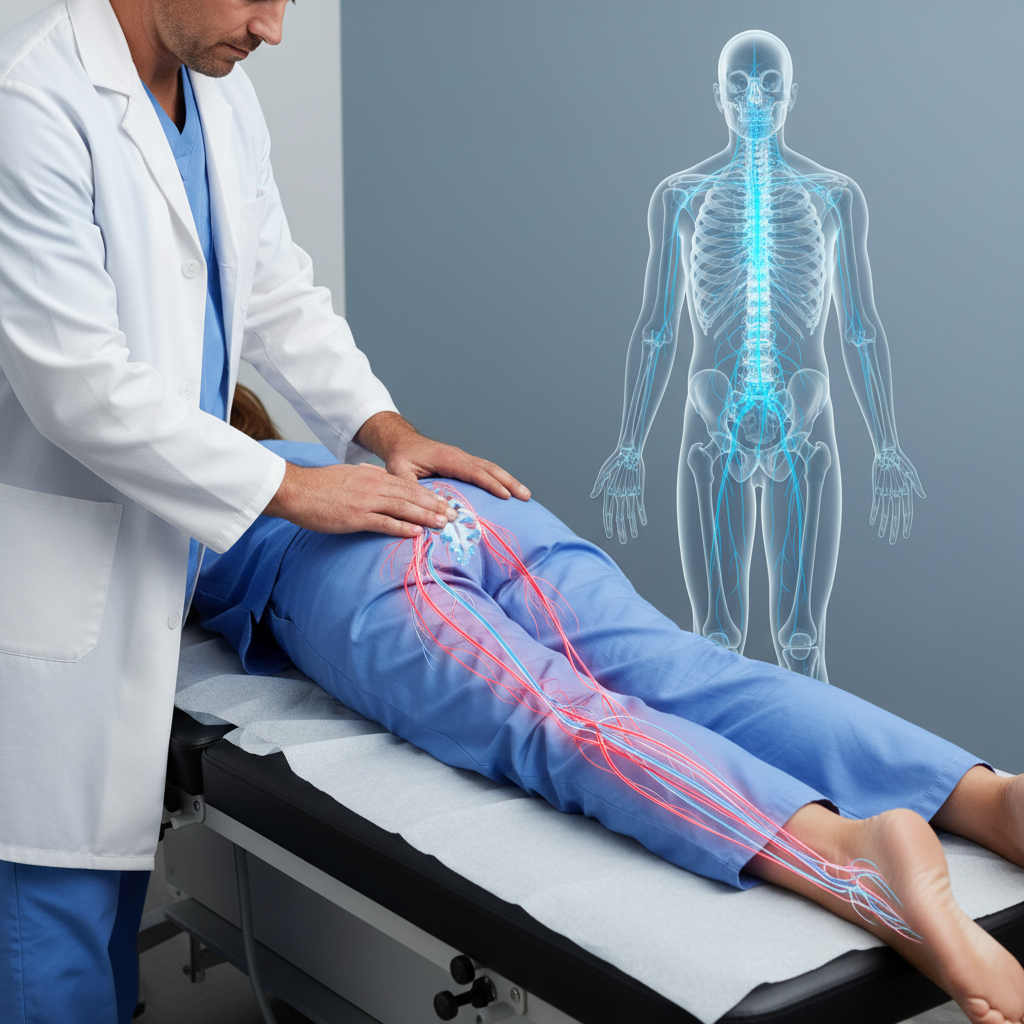
Understanding radiating leg pain and sciatica
If you are searching for a radiating leg pain chiropractor, you are probably dealing with pain, numbness, tingling, or burning that travels from your lower back or hip down your leg. This pattern often points to sciatic nerve compression, a common cause of radiating leg pain that can interfere with walking, sleeping, and daily activities.
Radiating leg pain, sometimes referred to as back related leg pain, occurs when irritated or compressed nerves send pain signals beyond the original site of the problem. For example, a disc or joint issue in your lower back can create “shooting” pain down your leg even though your leg itself is not injured [1].
Sciatica is one of the most frequent reasons people seek care for leg pain in medical and chiropractic offices. It typically involves irritation or compression of the sciatic nerve, which runs from your lower back through your hips and buttocks and down each leg. When this nerve is irritated, you may notice sharp, burning, or electric pain, as well as numbness, tingling, or weakness that follows the nerve’s path [2].
Understanding what is causing your symptoms and how chiropractic care can help is an important first step before you consider injections or surgery.
How sciatic nerve compression develops
Sciatic nerve compression usually begins with a mechanical problem in your spine or surrounding structures. Over time, these issues can narrow the space around the nerve or directly irritate it, leading to radiating pain.
Common causes include:
- Herniated or bulging lumbar discs that press on nerve roots, producing sharp, aching, or burning leg pain along with potential numbness or weakness [3]
- Spinal stenosis, a narrowing of the spinal canal that compresses the spinal cord or nerve roots, often in adults over 50, leading to leg pain, tingling, and weakness that worsens with walking [3]
- Piriformis syndrome, when the piriformis muscle in the buttock becomes tight or inflamed and squeezes the sciatic nerve, causing pain into the buttocks, hips, and legs, especially when sitting [3]
- Spondylolisthesis, where one vertebra slips forward over another, narrowing the space for nerves and creating back stiffness, leg pain, and difficulty walking [3]
Radiating leg pain can also follow trauma, such as a fall or car accident, or gradual overuse of certain muscles and joints [1].
When the nerve is compressed or irritated, it can create:
- Sharp, shooting, or electric pain down one leg
- Burning or itching sensations
- Numbness or pins and needles
- Muscle weakness or a feeling that your leg may “give out”
- Reduced range of motion in your lower back, hip, or leg [4]
A radiating leg pain chiropractor focuses on finding where that pressure is coming from and using conservative methods to relieve it.
Common symptoms you should not ignore
You may benefit from a radiating leg pain chiropractor if you notice any of the following patterns, especially if they persist beyond a few days or interfere with your daily life.
Pain patterns
Sciatic related pain usually affects one side of your body and may:
- Start in your lower back or buttock and travel down the back or side of your thigh
- Extend below the knee into your calf, ankle, or foot
- Feel worse with prolonged sitting, bending, lifting, or coughing
- Improve slightly when you lie flat or change positions
Radiating pain may be sharp, stabbing, or burning, or it may come and go in waves. Some people describe it as “electric” or “lightning-like.”
Sensory changes
Nerve compression often causes altered sensation, including:
- Numbness or reduced feeling in parts of your leg or foot
- Tingling or “pins and needles” in your thigh, calf, or foot
- Patchy areas that feel different to touch on one side compared to the other
These signs indicate that nerve signals are being disrupted and should be evaluated promptly [4].
Weakness and mobility issues
When sciatic nerve compression is more advanced, you may notice:
- Leg weakness or difficulty lifting your foot
- Trouble climbing stairs or standing from a seated position
- A sense that your leg is “heavy” or unsteady
- Reduced range of motion in your lower back, trouble bending or twisting [4]
If weakness develops suddenly or worsens rapidly, you should seek immediate medical attention.
When to see a radiating leg pain chiropractor
You do not have to wait until the pain is unbearable to seek help. A chiropractor who specializes in radiating leg pain can often intervene early and reduce the risk of long term nerve irritation.
You should consider scheduling a chiropractic evaluation if:
- Your leg pain, numbness, or tingling lasts more than a few days or keeps recurring
- Pain interferes with sleep, work, or walking
- Over the counter medications and simple rest are no longer effective
- You prefer conservative, non invasive care before considering injections or surgery
Experts recommend seeing a chiropractor when radiating pain affects daily life and does not improve within a short period, as a detailed evaluation can identify the underlying source and guide a personalized treatment plan [1].
If you already know that your pain is from sciatic nerve compression and you want to explore sciatica treatment without surgery, a radiating leg pain chiropractor can be an important part of your care team.
How chiropractors evaluate radiating leg pain
During your first visit, your radiating leg pain chiropractor will aim to understand the full picture of your health and symptoms. A comprehensive evaluation typically includes:
Detailed history
You can expect questions about:
- When your pain started and how it has changed
- What makes symptoms better or worse
- Any previous injuries, surgeries, or chronic conditions
- Your work demands, activity levels, and posture habits
- Medication use and other treatments you have tried
Some chiropractors specifically review dietary and fitness habits, as these can affect inflammation, circulation, and overall healing capacity [5].
Physical and neurological examination
Your chiropractor will perform a hands on examination that may include:
- Checking posture and spinal alignment
- Assessing flexibility and range of motion in your hips, back, and legs
- Testing muscle strength and reflexes
- Performing specific orthopedic and nerve tension tests to reproduce or relieve your symptoms
Because radiating leg pain often starts in the lower back, your chiropractor will carefully evaluate each segment of your spine to identify misalignments, restricted joints, and muscle imbalances.
Imaging and referrals when needed
In some cases, your chiropractor may recommend imaging such as X rays or MRI, or may coordinate with your primary care provider or specialist. This is more likely if:
- Your pain is severe and sudden
- You have red flag symptoms like significant weakness, unexplained weight loss, or bowel or bladder changes
- You have not responded to an initial course of conservative care
A careful evaluation allows your chiropractor to design a plan of chiropractic therapy for nerve compression that is appropriate for your specific condition.
How chiropractic care relieves nerve compression
A radiating leg pain chiropractor uses non invasive methods to reduce pressure on irritated nerves, restore normal motion, and calm inflammation in the affected areas. Treatment is personalized, but several core strategies are commonly used for sciatic nerve compression and related conditions.
Spinal adjustments for alignment and mobility
Spinal adjustments, often called spinal manipulation, are at the center of many chiropractic care plans for radiating leg pain. During an adjustment, your chiropractor applies a carefully controlled force to specific spinal joints to improve their motion and alignment.
These adjustments can:
- Reduce pressure on nerve roots by restoring space and alignment in the spine
- Improve joint mechanics so your body can move more evenly
- Decrease local inflammation that contributes to pain and nerve irritation
Chiropractic spinal manipulative therapy has been used in trials for back related leg pain and sciatica. One randomized study of acute sciatica with confirmed disc herniation found that patients receiving chiropractic manipulation had higher pain free rates at 6 months compared to controls and no serious adverse events were reported [6].
If you are specifically exploring a chiropractic adjustment for sciatica, your chiropractor will explain the techniques used and how they relate to your imaging and examination findings.
Spinal decompression and traction
For some cases of herniated or bulging discs, non surgical spinal decompression can help reduce pressure on the sciatic nerve. This technique gently stretches the spine in a controlled way to create negative pressure within the disc and open up spaces where nerves exit.
Spinal decompression therapy has been recommended for sciatica patients with disc related compression because it can lessen nerve pressure and alleviate radiating leg pain without surgery [7].
Pelvic and extremity adjustments
Your pelvis and lower extremity joints influence how forces travel through your spine. If your hips, sacroiliac joints, or ankles are misaligned or restricted, they can increase strain on your lower back and the sciatic nerve.
Chiropractic adjustments to the pelvis and related joints can:
- Correct imbalances that alter your gait
- Reduce compensatory muscle strain in your hips and legs
- Improve the mechanical path of the sciatic nerve as it travels through these areas
Pelvic adjustments in particular can help reduce nerve compression along the sciatic pathway and improve mobility [7].
Soft tissue and trigger point therapy
Muscle tension and scar tissue around the spine, hips, and legs often contribute to nerve irritation. Your chiropractor may incorporate:
- Trigger point therapy
- Myofascial release
- Deep tissue or instrument assisted soft tissue techniques
For example, trigger point therapy targeting a tight piriformis muscle in the buttocks can reduce pressure on the sciatic nerve and ease radiating pain [7]. Soft tissue work also improves circulation and helps muscles relax, which can reduce pain and support healing.
Some practices emphasize soft tissue therapy to break down scar tissue and adhesions, particularly in athletes or active individuals, allowing better blood flow and faster recovery from leg injuries and radiating pain [8].
Posture, movement, and rehabilitation
Chiropractic care for radiating leg pain typically includes customized exercises and movement retraining. These programs are designed to:
- Strengthen key support muscles in your core, hips, and legs
- Improve flexibility and joint mobility
- Correct faulty movement patterns and posture that overload your spine
Gait and posture correction can be especially important if repetitive motion or poor alignment contributed to your sciatic nerve compression. By teaching you how to move differently, your chiropractor reduces the risk of recurrent flare ups [8].
If you are seeking a sciatica pain relief plan that does not rely on injections, these active components are a key piece of long term success.
Your non‑invasive treatment options with chiropractic care
Many people explore chiropractic care because they are looking for non invasive sciatica treatment options that address the root cause instead of simply masking symptoms. A radiating leg pain chiropractor can offer several conservative strategies before more aggressive interventions are considered.
Drug‑free and surgery‑free approach
Chiropractic adjustments and related therapies are designed to:
- Reduce pain by correcting misalignments and improving joint function
- Relieve nerve pressure without incisions or injections
- Support your body’s natural healing mechanisms
For nerve compression conditions like sciatica, chiropractic care offers a way to pursue sciatica relief without injections and to delay or potentially avoid surgery when appropriate. Surgery is commonly considered a last resort for sciatica, reserved for severe pain, progressive nerve damage, or cases that do not respond to conservative care [2].
Support for nerve inflammation and healing
When nerves are irritated, addressing inflammation is important. Chiropractic care that targets spinal misalignments and joint dysfunction can:
- Decrease mechanical irritation of nerve roots
- Improve blood flow and nutrient delivery to surrounding tissues
- Reduce local inflammatory chemicals that sensitize nerves
This is why many people seek chiropractic care for nerve inflammation as part of a larger plan that may also include lifestyle changes, targeted exercises, and in some cases coordination with other providers.
Integrating with other conservative therapies
A comprehensive sciatic nerve pain management approach may combine:
- Specific stretching and strengthening exercises taught by your chiropractor or physical therapist
- Education on ergonomics and postural modification at work and home
- Short term use of medications when appropriate, guided by your medical provider
Chiropractic care can complement medical management by focusing on mechanical and functional contributors to nerve compression.
If you want to understand how these components fit together, you can explore how chiropractors treat sciatica in more detail.
Expected recovery timelines and progress
Recovery from radiating leg pain and sciatica varies, but most people see meaningful improvements with consistent conservative care.
Many cases of sciatica improve within four to six weeks with or without formal medical treatment, especially when you address aggravating activities and follow a structured home exercise plan [2]. Chiropractic care can help guide that process and monitor your progress.
Your recovery timeline depends on:
- The underlying cause, disc herniation, stenosis, muscle compression, or other
- How long you have had symptoms
- Your overall health, activity level, and adherence to recommendations
- Whether there is significant nerve damage or weakness
In clinical settings, chiropractic care plans for back related leg pain often include multiple visits over several weeks. For example, some research protocols used up to 20 spinal manipulation and mobilization sessions over 12 weeks with high adherence rates [6].
Your chiropractor will typically reassess:
- Pain intensity and frequency
- Leg strength and control
- Range of motion in your back, hips, and legs
- Function in daily activities such as walking, working, and sleeping
If you are wondering how long does sciatica take to heal chiropractor, your provider can give you a more specific estimate after your initial evaluation.
For chronic or recurring cases, a longer term sciatica recovery plan chiropractor may include periodic maintenance visits, ongoing exercises, and lifestyle modifications to keep symptoms under control.
When chiropractic care is appropriate before injections or surgery
One of the key questions you may have is whether you should try chiropractic care before more invasive treatments such as epidural injections or surgery. In many situations, the answer is yes.
Chiropractic care is often appropriate as an early or intermediate step when:
- You have radiating leg pain, numbness, or tingling consistent with sciatica
- You do not have red flag symptoms that require urgent surgical evaluation
- You prefer a conservative approach to manage sciatic nerve compression
- Your symptoms are significant but not rapidly worsening
Many treatment guidelines and clinical practices start with non surgical management for several weeks. Self care, exercise, and therapies like chiropractic or physical therapy are emphasized before injections or surgery are considered [2].
Chiropractic care may not be sufficient on its own when:
- You have severe, progressive weakness in your leg or foot
- You experience loss of bowel or bladder control
- Imaging shows a structural problem that clearly requires surgical decompression
- Conservative care over a reasonable timeframe has not improved your symptoms
In these cases, your chiropractor can coordinate with your medical team and, when appropriate, help you weigh chiropractic vs surgery for sciatica based on your results, lifestyle, and goals.
If you are trying to avoid injections or surgery but want a clear, structured strategy, a sciatica treatment without surgery plan that includes chiropractic care may be the right fit.
In most cases of radiating leg pain from sciatica, conservative care is the first line of treatment, and many people improve significantly within a few weeks when nerve compression and inflammation are addressed early [2].
How to choose the best radiating leg pain chiropractor
Not all chiropractors focus on the same conditions. When you are selecting a radiating leg pain chiropractor, it helps to look for specific experience and a philosophy that aligns with your goals.
Consider these factors as you compare options:
-
Experience with sciatica and nerve compression
Ask how often they treat patients with sciatica, disc herniation, or spinal stenosis, and what outcomes they typically see. If a clinic offers focused services like sciatic nerve compression treatment or chiropractic treatment for lumbar sciatica, that can be a positive sign. -
Thorough evaluation process
Look for a provider who offers a careful nerve pain chiropractor evaluation, including a detailed history, physical and neurological exams, and appropriate use of imaging or referrals. -
Personalized, multi‑modal treatment plans
Effective care for radiating leg pain usually includes adjustments, soft tissue work, exercises, and education. A chiropractor who combines these, rather than relying on a single technique, can better tailor your sciatica pain relief plan to your needs. -
Clear communication and education
You should feel comfortable asking questions and understanding why each part of your care is recommended. Educational resources on how chiropractors treat sciatica or chiropractic care for nerve pain can indicate a practice that values informed patients. -
Conservative, patient‑centered philosophy
The best radiating leg pain chiropractor for you will respect your preferences about medication, injections, and surgery. If you are specifically seeking a natural sciatica pain relief chiropractor, ask how they approach care without relying on pharmaceuticals or invasive procedures. -
Willingness to coordinate with other providers
Sciatica and nerve compression sometimes require input from multiple specialists. A chiropractor who communicates with your primary care doctor, neurologist, or surgeon can help ensure you receive safe, integrated care.
If your primary symptom is leg pain, you may also want a practice that offers services such as leg pain from sciatica chiropractor and chiropractor for sciatica nerve pain, indicating specific focus on lower extremity nerve pain.
Taking your next step toward relief
Radiating leg pain, whether it feels like burning, tingling, or sharp electric shocks, is a sign that your nerves are asking for attention. When sciatic nerve compression is the source, addressing the mechanical and inflammatory causes early can help you avoid long periods of disability and reduce the likelihood of needing more invasive procedures.
A radiating leg pain chiropractor can:
- Identify where the nerve is being irritated
- Use non invasive techniques to reduce pressure and inflammation
- Guide you through movement and lifestyle changes that protect your spine long term
If you are ready to explore a conservative, structured plan to manage your symptoms, consider scheduling a chiropractic evaluation and discussing options like chiropractic therapy for nerve compression, sciatica recovery plan chiropractor, or sciatic nerve compression treatment.
With the right support, you can move toward less pain, better function, and a clearer understanding of how to care for your back and legs in the future.