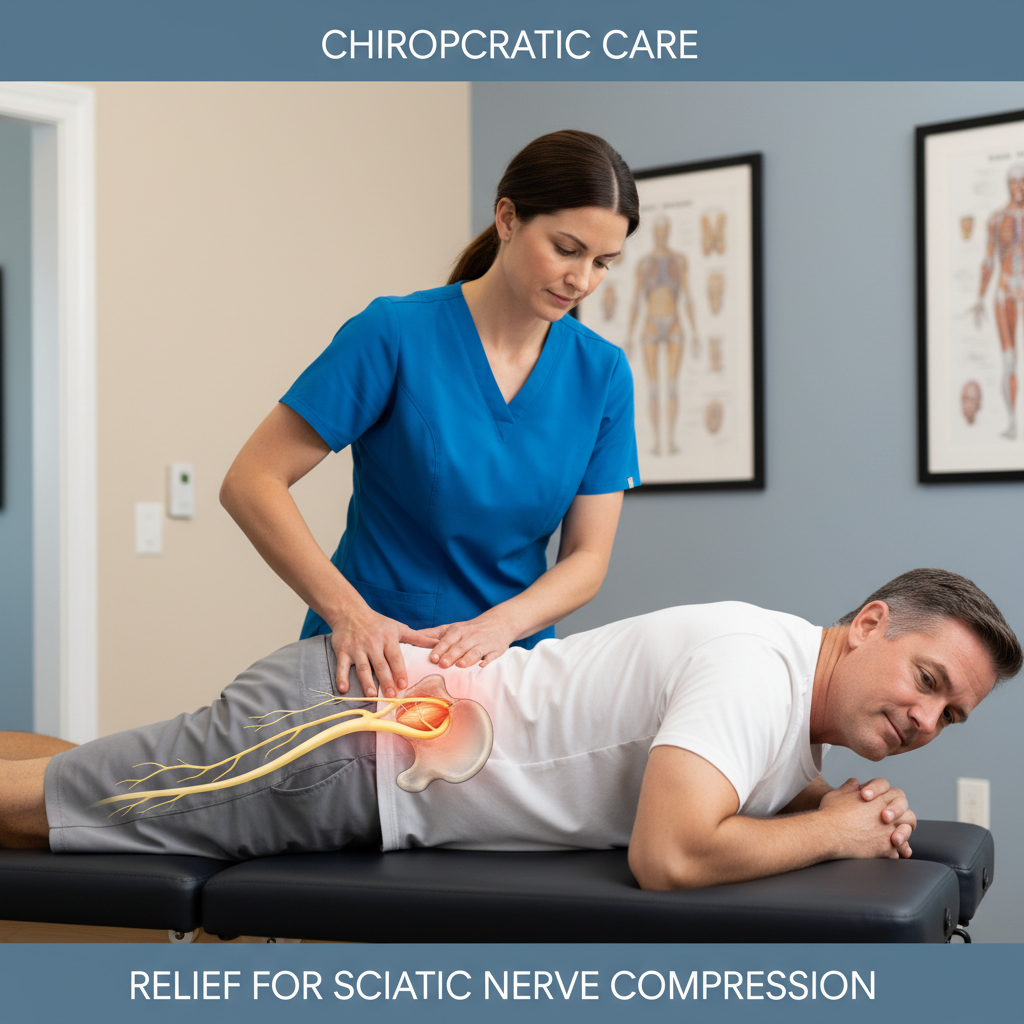
Sciatica can be confusing and frightening, especially when you are feeling sharp, shooting pain down your leg and you keep hearing phrases like “pinched nerve” and “spinal compression.” If you are considering a chiropractor for pinched nerve sciatica, it helps to know exactly what is happening in your body, what a chiropractor actually does, and what you can realistically expect from treatment.
This guide walks you through how sciatica develops, how chiropractic care is used as a conservative treatment, what the first visits look like, and how long healing may take so you can decide whether this approach fits your goals for relief without injections or surgery.
Understanding sciatica and pinched nerve pain
Sciatica is not a diagnosis by itself. It is a description of a pattern of pain caused by irritation or compression of your sciatic nerve. The sciatic nerve is the longest nerve in your body. It runs from your lower back through your buttocks and down the back of each leg, all the way toward your toes [1].
When something presses on or inflames this nerve, you can feel:
- Sharp or shooting pain from your low back or buttock down the leg
- Burning, tingling, or “pins and needles” sensations
- Numbness or weakness in your leg or foot
- Pain that worsens when you sit, cough, or sneeze
Cleveland Clinic notes that sciatica most often comes from irritation or compression of the sciatic nerve, and many people recover with stretching, medication, or physical therapy [2].
Chiropractic care focuses on the mechanical, structural causes of this nerve irritation. If your pain is related to how your spine, discs, joints, and muscles are functioning, a chiropractor may be able to reduce pressure on the nerve and calm inflammation so you can move more comfortably.
How sciatic nerve compression develops
You feel sciatica symptoms in your leg, but the problem usually starts in your lower back or pelvis. Sciatic nerve compression can develop in several ways.
Common causes of sciatic nerve compression
According to multiple chiropractic and medical sources, sciatica can be triggered by:
- Herniated or bulging lumbar discs that press on the nerve root as it exits the spine [2]
- Degenerative disc or joint changes that narrow the openings where nerve roots travel
- Spinal misalignment or vertebral subluxation that alters joint mechanics and increases nerve pressure [3]
- Piriformis syndrome, where a tight muscle in the buttock irritates the sciatic nerve [1]
- Soft tissue tightness, scar tissue, or adhesions around the nerve path [4]
In many cases, your symptoms are caused by a combination of these factors. For example, a mildly bulging disc plus prolonged sitting and weak core muscles can be enough to irritate a sensitive nerve root.
If you want a deeper dive into the structural side of this condition, you can explore sciatic nerve compression treatment for more detail on specific causes.
Why early treatment matters
A pinched nerve occurs when surrounding tissues like bone, cartilage, muscles, or tendons place too much pressure on a nerve. This can create pain, numbness, tingling, or weakness. If this compression continues and is left untreated, it can sometimes lead to chronic pain or even permanent nerve damage [5].
Healthline notes that sciatica affects between 10 and 40 percent of people, and most mild cases resolve on their own. However, untreated sciatica can progress to ongoing pain, muscle weakness, or serious issues like loss of feeling or bowel and bladder control [6].
Early conservative care aims to:
- Reduce inflammation before it becomes chronic
- Restore normal movement patterns so you do not overload the nerve
- Prevent your brain and nervous system from “learning” pain as the new normal
Chiropractic care slots in here as a non invasive option, used with or before other approaches such as sciatica treatment without surgery.
When to consider a chiropractor for pinched nerve sciatica
You might consider seeing a chiropractor for pinched nerve sciatica if you notice:
- Radiating leg pain that follows the sciatic nerve path
- Numbness, tingling, or burning in your leg or foot
- Pain that gets worse when you sit, bend, or twist
- Symptoms that are not improving with a few days of self care
- Difficulty walking, standing up straight, or doing daily tasks
For mild sciatica symptoms, Cleveland Clinic suggests beginning with self care such as gentle stretching and light movement, since too much rest can actually worsen pain and slow recovery [2]. If symptoms last longer than a few days, limit your activities, or seem to worsen, it is appropriate to seek professional evaluation.
Chiropractors recommend that you seek care for pinched nerve symptoms that:
- Persist beyond a few days
- Worsen with movement
- Cause numbness or tingling
- Interfere with work, sleep, or daily functioning
Early chiropractic evaluation can support faster recovery and may help prevent worsening nerve damage [4].
If your main complaint is leg pain more than back pain, resources such as leg pain from sciatica chiropractor and radiating leg pain chiropractor can help you understand why your leg hurts even when the issue starts in your spine.
What happens at your first chiropractic visit
Your first appointment focuses on getting an accurate picture of what is causing your sciatica, not just on adjusting your spine.
History and symptom review
Your chiropractor will start with a detailed health history that typically includes:
- When your symptoms began and how they have changed
- Where you feel pain, numbness, tingling, or weakness
- Movements or positions that make symptoms better or worse
- Your work activities, exercise habits, and previous injuries
- Any prior imaging or treatments for your back or leg pain
Reno Spine Care notes that chiropractors also look at your overall health, fitness, diet, and other medical conditions so that your plan can address chronic neck and back pain, joint pain, and old injuries as needed [3].
If you are preparing for this step, you may find it useful to read about nerve pain chiropractor evaluation so you know what to bring and what questions to expect.
Physical and neurological examination
Next, your chiropractor performs a physical exam focused on:
- Posture and spinal alignment
- Range of motion in your lower back and hips
- Muscle strength and flexibility
- Reflexes and sensation in your legs and feet
- Orthopedic tests that gently stress certain joints or nerves
Chiropractors use these findings to identify where the nerve is likely being compressed and which structures are involved. This helps determine whether your sciatica is more disc related, joint related, or primarily due to soft tissue irritation.
Imaging and diagnostic tests
If your symptoms are severe, have been present for a while, or show signs of serious nerve involvement, your chiropractor may order imaging or refer you to another provider for tests such as:
- X rays
- MRI
- CT scan
- Electromyography (EMG) or nerve conduction studies
LJ Chiropractic describes this combination of history, physical examination, and diagnostic tests as essential for finding the true cause of a pinched nerve and guiding an appropriate treatment plan [5].
Comprehensive evaluation is especially important before more advanced structural correction approaches, such as Chiropractic BioPhysics, which uses detailed imaging to correct spinal alignment and relieve sciatica [7].
If your case indicates that chiropractic care is suitable, your provider will discuss a sciatica recovery plan chiropractor that fits your condition and goals.
How chiropractors treat sciatic nerve compression
Once your chiropractor has identified the likely source of your sciatic nerve compression, treatment focuses on reducing pressure on the nerve, restoring normal movement, and calming inflammation. Healthline describes chiropractic care for sciatica as a set of spinal manipulation and manual therapies intended to relieve pain by applying controlled force to the spine or joints [6].
You can get an overview of techniques in how chiropractors treat sciatica, and the sections below explain how these methods work together.
Spinal adjustments and joint realignment
Chiropractic adjustments, or spinal manipulation, use precise, controlled force to move specific joints that are not moving correctly. For sciatica, this often involves the lower lumbar vertebrae and sacroiliac joints.
According to the Chiropractic Center of Erie, spinal adjustments can:
- Realign vertebrae and joints
- Reduce pressure on compressed nerves
- Improve joint mobility
- Support your body’s natural healing process [4]
Reno Spine Care notes that a common chiropractic goal in sciatica cases is to realign the spine and joints to relieve nerve pressure and muscle imbalance, which can improve posture and reduce pain without drugs or surgery [3].
If you are curious about the “popping” sound, Reno Spine Care explains that it is similar to knuckle popping and usually leads to relief in the affected joint, not pain [3].
You can read more about this specific technique in chiropractic adjustment for sciatica.
Spinal decompression therapy
Spinal decompression is a non invasive therapy that gently stretches your spine in a controlled way. As described by the Chiropractic Center of Erie, this treatment:
- Creates negative pressure inside your discs
- Helps retract or reduce the pressure of bulging or herniated discs
- Increases the space around nerve roots
- Supports natural disc healing over time [4]
Spinal decompression is often used when disc issues are a clear contributor to your sciatica. It can be part of a broader chiropractic therapy for nerve compression plan that also includes exercises and manual care.
Soft tissue therapies and muscle work
Because muscles and fascia can tighten and irritate nerves, many chiropractors also use soft tissue techniques alongside adjustments. These may include:
- Gentle massage and trigger point therapy
- Myofascial release to break up adhesions
- Techniques to reduce muscle tension and inflammation around the nerve path
Soft tissue therapies help relax protective muscle guarding, improve blood flow, and enhance the effects of adjustments on nerve decompression [4].
LJ Chiropractic also notes that massage therapy, heat and cold therapy, and electrical stimulation can be used to decrease pain and inflammation in pinched nerve conditions [5].
These approaches are part of a broader category of chiropractic care for nerve inflammation.
Corrective exercises and movement retraining
Your chiropractor will typically assign targeted stretches and strength exercises to stabilize your spine and protect the nerve over the long term. Corrective exercises may focus on:
- Core and hip strength
- Hamstring and hip flexor flexibility
- Gluteal activation
- Posture and proper lifting mechanics
The Chiropractic Center of Erie emphasizes that these exercises help strengthen and stabilize the spine after realignment, maintain nerve decompression, and reduce the chance of symptoms returning [4].
These recommendations form an important part of a structured sciatica pain relief plan that extends beyond the treatment table into your daily life.
Holistic and home based support
Chiropractic care for sciatica is often holistic. Healthline notes that chiropractors may recommend:
- At home stretching and mobility routines
- Activity modifications to reduce strain on your lower back
- Ergonomic changes to your workstation
- General wellness and nutrition guidance [6]
LJ Chiropractic also highlights preventive measures, including maintaining proper posture, making ergonomic adjustments, taking regular breaks from sitting, and doing regular low impact exercise to avoid recurrence of pinched nerve problems [5].
If you are specifically looking for drug free strategies, you can explore natural sciatica pain relief chiropractor and sciatica relief without injections for more options that fit a conservative care approach.
Safety of chiropractic care for sciatica
A common concern is whether chiropractic care can make sciatica worse. Available evidence and clinical reports suggest that when it is properly applied after thorough assessment, chiropractic care is generally safe for most people with mechanical sciatica.
HAVEN Chiropractic cites research showing that adverse events from spinal manipulation for sciatica are rare, less than 1 percent of cases, and usually involve minor, temporary soreness [7].
You may experience:
- Mild soreness or stiffness for 24 to 48 hours after an adjustment
- Temporary flare ups in symptoms as your body adapts to new movement patterns and reduced nerve pressure
This adaptation response is considered normal. Increasing or severe pain, however, is a signal to contact your chiropractor promptly for reassessment and possible imaging [7].
Ashburn Village Chiropractic notes that symptoms can feel temporarily stronger early in care due to nerve sensitivity or changes in mechanical load on your tissues, but this does not mean the treatment is harmful when appropriately tailored to your condition [8].
For an overview of how chiropractic compares to other conservative and surgical options, you can review chiropractic vs surgery for sciatica and sciatica treatment without surgery.
In most cases, chiropractic care for sciatica is a conservative, non invasive option that aims to treat the mechanical cause of nerve compression before you consider injections or surgery.
How long sciatica takes to heal with chiropractic care
Healing time for sciatica depends on several factors:
- The underlying cause, for example a mild joint irritation compared to a significant disc herniation
- How long you have had symptoms
- Your age, overall health, and activity level
- How consistently you follow your home exercises and activity recommendations
Healthline notes that chiropractic care often requires multiple visits before pain relief becomes noticeable, and treatment plans are adjusted based on your history and any imaging [6].
In general:
- Mild, recent sciatica may respond within a few weeks of consistent chiropractic and home care
- Moderate cases often require several weeks to a few months
- Chronic or complicated cases may need ongoing management to keep symptoms controlled
You can explore this topic more deeply in how long does sciatica take to heal chiropractor.
Importantly, a 2025 study summarized by Healthline found that people with sciatica who chose chiropractic spinal manipulation instead of opioid medications had fewer side effects one year later. Early chiropractic care also reduced the later need for opioids [6]. This suggests that conservative, non drug care may not only help you feel better now but also support safer long term pain management.
When chiropractic is appropriate and when to seek other care
Chiropractic care is generally appropriate if:
- Your sciatica symptoms are related to mechanical issues such as disc, joint, or soft tissue problems
- You do not have red flag signs such as loss of bowel or bladder control, significant leg weakness, or unexplained weight loss
- You prefer non invasive sciatica treatment options before injections or surgery
- You are willing to be active in your recovery, including exercises and lifestyle changes
Sciatica usually begins with self care. Cleveland Clinic recommends stretching and light movement first for mild symptoms, and seeking professional help if your pain does not improve or worsens after a few weeks [2].
Surgery is typically considered a last resort and is reserved for situations such as:
- Severe, unrelenting pain
- Progressive neurological deficits or muscle weakness
- A clear risk of permanent nerve damage
- Failure of conservative treatments, including chiropractic and physical therapy, to provide relief [2]
Chiropractic care fits into a broader plan of sciatic nerve pain management and chiropractic care for nerve pain, often working alongside your primary care physician, physical therapist, or pain specialist.
If your sciatica is clearly related to a disc issue, such as a lumbar disc herniation, you can review sciatica caused by disc chiropractor and chiropractic treatment for lumbar sciatica to see how disc related cases are handled differently.
Putting it all together for your next step
Choosing a chiropractor for pinched nerve sciatica means choosing a conservative approach that aims to correct the underlying mechanical problem, not just numb the pain.
You can expect:
- A thorough evaluation of your symptoms, history, and movement patterns
- Diagnostic tests when needed to pinpoint the cause of nerve compression
- A combination of spinal adjustments, decompression therapy, soft tissue work, and corrective exercises
- Clear guidance on posture, ergonomics, and at home care
- Realistic conversations about timelines, progress, and when other treatments may be needed
Most people with sciatica improve without surgery, and chiropractic care is one of several options for sciatica treatment without surgery. If you are seeking sciatica relief without injections and want to address the root cause of your nerve irritation, scheduling a chiropractor for sciatica nerve pain evaluation can be a practical next step.