
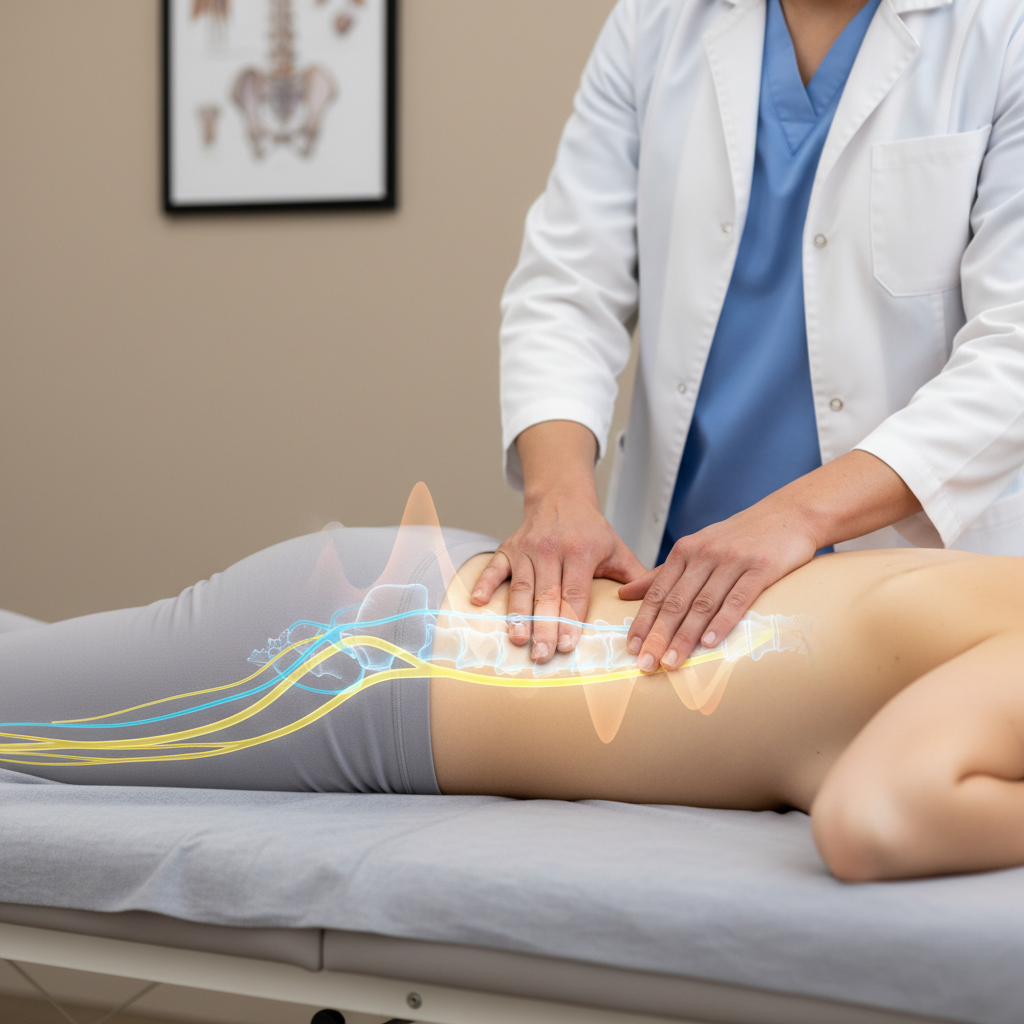
Understanding lumbar sciatica
If you are living with burning, shooting, or aching pain that travels from your lower back into your buttock, thigh, or even down to your foot, you may be dealing with lumbar sciatica. Sciatica is not a single diagnosis. It is a symptom that your sciatic nerve is irritated or compressed in your lower spine.
The sciatic nerve is the largest nerve in your body. It starts in the lumbar spine, passes through your pelvis, and runs down the back of each leg. When something squeezes or inflames this nerve, you can feel pain, numbness, tingling, or weakness anywhere along its path, not just in your back. Sciatica affects between 10% and 40% of people at some point in life, so you are not alone if you are experiencing these symptoms [1].
Lumbar sciatica specifically refers to sciatic nerve irritation that begins in the lower back. Common causes include herniated or bulging discs, spinal stenosis, degenerative disc disease, or pelvic misalignment. In many cases, these problems respond well to conservative care like chiropractic treatment before you ever need to consider injections or surgery. If you are exploring sciatica treatment without surgery, understanding how chiropractic care works is an important first step.
How lumbar sciatica develops
Sciatica usually develops because something in your lower spine or pelvis narrows the space around the sciatic nerve or its nerve roots. This is known as nerve compression. When the nerve is compressed, it can become inflamed and overly sensitive, which creates the pain and other symptoms you feel.
Common ways this compression happens include herniated discs that bulge backward toward the nerve, joints that become arthritic and bony, or vertebrae that shift slightly out of alignment. Poor posture, repetitive lifting, or an abrupt injury can speed up this process. Over time, surrounding muscles may tighten as a protective response, which can further irritate the nerve.
Chiropractic treatment for lumbar sciatica focuses on identifying exactly where and how that compression is happening. Your chiropractor looks for misaligned vertebrae, restricted joints, tight muscles, and pelvic imbalances that narrow the sciatic nerve pathway. By correcting these mechanical problems, chiropractic care reduces the pressure and inflammation that are at the root of your pain.
If you suspect sciatica but are not sure what is causing it, a nerve pain chiropractor evaluation can help you understand what is going on in your lower back before you commit to more invasive options.
Typical symptoms you might notice
Sciatic nerve compression can feel different from person to person, but most people notice a recognizable pattern of symptoms. Knowing what to look for can help you decide when it is time to seek care.
You might experience:
- Pain that starts in the lower back or buttock and radiates down the back or side of your leg
- Burning, electric, or shooting sensations rather than a dull ache
- Numbness, tingling, or pins and needles in your leg, calf, or foot
- Weakness when you try to stand on your toes, lift your foot, or straighten your leg
- Pain that worsens when you sit, bend, cough, or sneeze
- Relief when you walk for a short period or lie flat on your back
Sometimes the back pain is mild and the leg pain is severe. In other cases, your back is more painful than your leg. If radiating leg pain is your main problem, a radiating leg pain chiropractor can help determine whether your symptoms are truly from sciatica or from another condition such as hip or knee disease.
If you notice sudden, severe leg weakness, loss of bowel or bladder control, or numbness around your groin, you should seek immediate medical attention. These are warning signs that sciatica may have progressed to a serious condition that requires urgent medical or surgical evaluation [1].
How chiropractors diagnose lumbar sciatica
When you visit a chiropractor for sciatica nerve pain, the first goal is to understand the source of your symptoms. Chiropractic diagnosis is usually thorough and hands-on, and it is tailored to your specific history and lifestyle.
History and symptom review
Your chiropractor starts by listening to you. You can expect to answer questions about:
- Where your pain starts and where it travels
- What makes it better or worse
- When it began and whether there was an injury
- How your work, posture, and daily habits could be affecting your back
Chiropractic treatment for lumbar sciatica also often includes a detailed review of your health conditions, medications, diet, and activity level. This broader history helps your provider tailor your care plan and is consistent with how many chiropractors approach chronic neck, back, and neuromusculoskeletal pain [2].
Physical and neurological examination
Next, your chiropractor performs an exam that may include:
- Posture analysis and assessment of spinal alignment
- Testing your range of motion in the lower back and hips
- Checking reflexes, muscle strength, and sensation in your legs
- Specific orthopedic tests that stretch or compress the sciatic nerve to see if they reproduce your symptoms
This kind of hands-on evaluation helps your chiropractor determine whether you are a good candidate for chiropractic treatment for lumbar sciatica and which techniques are likely to help you most.
Imaging and further testing
If your symptoms are severe, do not improve, or raise concern for a more serious problem, your chiropractor may refer you for imaging tests such as X rays, MRI, or CT scans. These tests can reveal herniated discs, spinal stenosis, or other structural problems that influence your sciatic nerve compression treatment.
In some cases, your chiropractor will coordinate with your primary care doctor or a spine specialist so that your care plan stays conservative but medically appropriate.
Core chiropractic techniques for lumbar sciatica
Once your chiropractor understands the pattern of your pain and its mechanical causes, treatment can begin. Chiropractic care for lumbar sciatica typically combines several techniques to reduce nerve compression, calm inflammation, and restore normal movement.
Spinal adjustments and mobilization
Spinal adjustments, sometimes called spinal manipulative therapy, are a central part of chiropractic care. Your chiropractor applies a controlled force to specific joints in your spine to correct misaligned vertebrae that are putting pressure on the sciatic nerve or its roots. This can help relieve pain, improve function, and restore more natural movement patterns [3].
One study summarized by North East Chiropractic Center reported that about 60% of sciatica patients who had not benefited from other treatments experienced relief from chiropractic adjustments that was comparable to relief from surgery [3]. While results vary, this suggests that for many people, trying chiropractic care before surgery can be a smart, lower risk option.
Adjustments may be performed with the chiropractor’s hands or with specialized tools. You might hear a popping sound, similar to knuckle cracking. This sound is simply gas releasing from the joint and does not mean anything is being damaged. Many patients notice a sense of relief or ease in the affected joints after these treatments [2]. If you want to understand this option in more detail, you can explore chiropractic adjustment for sciatica.
Flexion distraction and spinal decompression
For sciatica due to herniated or bulging discs, your chiropractor may use flexion distraction or nonsurgical spinal decompression techniques. Flexion distraction uses a specialized chiropractic table that gently stretches and bends your spine while your chiropractor guides specific segments. This motion can relieve nerve pressure and help reposition bulging discs [4].
Spinal decompression therapy is another nonsurgical option. It gradually stretches and relaxes your spine in cycles. This creates negative pressure inside the spinal discs, which can draw bulging material away from the nerve and reduce compression [3]. These methods can be especially effective if your sciatica is related to disc problems, which is often the case with sciatica caused by disc chiropractor cases.
If you are comparing conservative treatments and surgery for disc related sciatica, understanding chiropractic vs surgery for sciatica can help you decide how to proceed.
Pelvic adjustments and posture correction
Pelvic misalignments can subtly twist your lower spine and tighten the muscles around your hips. Over time, this can disrupt the path of the sciatic nerve and contribute to lumbar sciatica. Pelvic adjustments help correct these imbalances, reduce nerve compression, and support long term spinal alignment and mobility [3].
Your chiropractor may also look at how you stand, sit, and move throughout the day. Uneven weight distribution on your legs or a habit of leaning to one side can aggravate sciatic pain [2]. Addressing these patterns is a key part of chiropractic therapy for nerve compression and can help keep your symptoms from returning.
Soft tissue and trigger point therapy
Muscle tension and trigger points often develop around an irritated sciatic nerve. For example, tightness in the piriformis muscle in your buttock can squeeze the sciatic nerve and mimic or worsen sciatica. Chiropractors use several soft tissue techniques to relax these muscles and improve circulation.
These methods can include:
- Massage therapy
- Myofascial release
- Deep tissue work
- Trigger point therapy applied to tight muscle knots
By reducing muscle tension and spasms in the lower back, buttocks, and legs, soft tissue therapy can lower pain levels and enhance the benefits of spinal adjustments [5].
If you are looking for natural sciatica pain relief chiropractor approaches, this combination of gentle joint work and soft tissue therapy may align well with your goals.
Corrective and therapeutic exercises
Chiropractic care for lumbar sciatica almost always includes specific exercises to stabilize your spine and protect your sciatic nerve over the long term. Your chiropractor may prescribe:
- Targeted stretching to improve hip and hamstring flexibility
- Core strengthening exercises to support the lumbar spine
- Low impact aerobic activities such as walking or swimming
These therapeutic exercises can strengthen the muscles that support your spine, reduce flare ups, and improve overall spinal health [4]. They also mirror the home exercise programs that have been used in clinical trials to support recovery from back related leg pain [6].
If you want a structured plan that integrates adjustments and exercise, a customized sciatica pain relief plan or sciatica recovery plan chiropractor can guide your day to day progress.
Lifestyle and posture coaching
Finally, your chiropractor can help you adapt your environment and habits to support healing. Advice may cover how to set up your workspace, how often to stand and move if you have a desk job, safe lifting techniques, and sleeping positions that reduce stress on your lower back.
These small but consistent adjustments in how you move and sit can make a meaningful difference in recovery and are an important part of non invasive sciatica treatment options [7].
What the research says about chiropractic care
Chiropractic spinal manipulation is one of the most commonly used complementary and alternative treatments for back pain and back related leg pain in the United States [6]. For lumbar sciatica, the research suggests some promising benefits along with some limits that you should understand.
A randomized trial by Santilli and colleagues followed 102 patients with acute sciatica caused by confirmed lumbar disc herniation. At 6 months, 28% of those who received spinal manipulative therapy were pain free for local back pain and 55% were pain free for radiating leg pain, compared with 6% and 20% in the sham manipulation group. No adverse events were reported [6]. This suggests that for certain types of sciatica, spinal manipulation can meaningfully improve both back and leg pain.
Other research has looked more broadly at back related leg pain. A 2011 study protocol was designed to evaluate spinal manipulation plus a home exercise program versus exercise alone, with up to 20 treatments over 12 weeks and an emphasis on posture awareness and trunk endurance exercises [6]. This kind of structured approach is similar to many real world chiropractic care plans.
At the same time, reviews as recent as 2021 note that while spinal manipulation may help certain types of nerve pain, the evidence specifically for sciatica remains limited and somewhat inconsistent due to differences in study design and small sample sizes [1]. So you should view chiropractic treatment for lumbar sciatica as a reasonable, low risk, often helpful option, not as a guaranteed cure.
More recent findings also suggest a potential benefit in avoiding or limiting medication. A 2025 study found that people with sciatica who received chiropractic spinal manipulation instead of opioids had fewer side effects one year later, and those who started chiropractic care sooner were less likely to need opioids in the future [1]. If you are trying to manage pain without long term medications, this may be an important factor for you.
For many people, these data support choosing chiropractic sciatica pain management as part of a conservative strategy before you consider injections or surgery, especially when your symptoms are moderate and you do not have red flag signs.
Benefits of choosing chiropractic before injections or surgery
When you are in severe pain, the idea of surgery or spinal injections might feel like the only way forward. However, for many people with lumbar sciatica, trying chiropractic care first can be a smart and practical choice.
Some key advantages include:
Non drug, non surgical care. Chiropractic treatment for lumbar sciatica relies on manual therapies, exercises, and lifestyle changes rather than medications or invasive procedures. This can lower your risk of side effects and complications [8].
Focus on cause, not just symptoms. By improving alignment, mobility, and muscle balance, chiropractic care aims to reduce the underlying nerve compression that is driving your pain, not just mask discomfort temporarily. This supports more sustainable sciatic nerve compression treatment.
Personalized, whole person approach. Chiropractors often consider your full medical history, daily habits, and goals when designing your plan [2]. This can be especially valuable if your sciatica is influenced by work demands, posture, or other lifestyle factors.
Opportunity to avoid or delay surgery. Since about 10% of people with severe back related leg pain eventually undergo surgery, compared to 1% to 2% of those with uncomplicated low back pain, trying a conservative approach first can make a significant difference in your long term path [6].
If you are specifically searching for sciatica relief without injections, chiropractic care is one of the primary conservative options to consider before moving up the ladder to more invasive procedures.
What to expect from recovery and timelines
A natural question to ask is how long it will take for sciatica to heal with chiropractic care. In reality, recovery timelines vary depending on the cause and severity of your nerve compression, your overall health, and how consistently you follow your care plan.
Many people begin to notice some relief after a few chiropractic sessions, especially if their sciatica is relatively recent and due to a mechanical issue that responds well to adjustments [7]. Others may need several weeks of repeated care before they feel steady improvement, particularly if the problem has been present for months or years.
Clinical protocols for back related leg pain often involve up to 20 treatments over 12 weeks combined with daily home exercises [6]. Your chiropractor will adjust your schedule based on how you respond. Once your pain decreases and your function improves, your visits may gradually space out as you transition to maintenance or prevention.
To get a clearer sense of timelines in your specific situation, you can discuss how long does sciatica take to heal chiropractor expectations at your initial visit. A structured sciatica recovery plan chiropractor approach can also give you realistic milestones to look for.
Throughout this process, communication is important. You should tell your chiropractor about any changes in your symptoms, new weakness, or worsening pain. If your progress is slower than expected, your provider may modify the plan, request imaging, or refer you to another specialist to ensure you receive the most appropriate care.
When chiropractic care is appropriate, and when it is not
Chiropractic treatment for lumbar sciatica is usually most appropriate when:
- Your pain is moderate to severe but does not involve emergency symptoms
- Imaging or examination suggests mechanical nerve compression from discs, joints, or alignment issues
- You want to try conservative, non invasive sciatica treatment options before injections or surgery
- You prefer a more natural approach to sciatic nerve pain management and hope to minimize medication use
Chiropractic care is generally considered safe with few risks when provided by a licensed practitioner [1]. However, it may not be the right first step if you have:
- Cauda equina symptoms, such as loss of bowel or bladder control or saddle anesthesia
- Progressive, significant leg weakness
- Known spinal tumors, infections, or certain fractures
- Some severe or unstable medical conditions
In these situations, urgent medical evaluation and possibly surgical intervention take priority. Once the acute problem is stabilized, chiropractic care may still play a role in rehabilitation, but it is not the initial treatment.
If you are not sure where you fall on this spectrum, a chiropractor for pinched nerve sciatica or your primary care provider can help you determine whether chiropractic care should be your next step or whether further medical testing is needed first.
Taking your next step toward relief
Living with lumbar sciatica can affect every part of your day. Sitting through a work meeting, driving, or even resting comfortably at night may feel nearly impossible. You may also worry about what the future holds if your pain continues.
Chiropractic treatment for lumbar sciatica offers you a way to address the mechanical causes of your pain while avoiding or delaying more invasive options. Through a combination of spinal adjustments, decompression, soft tissue therapy, corrective exercise, and lifestyle guidance, your chiropractor can work with you to reduce nerve compression, calm inflammation, and support long term spinal stability.
If you are ready to explore conservative care, you might start by scheduling a nerve pain chiropractor evaluation to understand the source of your symptoms. From there, a personalized sciatica pain relief plan can guide your path, whether your main concern is leg pain from sciatica chiropractor issues, ongoing chiropractic care for nerve pain, or broader chiropractic care for nerve inflammation.
You do not have to choose injections or surgery as your first response to sciatic nerve pain. With the right information and support, you can make an informed decision about whether chiropractic care is the smart choice for your recovery.